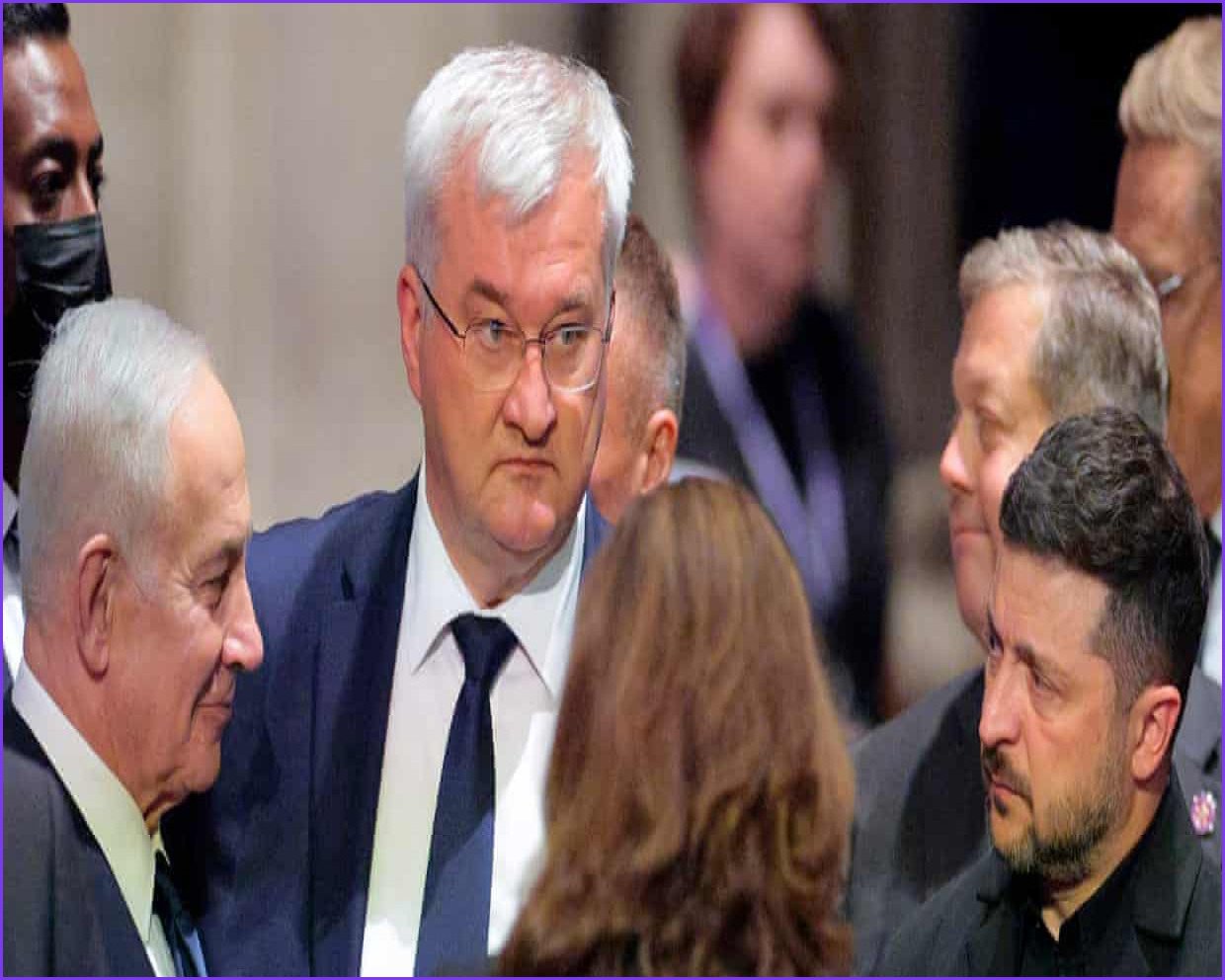
Ukrainian President Volodymyr Zelenskyy and Israeli Prime Minister Benjamin Netanyahu have arrived in Washington at a time when the United States remains a dominant global power, yet their individual prospects for success are clouded by the unpredictable nature of President Donald Trump’s administration. While both leaders view a White House meeting as vital to their respective national interests and ongoing conflicts, they must contend with a presidency that has become increasingly defined by Trump’s erratic leadership and his desire to project imperial authority.
The two leaders find themselves on diverging paths. Netanyahu’s standing has suffered significantly since he convinced Trump to engage in a conflict with Iran five months ago, based on the inaccurate assertion that the regime in Tehran would collapse rapidly. Since that time, Trump has publicly criticized the Israeli leader, and the White House has leaked details of the president’s derogatory remarks regarding Netanyahu. Despite Trump’s desire to distance himself from the region, he continues to face resistance from Israel, even as the U.S. remains deeply committed to Israel’s defense in a way that currently exceeds support for other allies.
Conversely, Zelenskyy arrives in Washington in a stronger position than previously anticipated. Ukraine has successfully resisted Russian forces, established itself as a leader in drone warfare, and gained unexpected support from figures within the "Magaverse," including influencer Lara Loomer, who recently interviewed the Ukrainian leader and called for increased support for Kyiv. This stands in stark contrast to Zelenskyy’s February 2025 visit, where he was subjected to a public attempt at humiliation by Trump and Vice-President JD Vance.
Despite his recent ascent, Zelenskyy recognizes that he lacks a winning hand without significant U.S. backing. His current objective is limited: he hopes to persuade Trump to support a Russia sanctions bill originally championed by the late Senator Graham. He remains aware that meaningful direct U.S. military aid is unlikely to resume soon, especially as American weapon stocks, including Patriot interceptors, have been largely exhausted in the Middle East to bolster Israel’s security. Ultimately, both leaders must navigate a White House where policy is dictated by the whims of a president who remains, for both, an essential but volatile partner.
Facing a hostile electorate, the president is trying to extricate himself from the region, but in doing so is finding Israel the most recalcitrant party on every front.
Rather than capitulate, Ukraine showed it could fight on despite drastic cuts in US military aid, relying more on Europe and its own hard-won improvised expertise.