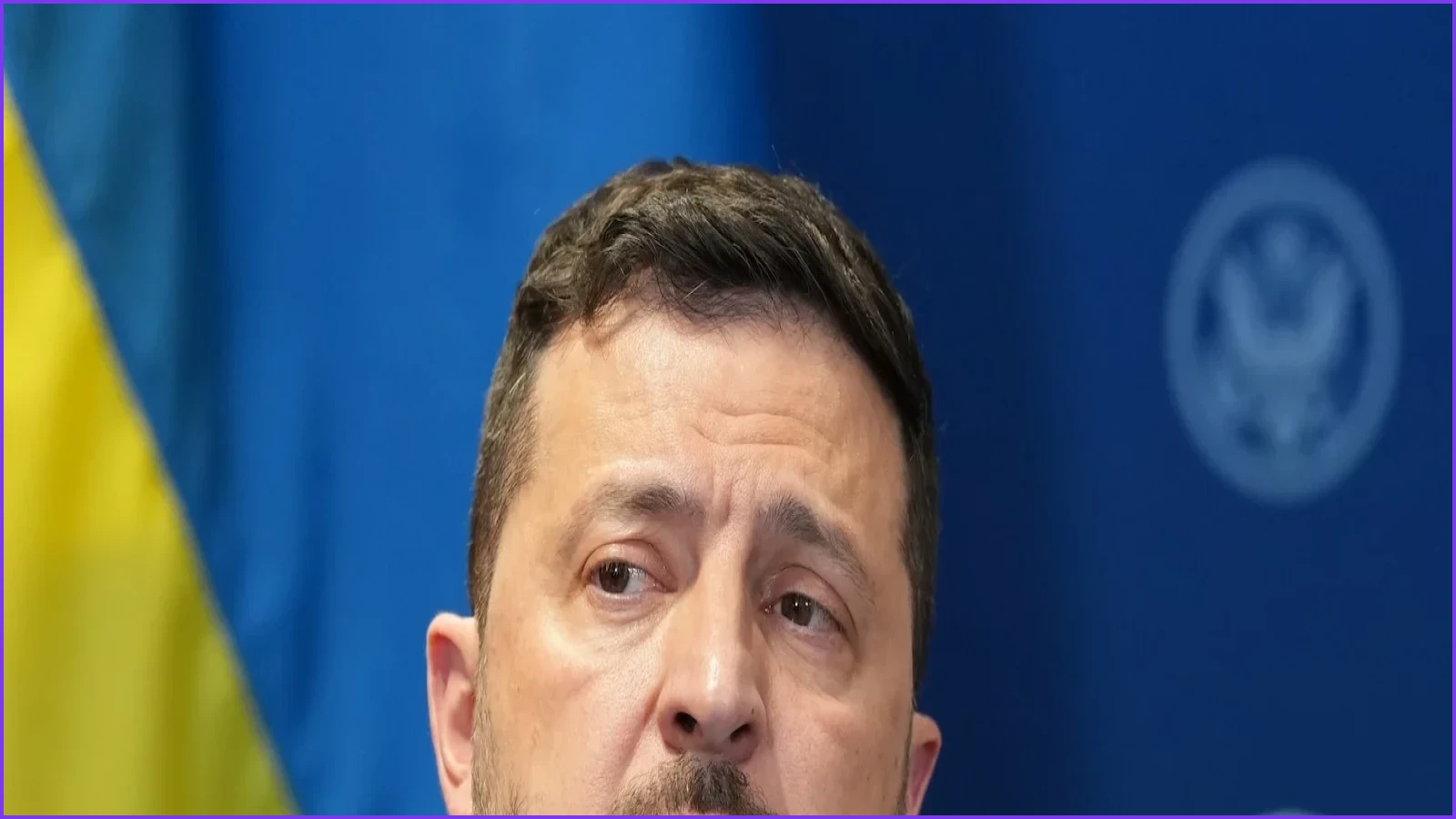
Ukrainian President Volodymyr Zelenskyy has publicly detailed the reasons behind his decision to dismiss Defense Minister Mykhailo Fedorov, characterizing several of the former minister's recent actions as misguided. In a candid discussion held during a two-hour off-the-record meeting with journalists on Saturday, the president emphasized that while he maintains a positive personal attitude toward Fedorov, he believes the former official was either acting improperly or being influenced by others to pursue harmful agendas. Zelenskyy revealed that he had offered Fedorov four distinct roles to remain within the government, all of which were rejected.
The president specifically criticized Fedorov's involvement in promoting mass protests and his public calls for holding national elections during the ongoing conflict. Zelenskyy argued that conducting an election under current circumstances would pose a severe risk to the nation, potentially acting as a political "tsunami" that could divide Ukraine. He noted that while he has previously faced pressure to hold elections, no partners have presented a viable plan to ensure they could be conducted safely, legitimately, and democratically.
The dispute also extended to military and administrative policy. Zelenskyy highlighted a problematic exchange with U.S. President Donald Trump regarding the use of Starlink technology in Russia. According to the Ukrainian president, the Defense Ministry had previously informed him that SpaceX permitted the use of Starlink over Russian territory for deep-strike operations, subject to political approval. Based on this information, Zelenskyy consulted with President Trump, who later informed him that Elon Musk had rejected the proposal and accused the Ukrainian leader of deception. Zelenskyy noted that this incident was a factor in his assessment of the ministry's leadership, though he stopped short of accusing Fedorov of intentional dishonesty.
Financial management served as another point of contention. Zelenskyy reported that the Defense Ministry faced a $27 billion budget shortfall, stemming from spending decisions made earlier in the year that depleted funds originally allocated for the second half of 2026. Addressing recent corruption investigations involving his office, the president stated that anti-corruption agencies have confirmed he is not personally involved in any wrongdoing, noting that investigators have zero questions for him.
On the battlefield, Zelenskyy expressed optimism regarding the reclamation of the Dnipropetrovsk region, noting that only 10 square kilometers and three small villages remain outside of Ukrainian control. He projected that by the end of 2026, Ukraine could achieve parity in territory regained versus territory occupied by Russia since the start of the year. He noted that Russia had occupied about 990 square kilometers since the start of the year, while Ukraine had restored control over roughly 820 square kilometers. He also mentioned that another operation was underway with results expected by the end of August. He noted that Russia’s principal objective remains the Konstantynivka-Sloviansk-Kramatorsk axis and that Moscow continues to demand a withdrawal from the Donbas region as a condition for a settlement.
Zelenskyy also pushed back against protesters’ vilification of former army chief Oleksandr Syrskyi and current Defense Minister Maj. Gen. Yevhen Khmara, saying they had gone too far. Regarding air defense, Ukraine is facing a significant shortage of Patriot interceptor missiles; the country received 675 in 2023, compared to 364 in 2025, with only 264 projected for 2026. Zelenskyy stated he is seeking 300 additional missiles for the winter, while the Air Force has requested 360. He noted that Russia could eventually produce up to 1,300 ballistic missiles a year, compared to an estimated current capacity of 600. Ukraine is also preparing alternatives to Starlink, including a European communications project.
As the war continues, local authorities reported ongoing hostilities: a Ukrainian drone strike hit industrial facilities in Russia’s Orenburg region, including a warehouse belonging to online retailer Ozon. One person was killed and six wounded in Ukrainian drone attacks on Russia’s Belgorod border region, and a woman died in a drone attack in the Tula region. In Ukraine, a woman was killed and four other people wounded when a Russian drone hit an electric train in the Kharkiv region, according to Infrastructure Minister Mykola Kalashnyk.