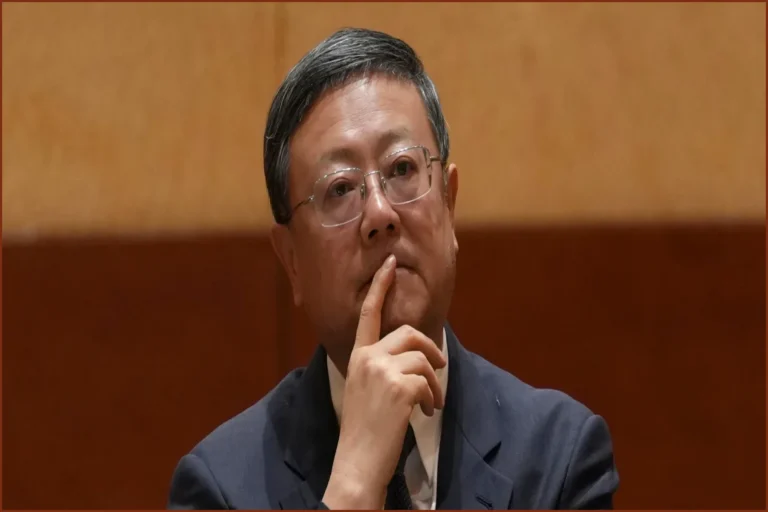
General Secretary To Lam of the Communist Party of Vietnam (CPV) attended a session of the 14th CPV National Congress in Hanoi on Jan. 21, 2026, amid a broad political and administrative restructuring that has reinforced party authority across the country. Since assuming the party's top leadership post in July 2024 following his career as a police general, Lam declared "a new era of national rise" for Vietnam and committed to raising the nation's economic growth rate to double digits from its previous level of 7 percent.
Following his initial declarations, Lam enacted rapid structural reforms that reshaped Vietnam's administrative and political system within a few months. Under his orders, multiple central ministries were either abolished or merged into other departments. At the regional level, all district-level governments were eliminated, requiring incumbent officials to be transferred to provincial roles, reassigned to commune-level positions, or encouraged to retire. Concurrently, Vietnam's 63 provincial and provincial-level administrative units were merged into 34 new units, cutting the total number by nearly half.
Lam's economic policy marks a clear shift away from the focus on socialist ideology championed by his predecessor as CPV chief, Nguyen Phu Trong. Instead, Lam has called for positioning the private sector as the primary engine of the national economy. Under this directive, major infrastructure initiatives, including nuclear power plants and high-speed rail lines, have been awarded to a select group of politically connected private conglomerates, despite those entities lacking prior experience or technical expertise in those specific sectors.
In international affairs, Lam has maintained an intensive diplomatic schedule, visiting approximately two dozen countries over the past two years. Under his leadership, Vietnam has elevated its diplomatic relationships with several nations to the highest formal levels. The country's export economy has also shown steady activity; despite tariffs imposed by U.S. President Donald Trump on Vietnamese exports, Vietnam's trade surplus with the United States has continued to increase.
The Economist has previously described To Lam using the terms "Hardman, Capitalist, and Hedonist," capturing the complex dimensions of his background and public persona. Born in 1957 in Hung Yen province in communist North Vietnam while the country was divided, Lam reached adulthood in 1975 as the civil war ended with the victory of the North. His father, Colonel To Quyen, served as a security agent who spent most of the war years in South Vietnam aiding the communist revolution. Colonel To Quyen later became head of the Prison Department within the Ministry of Internal Affairs—the predecessor to the current Ministry of Public Security—where he managed an extensive state incarceration network.
Lam pursued a career path within the state security structure after studying at the College of Public Security. He rose through the security ranks to become a major general at age 50 and minister at age 59, supported in part by his family's political background. In Vietnam's political system, where the CPV operates with traditional secrecy and emphasizes collectivism while discouraging individual ambition, security officials generally maintain understated public profiles.
However, aspects of Lam's personal history diverge from standard norms among party officials of his generation. After divorcing his first wife, with whom he had two children, he remarried Ngo Phuong Ly, who is 13 years his junior. Born to an artist father and an actress mother, Ly trained in painting and previously worked as a television host. Close associates also know Lam for his personal hobby of collecting antiques.
Lam's background also contains distinct ideological symbols. In 2017, while Lam was serving in his security leadership role, a bust of Felix Dzerzhinsky was installed at his alma mater, now named the People's Academy of Security Services. Dzerzhinsky, a Polish-born ally of Lenin, founded the Cheka and the early Soviet Gulag camp system. While one of Lam's daughters has pursued her education in England, these contrasting elements reflect the wider social, economic, and political shifts that have taken place in Vietnam since market reforms began more than three decades ago.