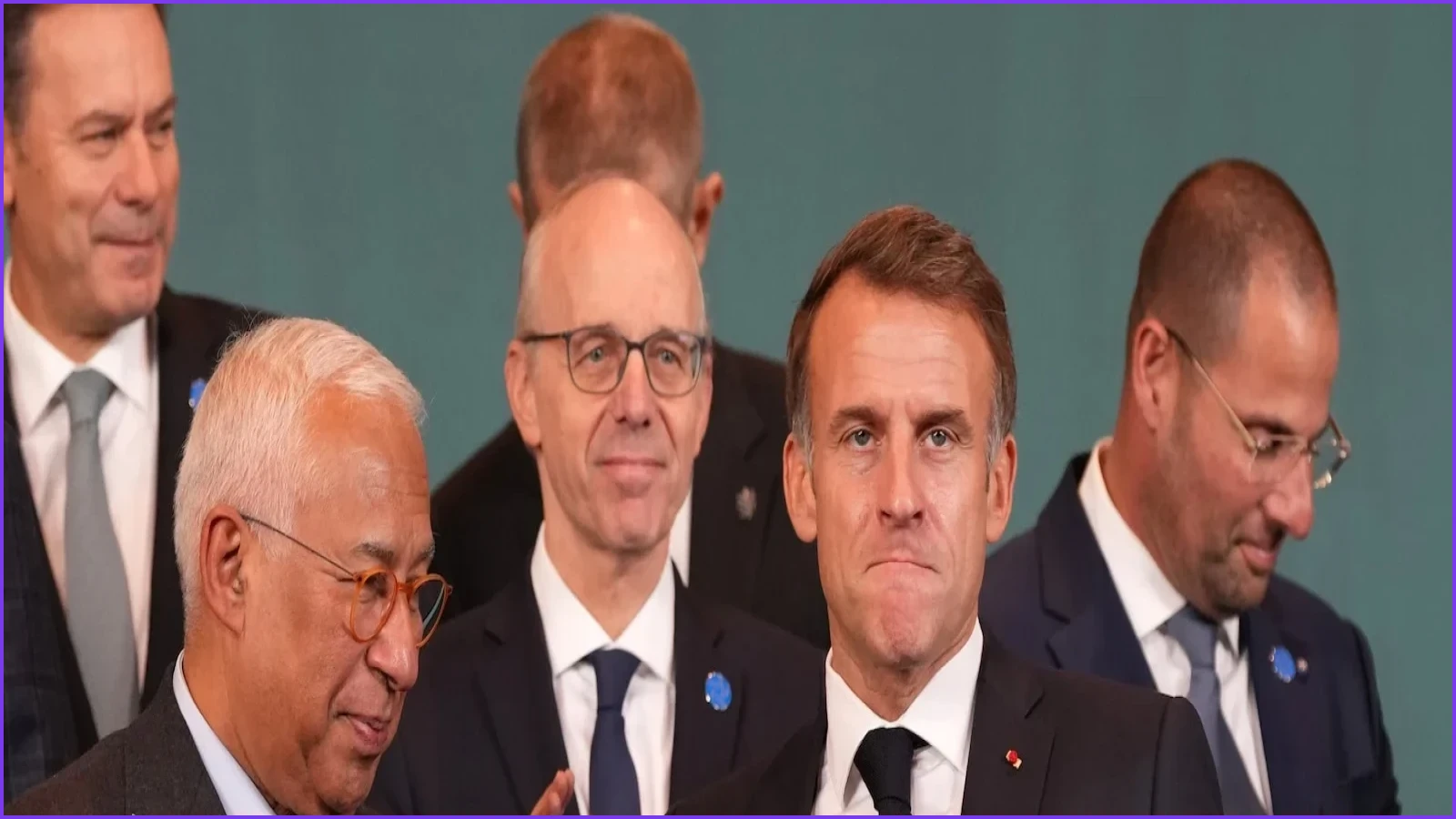
European Union leaders gathered in Brussels on Thursday for a two-day summit aimed at bridging deep divisions over the bloc's next long-term budget and securing a critical financial loan for Ukraine.
The negotiations center on the 2028-2034 financial framework, estimated to account for 1% to 1.2% of the EU’s gross national income. The multi-year budget is funded primarily by the 27 member states according to the size of their respective economies. Seeking to broker a compromise, European Council President António Costa, who is chairing the meeting, recently submitted a revised proposal that reduces the European Commission’s initial plan by approximately 10%.
Costa urged leaders in a summit invitation letter to finalize the deal, writing, “The time has come to reach an agreement.” He emphasized that member states hold “the responsibility to find a balanced agreement that will allow the European Union to take on the challenges ahead.”
Reaching consensus has proven difficult due to entrenched factions within the bloc, exacerbated by rising national debt and growing pressure to expand military spending as Russia's war on Ukraine approaches its fifth year. Approximately one-third of the member states operate as net contributors, paying more into the shared budget than they receive. Led by Germany, Austria, the Netherlands, and Sweden, these nations strongly resist calls for higher contributions and insist on fiscal discipline and belt-tightening.
In contrast, a sizable bloc known as the "friends of cohesion," spearheaded by France and Italy, is firmly defending traditional subsidies. These funds support agricultural producers and finance infrastructure initiatives in economically developing member nations to help them meet broader EU standards. Historically, farm subsidies and regional development programs have consumed roughly two-thirds of the entire European budget.
At the same time, most member governments want to redirect capital toward pressing modern challenges. Beyond sustaining financial support for Ukraine against Russian aggression, the bloc is attempting to boost economic competitiveness while navigating trade tensions with the United States and China alongside high domestic energy costs. To generate fresh revenue, Costa suggested implementing a bloc-wide digital services tax targeting online advertising revenue and user data monetization, which could yield about 5 billion euros ($5.5 billion) annually.
Financial backing for Ukraine represents a central element of the budget negotiations. The seven-year plan includes a proposed 100 billion-euro ($110 billion) package dedicated to Ukraine, while leaders are also tasked with approving a separate 45 billion-euro ($49.4 billion) loan to cover immediate economic and military needs for the coming year.
Political friction surrounding the assistance has escalated. German Chancellor Friedrich Merz previously threatened to block the overarching budget agreement unless every single member state agrees to a "collective commitment" to support Kyiv "without exception." In a letter to Costa, Merz stressed that helping "Ukraine is a matter of our indivisible European security, and so must be the burden sharing for that support." However, Hungary, Slovakia, Bulgaria, and the Czech Republic remain opposed to allocating funds toward military assistance for Ukraine.
Nearly a year ago, EU leaders approved a 90 billion-euro ($99 billion) loan designed to meet the majority of Kyiv's financial needs over a two-year period. However, Ukraine's financial stability has deteriorated under intensified Russian strikes against energy installations and civilian infrastructure, alongside disruptions to trade routes across the Black Sea.
To fund the proposed 45 billion-euro loan package, the European Commission plans to raise funds on international capital markets. Under the proposed structure, 20 billion euros ($22 billion) would be designated for economic stabilization, while 25 billion euros ($27 billion) would directly fund the Ukrainian armed forces.
EU diplomats indicate that a final budget compromise is more likely to be reached when leaders convene again next month. While missing a December deadline would not cause immediate financial collapse—since current mechanisms provide a one-year buffer—officials emphasize that substantial lead time is required to draft spending legislation and secure formal approval from all 27 member states and the European Parliament so that funding can begin flowing by January 2028.