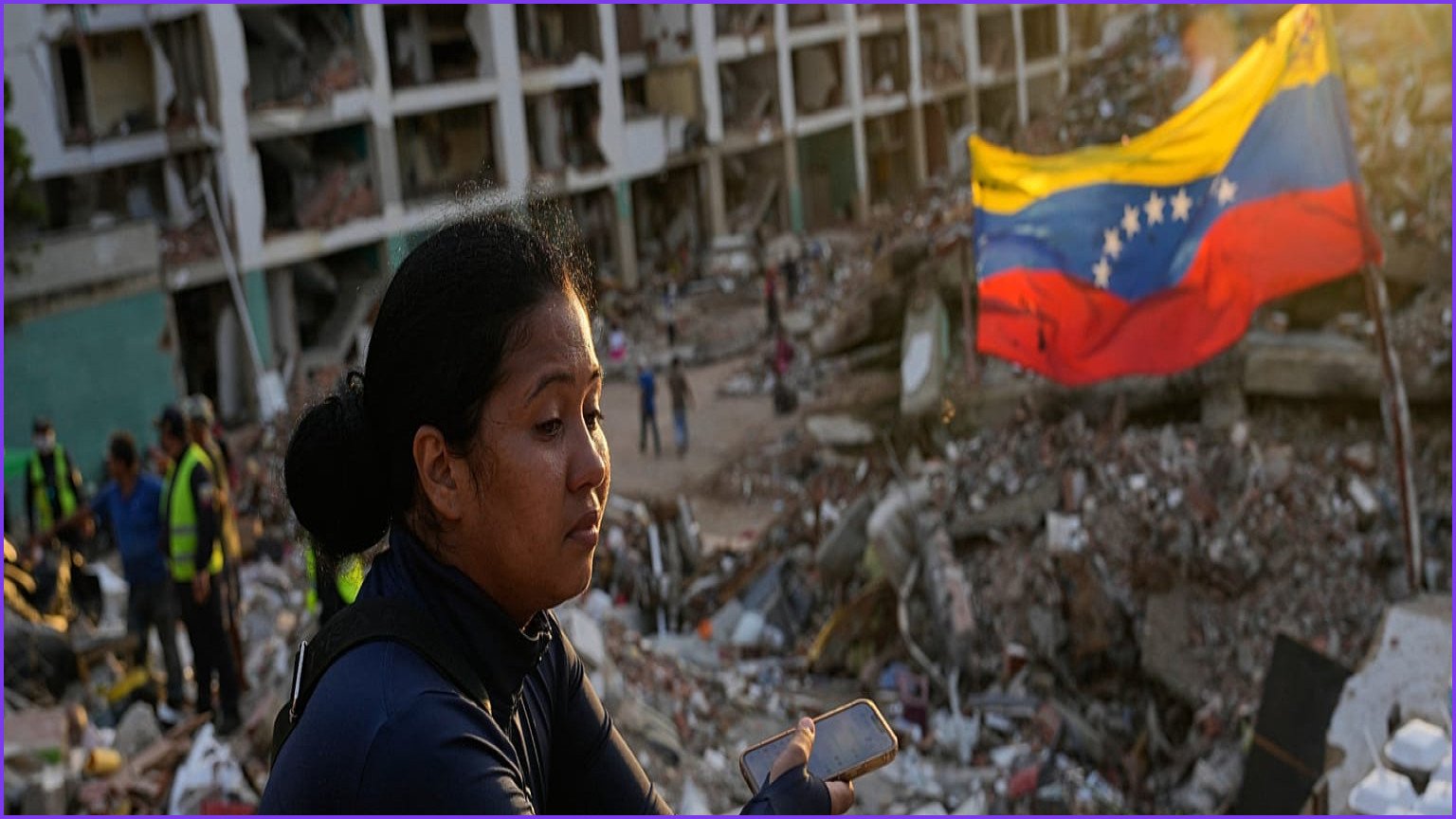
It has been exactly thirty days since northern Venezuela was struck by a rare seismic phenomenon known as a seismic doublet. On the night of 24 June, two earthquakes measuring 7.2 and 7.5 in magnitude hit the region just 39 seconds apart. This event has since been classified as one of the most severe natural disasters to impact the country in over a century.
The official casualty figures, provided last Friday by National Assembly president Jorge Rodríguez, confirm that 5,546 people have died and 16,740 have been injured. While the number of injured has remained largely stable for weeks, suggesting that medical teams are no longer receiving new critical cases, the death toll continues to rise. This increase is attributed to ongoing debris removal efforts and the continuous work of forensic teams identifying bodies, many of which have been buried in mass graves at cemeteries in La Guaira.
A significant point of public criticism involves the government's handling of missing persons data. Authorities have not updated the official figure for the missing since 25 June, the day after the disaster, when the count stood at 157. In the absence of official updates, a citizens' initiative known as Desaparecidos del Terremoto de Venezuela has formed to centralize reports from families. This group currently maintains a registry of nearly 29,500 people whose whereabouts remain unknown, highlighting a stark gap between state-acknowledged figures and citizen-documented reports.
The economic toll of the disaster is equally staggering. A report published last week by the World Bank estimates the total direct physical damage at approximately 19.6 billion dollars. This total includes 9.3 billion dollars in destroyed or severely damaged homes, 5.2 billion dollars in damage to public infrastructure such as schools and hospitals, and nearly 5 billion dollars in losses to commercial and industrial facilities.
The region remains geologically unstable, with 1,405 aftershocks recorded since the main event. These tremors have frequently complicated efforts to stabilize structures that were already weakened by the initial shocks. Although basic services like electricity were restored in some parts of La Guaira roughly two weeks after the quake, normality remains elusive. Organizations such as Médecins Sans Frontières are currently operating mobile clinics to address healthcare needs that the local public system, which was already struggling before the disaster, cannot fully meet.
This tragedy has unfolded during a period of intense political transition for Venezuela, following the arrest of former president Nicolás Maduro earlier this year. An interim government led by Delcy Rodríguez is currently in place, though no date for upcoming elections has been established. The pace of future reconstruction will likely depend on international aid management, including cooperation from nations like Israel and efforts to unblock Venezuelan assets with the support of the United States.