Changing an alphabet involves more than just replacing letters; it requires a profound transformation of the state’s institutional and cultural fabric. Uzbekistan’s transition from the Cyrillic to the Latin alphabet is not merely a technical change; rather, it has a far-reaching dimension tied to the nation-building process. Since declaring its independence in 1991, Tashkent has revised its alphabet policies numerous times, yet the simultaneous use of both the Cyrillic and Latin alphabets has continued for over 30 years. Visitors to Uzbekistan will still see both alphabets — alongside the Russian language, which uses a Cyrillic alphabet — in many parts of daily life.
Legislation on the alphabet in 1993 kicked off a comprehensive transition process which is still ongoing, despite the most recent deadline for the switch passing back in 2023. Following the 1993 legislation, the government established new spelling standards for Uzbek written in the Latin alphabet and launched a phased implementation plan. As part of this effort, school curricula were updated to include instruction in the Latin alphabet; new textbooks were prepared; and signs in public spaces were redesigned using the Latin alphabet. Furthermore, official documents and government correspondence have been gradually converted to the Latin alphabet, and media organizations have been encouraged to adopt the new alphabet. Additionally, this transition process complimented other efforts to clear away the most obvious signs of Soviet influence, such as renaming streets and removing statues.
Three years later, in 1996, all educational institutions in Uzbekistan began offering instruction in the Uzbek language using the Latin alphabet. However, the transition to the Latin alphabet proved to be a much more difficult and protracted process than initially anticipated. Initially, the full transition to the new alphabet was planned to be completed by 2000, but this deadline was extended to 2005 and then to 2010. Even the most recent deadline of 2023 has passed in an environment where the Cyrillic alphabet remains firmly entrenched in bureaucracy, the media, and daily life. The fact that the alphabet reform in Uzbekistan has not fully materialized is not due to a lack of political will; instead, the reason lies in the fact that institutions, generations, and economic realities continue to favor the old script.
Under the leadership of Uzbekistan’s current President Shavkat Mirziyoyev, alphabet reform has evolved from a symbolic choice into a systematic institutional framework. Since 2016, several key institutions have been established to accelerate the transition to the Latin alphabet. The State Language Development Department, established in 2019, and the Uzbek Language Development Fund, established in 2020, have taken on the task of standardizing the use of the Latin alphabet within government agencies. This includes collaborating with organizations — from government agencies to banks and others — to publish guidebooks, dictionaries, terminology guides, and methodological and instructional materials prepared in Uzbek based on the Latin alphabet. The Uzbek Language Development Fund facilitates the integration of the language into social life, education, culture, and the international arena.
For example, university faculty and staff have received training on the Latin script. These programs attracted an extremely diverse group of participants. In conversations with academics, a remarkable reality emerged. Most of the older professors acknowledged that relearning the alphabet of their native language in the twilight of their careers was a struggle, yet they recognized it as an indispensable step for Uzbekistan. As one experienced academic noted, “Ilm olish uchun hech qachon kech emas” — “It’s never too late to learn” — reflecting an unwavering commitment to the government’s vision. This concrete reality at the university suggests that the reform is not merely a top-down directive, but rather that the Latin alphabet is being taught through a gradual process of internalization.
It takes time to eliminate or transform habits; this is true of changing alphabets, too. Although more than 30 years have passed since Uzbekistan gained independence, the continued dominance of the Cyrillic alphabet remains too ambiguous to be explained solely by technical or administrative reasons. In interviews with Uzbek faculty members and political scientists, it emerged that the older generations’ familiarity with the Cyrillic alphabet was one of the factors slowing down the transition. Sayliyeva Rakhmiddinova, a faculty member at Bukhara State University, stated that, for generations raised within the Soviet education system, the Cyrillic alphabet was not merely a writing system but a fundamental tool for these people to carry on with their lives. Furthermore, Rakhmiddinova noted that for them, the transition to the Latin alphabet meant not only learning a new alphabet but also abandoning cognitive and practical habits that had been ingrained over many years. Similarly, Shohista Akramova, a philology lecturer, noted that because many high-ranking officials and institutional employees were educated in the Cyrillic alphabet, the use of Cyrillic in official correspondence has become a natural preference. Akramova pointed out that even though the Latin alphabet is encouraged by law, established patterns persist in practice.
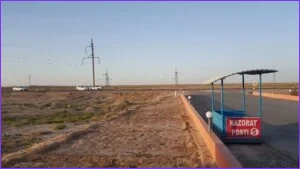
A key aspect of Uzbekistan’s transition to the Latin alphabet is the conversion of the country’s archival records from the Cyrillic to the Latin alphabet. The conversion of these archives serves as a microcosm of the state’s broader administrative efforts. For nearly the entire 20th century, Uzbekistan’s legal, academic, and historical infrastructure was built upon the Cyrillic alphabet. This has created a vast treasure trove of information that cannot be converted by a mere decree. As noted by Uzbek political scientist Ulugbek Mirzokhidov, most academic and discipline-specific books in universities are still written in the Cyrillic alphabet. This creates a practical bottleneck: younger generations are being educated in the Latin alphabet, but if they cannot read records written in the Cyrillic alphabet, they face the risk of becoming disconnected from their own history and professional depth. In government ministries, this situation manifests as a “dual system” in which public signs are written in the Latin alphabet, but files and internal memos — considered the heart of the bureaucracy — generally revert to the customary Cyrillic alphabet. Akramova has closely examined these administrative obstacles and says that the problem is as much institutional as it is individual. She notes that templates, software infrastructure, and archiving standards in government offices are fundamentally designed for the Cyrillic alphabet. This situation transforms the transition to the Latin alphabet into a complex technical and bureaucratic transformation rather than a simple administrative change.
Approximately 60 percent of Uzbekistan’s population is under the age of 30 and has been educated almost entirely using the Latin alphabet. However, the “middle generation,” which holds key positions in the country’s administration, developed their professional expertise under the Soviet system. This inconsistency has led to a kind of “fragmented literacy” — a situation in which students, despite being able to use the new alphabet fluently, struggle when it comes to studying academic literature written in the old alphabet. While primary and secondary education have successfully adapted, higher education remains a stronghold of the Cyrillic alphabet. The media landscape also reflects this hybrid structure. Although official state media has largely adopted a two-alphabet system, private publishing houses and newspapers generally stick to the Cyrillic alphabet. For many publishers, this choice is purely a commercial decision. The readership for publications written in Cyrillic is still broader and more “profitable” than the Latin script. Meanwhile, it is common to find books in bookstores with titles printed in the Latin alphabet but with the entire text written in the Cyrillic alphabet. According to political scientist Komronbek Isroilov, this situation creates a structural disconnect that negatively affects the reading habits of the younger generation and effectively constitutes a barrier to accessing their cultural heritage.
One of the pragmatic factors hindering the transition to the Latin alphabet is the economic necessity of the Russian language. Uzbekistan’s ongoing economic dependence on Russia helps preserve the social functionality of the Cyrillic alphabet and also serves to slow the transition to the Latin alphabet. According to Russian government data, approximately 4.5 million Uzbek citizens were registered as migrant workers within Russia’s borders in 2021. For these migrants, the Russian language — and, naturally, the Cyrillic alphabet — is necessary to manage employment contracts, residence permits, and daily life in Russia. These migrants send billions of dollars in remittances back to Uzbekistan each year. According to data from the Central Bank of Uzbekistan, remittances sent to the country in 2024 reached $14.8 billion, of which $11.5 billion (77 percent) originated from Russia. This figure demonstrates that Russia is not only the most important destination for migration from the perspective of Uzbekistan’s economy but also its largest source of foreign currency. Since the livelihoods of millions of Uzbek families depend largely on the Russian labor market, knowledge of Russian — and, consequently, familiarity with the Cyrillic alphabet — remains an economic necessity. For this reason, the Cyrillic alphabet maintains a strong position in social life not only for historical or cultural reasons but also due to economic rationality.
The debates surrounding Uzbekistan’s alphabet reform have become the focus of intense geopolitical analysis in the Russian press in recent years. In Moscow, the Uzbek alphabet reform is largely viewed as a strategic move orchestrated by external powers with the aim of severing cultural ties between Russia and Central Asia. Analyses by media outlets such as the Strategic Culture Foundation have generally characterized Tashkent’s transition to the Latin alphabet as a “cultural wedge” (культурный клин) used by the United States to create a divide between civilizations. Other media outlets, such as the Krasnaya Vesna news portal, have expressed concern that the reform could leave older generations unable to read and write in Uzbek and contribute to a deterioration in educational quality. Ryazan-based political scientist Yuriy Mostyayev has argued that Uzbekistan’s alphabet reform creates an artificial barrier in relations with Russia while imposing substantial costs on both businesses and the state budget. Drawing a parallel with Ukraine, he warned in 2025 that linguistic reforms promoted in this way may contribute to a broader anti-Russian political trajectory. Similarly, analyst Antoine Gyori noted that this transition is generally viewed as part of Turkish soft power and aims to unite Turkic-speaking peoples around a common linguistic model. Beyond linguistics and geopolitical analysis, the issue of the alphabet can also be interpreted as a reflection of Uzbekistan’s foreign policy. Under Mirziyoyev’s leadership, Tashkent has begun to pursue a foreign policy aimed at opening up to the world while maintaining stable relations with its traditional partner, Moscow. A full and aggressive transition to the Latin alphabet would arguably be perceived by some as a “derussification” process signaling a shift toward the West’s sphere of influence. By maintaining the dual-alphabet status quo, Tashkent is striking a delicate balance: on the one hand, it demonstrates its nationalist stance to the domestic public and its Turkic partners, while on the other hand, it assures Moscow that respect for Russian cultural heritage continues.
It would be wrong to characterize Uzbekistan’s transition process as a failure, regardless of the missed deadlines. Uzbek decision makers are operating within significant financial and geopolitical constraints. And they are making substantial progress in education and raising public awareness. The transition process is, by its very nature, gradual; it is not an abrupt break but an endeavor that will span generations. Some of the challenges stem from the financial burden; the economic cost of completely overhauling the alphabet — from reprinting every textbook to updating government software — is often much higher than anticipated. Another reason for the slow progress of the transition to the Latin alphabet is that Tashkent simply has more pressing policy priorities. Following independence, the country has had to simultaneously grapple with numerous strategic issues, such as managing economic transformation, ensuring energy security, sharing water resources, maintaining relations with neighboring states, and, in particular, managing security risks stemming from Afghanistan. Consequently, despite its symbolic and long-term importance, alphabet reform has often remained far from the top of the policy agenda for decision makers. During the tenure of Mirziyoyev, the reform agenda has focused largely on economic liberalization, improving the investment climate, modernizing public administration, enhancing bilateral relations with neighboring countries, and deepening regional cooperation. The Latin alphabet reform also began to gain momentum during this period. For this transition process to ultimately succeed, the government must go beyond mandates and legislation. Success requires a large-scale investment in the digitization of archives written in the Cyrillic alphabet, the creation of economic incentives for local industries based on the Latin alphabet, and the finalization of a user-friendly writing system for the digital age. Until then, Uzbekistan will remain a country in transition — a place where the past and the future continue to intersect on every street sign and in every official document.
The Generational Gap and Media Hybridity
The Russian Factor: A Means of Survival and a Geopolitical Divide