The militaries of South Korea and the United States have announced plans to commence their annual large-scale joint exercises next week, a move designed to enhance readiness against evolving threats from North Korea. The announcement comes shortly after Pyongyang resumed ballistic missile testing, an activity currently prohibited by United Nations resolutions.
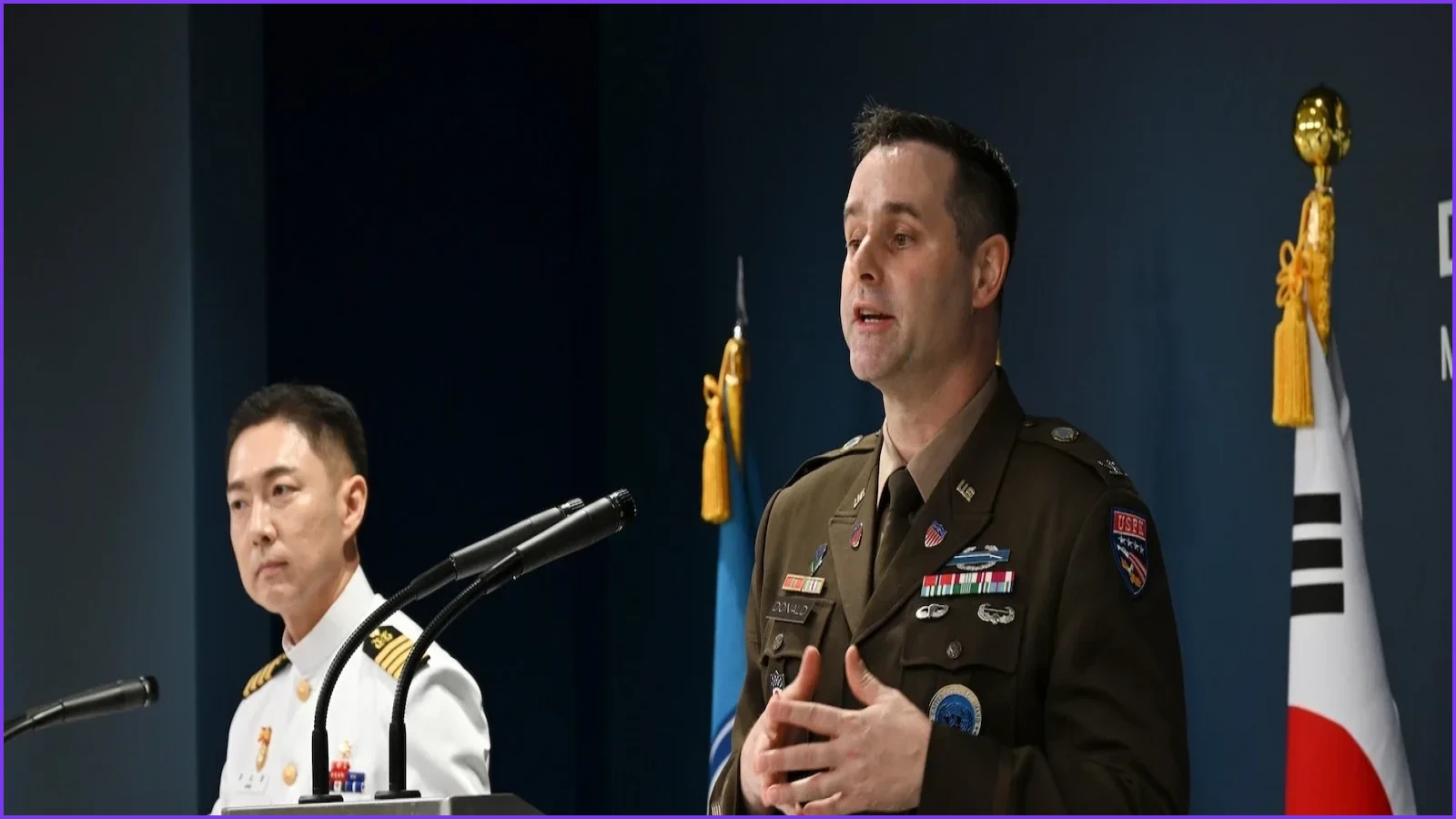
The upcoming drill, known as Ulchi Freedom Shield, is scheduled to run for 11 days starting next Monday. South Korean military spokesperson Jang Do-young confirmed that the exercise will involve approximately 18,000 South Korean personnel, maintaining a scale consistent with previous years. According to U.S. military spokesperson Ryan Donald, the training will incorporate lessons learned from recent global conflicts, including the deployment of North Korean soldiers to support Russia’s war in Ukraine. Donald emphasized that these battlefield experiences have altered North Korean capabilities, necessitating adjustments in the alliance's combined, joint, and all-domain operations to account for these shifts.
The U.S. military noted that the summertime exercises will feature a mix of live, virtual, constructive, and field-based training. This event remains one of the two primary combined military drills conducted by the allies annually, alongside their springtime training cycle. While North Korea has not provided an immediate official response, it has historically characterized such joint military activities as rehearsals for an invasion, often reacting with aggressive rhetoric or provocative weapons tests. Conversely, officials from both Washington and Seoul maintain that these exercises are strictly defensive in nature.
Tensions in the region were highlighted last Thursday when South Korea, the United States, and Japan detected a short-range ballistic missile launch by North Korea. The projectile landed in the waters off the North's east coast, marking the first such test since late June. The launch was condemned by Seoul and Tokyo as a provocation and a violation of multiple U.N. Security Council resolutions. Following the event, the U.S. Pacific Command reiterated its commitment to the defense of the region and the U.S. homeland.
Since the breakdown of high-stakes diplomacy between leader Kim Jong Un and then-U.S. President Donald Trump in 2019, North Korea has aggressively expanded its nuclear and missile arsenals. Experts suggest that Pyongyang believes a larger weapons stockpile may provide increased leverage in future negotiations. Furthermore, the provision of troops and ammunition to Russia has sparked international concern regarding potential technology transfers that could further advance North Korea's nuclear and missile programs, while simultaneously providing North Korean forces with valuable combat experience.