The agreement, expected to span decades and be valued in the billions of dollars, was announced by Energy Secretary Chris Wright. "These agreements reflect our two nations' shared commitment to strengthening U.S.-Saudi commercial relations, delivering prosperity at home and security to our allies abroad," Wright stated. He added that the agreements uphold "the highest standards of nuclear safety and nonproliferation, while relying on the world's best nuclear technology and scientists, designed right here in the United States."
Despite assurances of safety and nonproliferation, the agreement omits key provisions often referred to as the "gold standard." Specifically, it does not prohibit Saudi Arabia from enriching uranium or reprocessing nuclear fuel, nor does it mandate increased oversight from the International Atomic Energy Agency. These omissions are likely to spark concerns about the Kingdom potentially developing nuclear weapons.
Saudi Crown Prince Mohammed bin Salman has previously stated that Saudi Arabia would pursue nuclear weapons if Iran were to develop them. The administration memo, however, asserts that the U.S. does not support a Saudi nuclear weapons program and that the agreement is strictly for peaceful nuclear energy cooperation. The memo also clarifies that while the agreement provides a legal framework for cooperation on the nuclear fuel cycle, it does not obligate the U.S. to transfer any fuel cycle capabilities or technologies.
The memo further notes that the agreement includes nonproliferation terms under the Atomic Energy Act. Separately, an official named Bunn suggested that Iran might be less inclined to agree to intrusive inspections of its nuclear program if Saudi Arabia is not similarly committed to such stringent agreements.
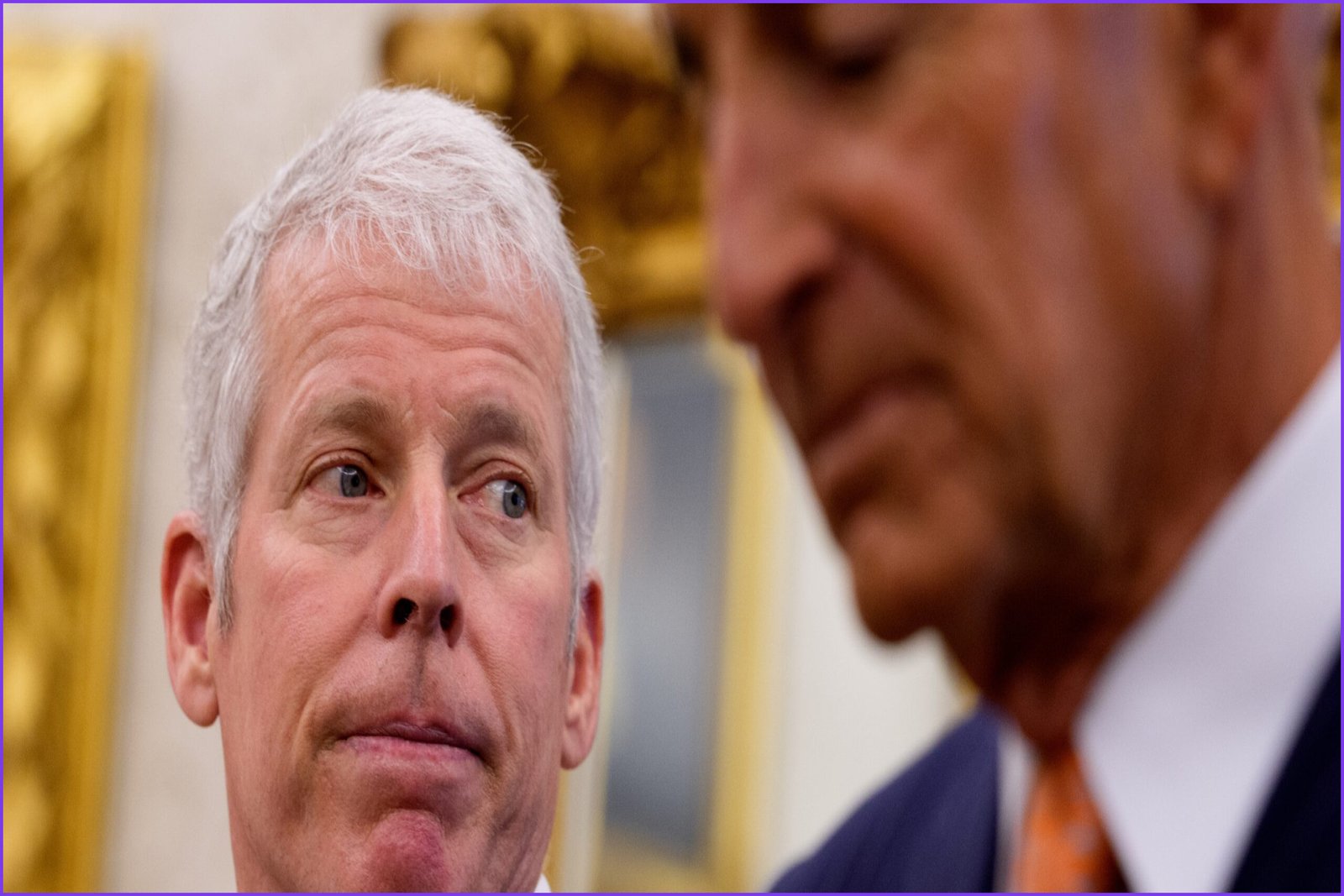
Energy Secretary Chris Wright at an Oval Office meeting earlier this month. Andrew Harnik/Getty Images hide caption