A Ukrainian drone attack on the petroleum hub of Nizhnekamsk in central Russia’s Tatarstan region has resulted in 13 deaths and 78 injuries, according to local officials. This incident marks one of the deadliest strikes on Russian soil since the conflict began four years ago. The targeted refinery is situated approximately 1,200 kilometers (750 miles) east of the Ukrainian border and serves a population of roughly 240,000. While Russian authorities did not specify the exact targets, the city of Nizhnekamsk hosts two refineries and a petrochemical plant. The Ukrainian military confirmed that its forces struck a Taneco oil refinery, initiating a fire.
Rustam Minnikhanov, the head of Tatarstan, described the event as a massive drone attack aimed at both industrial and civilian infrastructure. Among the casualties, nine individuals were killed when a drone struck a hostel, including citizens of Uzbekistan and Kyrgyzstan. Consular representatives from Uzbekistan confirmed that seven of their nationals were among the deceased. A child was also reported to be among those killed, and authorities declared a day of mourning in the region. It was not possible to independently verify the claims made by either side, and the Russian Foreign Ministry has urged international organizations to condemn the attack.
In a separate incident on Monday, Governor Alexander Moor reported that several Ukrainian drones sparked a fire at an industrial facility in the Tyumen region of western Siberia. Ukraine’s General Staff stated that its forces damaged a petrochemical complex in Tobolsk, which produces rocket fuel components, aviation fuel, composite materials for drones, and high-octane gasoline. This follows a previous Ukrainian drone strike last month against a refinery in the Tyumen region, located over 2,400 kilometers (about 1,500 miles) from the border with Ukraine. Domestically developed long-range drones have flown increasing distances, with some now reaching Siberia, approximately 2,000 kilometers (1,200 miles) from the border.
President Volodymyr Zelenskyy noted that these long-range strikes are intended to compel Russian leadership to engage in peace negotiations and stop the full-scale invasion launched in 2022. He emphasized that the ongoing war will increasingly impact Russia domestically, stating that every Russian strike will be met with a response. Ukraine has been conducting near-daily long-range drone campaigns against Russian energy facilities, which have successfully disrupted refining capacity, unsettled the population, and created fuel shortages. Repairing these facilities is complicated for Russia, as the specialized equipment is often imported, making repairs time-consuming and expensive due to international sanctions.
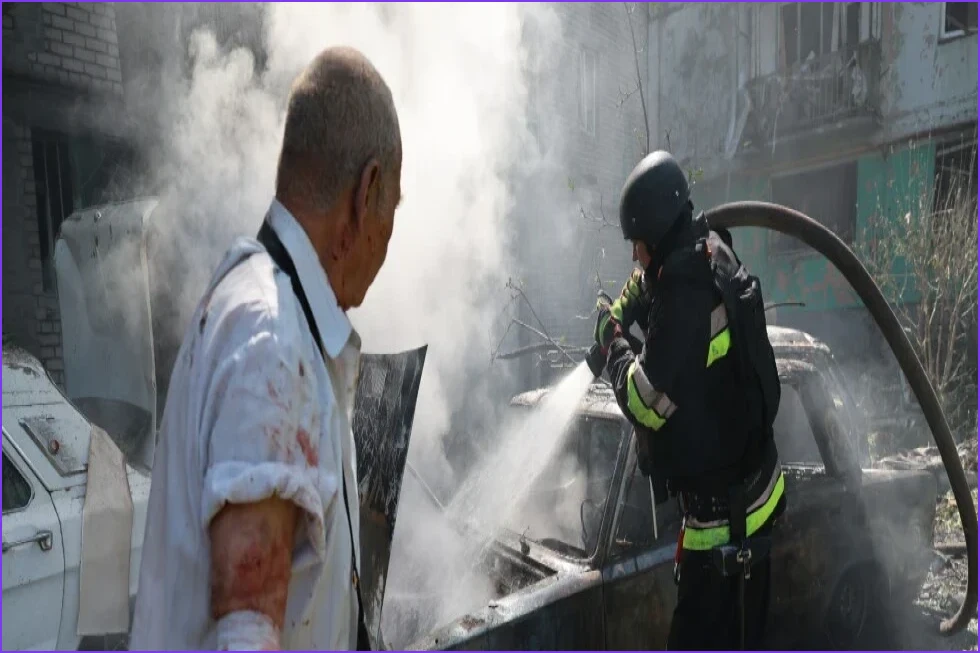
Simultaneously, the conflict continues to cause significant civilian casualties. In Ukraine, a Russian glide bomb strike in the city of Zaporizhzhia injured 24 people on Monday. The United Nations reported that in the first six months of 2026, 1,396 civilians were killed and 7,978 injured in Ukraine, representing a 37% increase compared to the same period last year. Additionally, the World Health Organization reported that one of its warehouses in the central Dnipro region was struck twice in less than 24 hours, destroying approximately $500,000 worth of emergency medical supplies intended for front-line health facilities. No casualties were reported in that specific incident.
Beyond drone strikes, Ukrainian forces have pursued a parallel strategy to disrupt Russian supply lines. The Defense Ministry stated that Kyiv’s forces struck road, rail, and pontoon bridges in six regions last month. Commanders claim these efforts have made Russian logistics slower, costlier, and harder to organize, which has helped stall Russian advances and enabled Ukrainian counterattacks. In a separate development, Robert “Madyar” Brovdi, the commander leading Ukraine’s drone war, stated in an interview that recent strikes in Crimea are only the first phase of an open-ended campaign to render the peninsula unusable as a staging ground for Russian forces. He added that his forces could strike seven times more military targets in Crimea if funding from Western allies arrived faster.