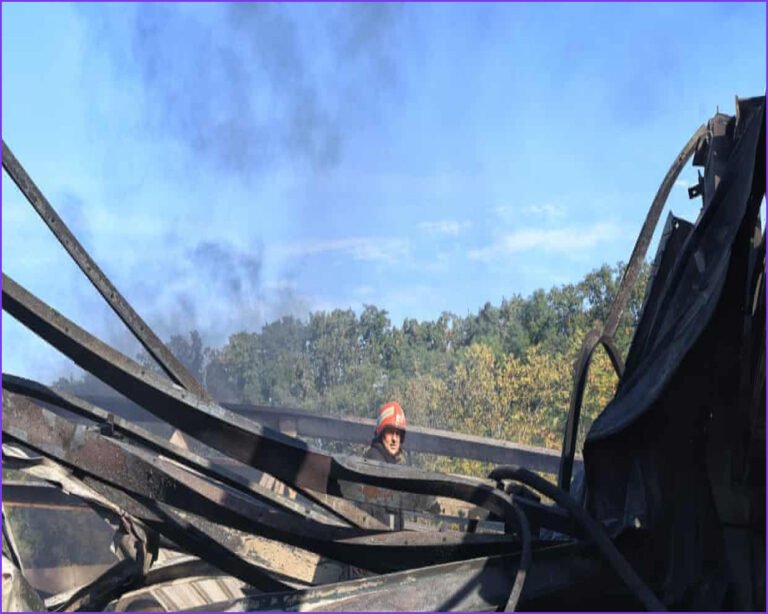
A new front has emerged in the ongoing conflict between Russia and Ukraine, directly targeting the everyday lives of Russian consumers and small businesses. Over the course of a single week, Ukrainian drone strikes have repeatedly hit the massive logistics network of Wildberries, which serves as the Russian equivalent to Amazon. An overnight strike marked the tenth such aerial attack against the company's facilities within a seven-day period, bringing the realities of the war directly to commercial hubs far from the front lines.
The physical and human toll of these strikes has been severe. Beginning last Saturday and continuing almost daily, Ukrainian drones have struck giant distribution centers located outside Moscow, near St. Petersburg, and in several southern Russian cities. The attacks have ignited massive fires, destroying vast quantities of consumer goods and resulting in the deaths of at least nine warehouse workers. Dozens of others have been injured, with officials noting that several of the casualties were migrant workers from Central Asia.
Beyond the immediate loss of life, the financial impact has devastated the small and mid-size Russian businesses that rely on Wildberries to distribute their goods. As Russia's largest online retailer, the platform hosts inventory for thousands of independent merchants. Following the strikes, numerous business owners have turned to social media to express their despair over what they describe as complete financial ruin. Among them is Kirill Valov, the owner of a small clothing brand, who reported losing a third of his entire inventory—valued at approximately $150,000—when a Wildberries warehouse outside Moscow went up in flames.
The targeted company represents a unique success story in the Russian corporate landscape, which is traditionally associated with male oligarchs and state-dominated industries. Wildberries was founded in 2004 by Tatyana Kim, a former schoolteacher and stay-at-home mother who initially began selling hard-to-find, quality apparel directly out of her family's apartment. While critics point out that her launch was aided by financial backing from her then-husband, who worked in the information technology sector, the brand grew rapidly. Kim, who once taught English, chose the name "Wildberries" and designed a distinctive neon pink "WB" logo because she wanted the brand to project a positive, progressive, and Western image.
This vision of a modern, middle-class consumer lifestyle resonated deeply with the Russian public. As the national economy expanded throughout the 2000s and beyond, Wildberries became a cornerstone of daily life. Its significance surged even further following the invasion of Ukraine, as major Western brands withdrew from the Russian market due to international sanctions. In response to the retail vacuum, online shopping exploded, and small Wildberries pickup points appeared on almost every street corner. This rapid expansion preserved a sense of consumer normalcy for ordinary Russians, while simultaneously elevating Kim's personal fortune. With an estimated net worth of $8 billion, the former teacher is now recognized as Russia's wealthiest woman.
However, the retailer's massive logistical footprint has now made it a primary military target. Ukrainian President Volodymyr Zelenskyy, speaking Ukrainian, publicly addressed the strategy last Saturday, announcing the initial strike and asserting that the warehouses were being utilized for military logistics. According to Zelenskyy, the facilities have been used to distribute military supplies, including navigation systems and essential components for drone manufacturing destined for the Russian armed forces.
Both Tatyana Kim and the Kremlin have strongly denied these allegations, with Russian officials condemning the attacks on Wildberries as acts of terrorism. While the retail giant does not sell weapons, its vast inventory includes various dual-use items that could potentially find utility on the battlefield. These range from civilian toy drones and electronics containing microchips to camouflage hunting apparel. By targeting these commercial distribution hubs, Kyiv appears committed to a broader strategy of bringing the economic consequences of the war directly to the Russian populace, mirroring its ongoing campaign against Russian energy infrastructure. As these strikes continue, Russian citizens are discovering that these sprawling, soft commercial targets are incredibly difficult to defend.
CHARLES MAYNES, BYLINE: Thanks for having me on the show.
SIMON: Tell us about how these attacks have been going on this week.