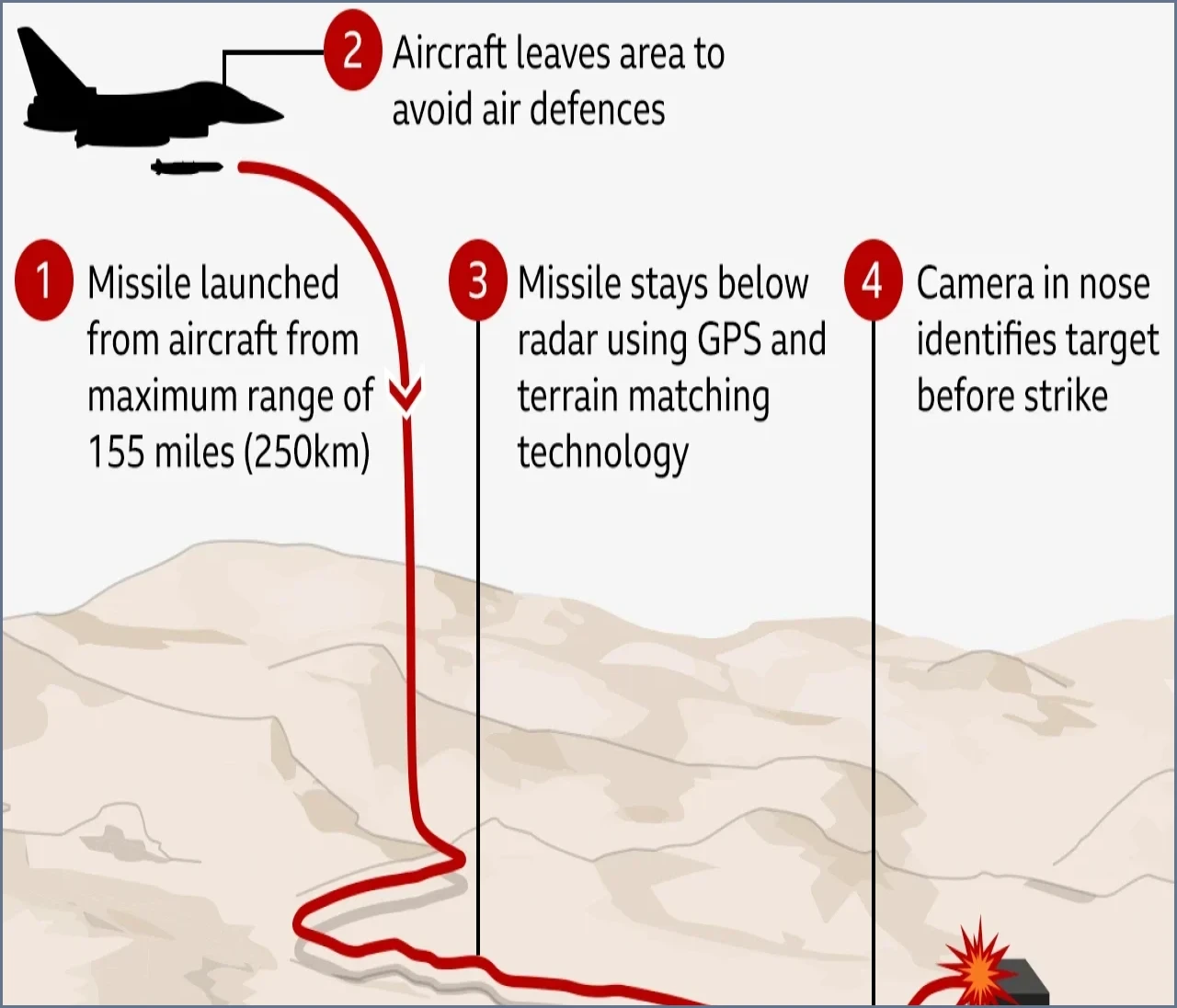
During a meeting in Kyiv on Monday, UK Prime Minister Andy Burnham met with Ukrainian President Volodymyr Zelensky to discuss defense cooperation, including a plan for the UK to hand over blueprints for its British-French designed Storm Shadow cruise missiles. This decision follows a similar move by France, aiming to allow Ukraine to manufacture the high-precision weapons domestically. However, defense experts suggest that this transfer, on its own, will not dramatically alter the course of the conflict.
Ukraine has already received and deployed Storm Shadow and SCALP missiles supplied by Britain and France, using them to strike military targets located inside Russian territory. Despite their effectiveness, these weapons are not new, having been developed in the 1990s, and they carry a high price tag of approximately £1 million per unit. Furthermore, their manufacturing relies on complex global supply chains, and they have historically been produced during peacetime at relatively low rates, numbering in the hundreds rather than the thousands.
Even with access to the technical blueprints, Ukraine is expected to face significant hurdles in sourcing the necessary components. Establishing domestic production of such complex cruise missiles could take months or potentially years. According to military analysts, "Given that Ukraine has already operated both Storm Shadow and SCALP, familiarity with the missile may help speed the overall process, but this will also be dependent on the extent and pace at which local assembly can be established."
The situation highlights a broader challenge: copying Western weapons production methods, which are designed for peacetime, is not a viable strategy for winning a protracted war. This is a realization that NATO nations are now beginning to share. Historically, Britain and many of its allies have focused on producing small quantities of highly advanced, expensive missiles. However, these stockpiles would quickly be depleted in a long-term conflict. This vulnerability was demonstrated in a 2021 NATO wargame, where Gen Ben Hodges, the former head of the US Army in Europe, noted that the UK military ran out of key weapons within a matter of days.
In response to these strategic lessons, the UK military has shifted its approach and is no longer purchasing Storm Shadow missiles for its own forces. Instead, under an initiative known as Project Brakestop, the UK is rapidly developing its own long-range cruise missiles. These new weapons are designed to be free of foreign components and are projected to cost less than half the price of a Storm Shadow. Project Brakestop is moving at a break-neck pace, with the UK hoping to have the new cruise missile ready by the end of the year, alongside a promise to supply it to Ukraine.
While the West adapts, Ukraine has already demonstrated how to mass-produce relatively cheap weapons necessary for a long, drawn-out conflict. At the beginning of the war, Ukraine's armed forces were heavily reliant on old Cold War-era Soviet weaponry. Although a slow supply of Western weapons helped the country adapt, Ukraine now produces 70% of its own weapons domestically.
A key driver of this self-sufficiency has been the rapid development of drone technology. This ranges from small, first-person view (FPV) one-way attack drones deployed on the front lines to larger, long-range drones capable of striking deeper into Russian territory than Storm Shadow missiles can reach. Kyiv is currently on track to manufacture 10 million drones by the end of this year. By utilizing mass-produced Chinese parts, Ukraine can build these systems far more cheaply than Western nations, whose equivalent drones can be twice as expensive due to policies shunning Chinese components.
Nonetheless, there remain critical weapon systems that Ukraine cannot easily produce on its own. These range from fast fighter jets to the most urgent requirement: interceptor missiles capable of shooting down Russian ballistic missiles. Currently, the US-made Patriot interceptor is the most effective weapon for this task. However, Ukraine has almost entirely run out of them, allowing Russian ballistic missiles to penetrate Ukrainian air defenses with ease.
These Patriot interceptors are in short supply globally, a situation exacerbated by America's war in Iran. They are also highly expensive, costing around £3 million per missile, and production rates have remained slow. While the US plans to double its production rates from roughly 600 Patriot missiles per year to 2,000, achieving this target will take several years. Even if Ukraine received authorization to build Patriots domestically, experts estimate it would take at least a year to establish production, and the country would still be dependent on the same sophisticated, high-demand global components.
To address this gap, Ukraine has launched Project Freya, a program supported by European partners to develop its own interceptor missiles. However, engineering a high-speed missile capable of intercepting targets traveling at thousands of miles per hour presents massive technological, financial, and time-consuming challenges. While Ukrainian manufacturers have proven to be fast learners—with the local company Fire Point currently developing its own ballistic missiles for potential deployment next year—Russia has already accelerated its own ballistic missile production to approximately 100 units per month. Ultimately, developing sophisticated defense systems requires significant time and money, both of which are in short supply for Ukraine, meaning the UK's offer of Storm Shadow blueprints will not provide an immediate solution to Kyiv's most pressing defense needs.