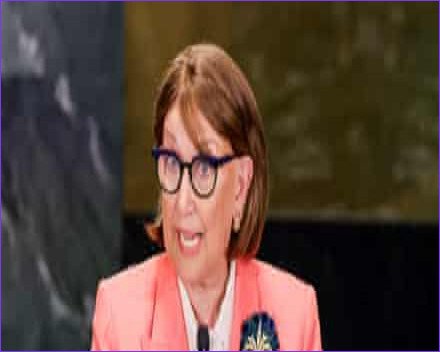
The search for the next United Nations secretary general remains deadlocked following a ninth straw poll that failed to produce a consensus candidate. As the race to replace António Guterres enters its 100th day—marking the longest selection process in UN history—the United Kingdom and France have reportedly exercised their power as permanent members of the Security Council to effectively veto the United Arab Emirates’ candidate, Lana Nusseibeh.
Reports suggest the opposition from London and Paris is primarily driven by the UAE’s alleged connections to atrocities in the ongoing conflict in Sudan. Nusseibeh, who entered the race as a late candidate, received seven positive votes but faced three negative votes from the P5 members. Her candidacy has faced significant backlash, with nearly 70 British MPs urging UK Foreign Secretary Ed Miliband to reject her, arguing she is not a credible candidate due to her history of dismissing UN reports linking the UAE to the conflict. While the UAE denies these claims, UN panels and rights organizations maintain that the country has provided weapons and hired mercenaries for the Rapid Support Forces, a group accused of genocide in Darfur. Nusseibeh, currently on leave from her ministerial role, has stated that the Sudan conflict serves as a litmus test for the incoming secretary general.
The search for a new chief diplomat for the world remained deadlocked on Friday after the UN security council’s ninth straw poll once again did not settle on a candidate. Costa Rican diplomat Rebeca Grynspan is the frontrunner in the process. Although she secured 10 votes in the latest poll—surpassing the nine required—she has yet to overcome the P5 requirement of unanimous support, having received two negative votes from within that group, believed by observers to be the United States and Russia. He said the Costa Rican, who is the head of the UN conference on trade and development (UNCTAD), needed to win over the remaining two P5 members resisting her candidacy. If Grynspan can secure the support of the remaining opposing permanent members, she would become the first woman and the first Jewish person to lead the organization. She has previously highlighted her family's background as refugees from the Second World War as a foundation for her commitment to peace. “It is all speculation at this stage, but I would speculate that it’s not impossible. It’s not easy because the fact is that she’s been trying for a while to peel off American opposition, but she is the undisputed frontrunner: other candidates face a steeper hill.”
The election process remains highly complex, requiring candidates to navigate the interests of the 15-nation Security Council. China has also signaled opposition to Nusseibeh, citing an unwritten convention that the secretary general’s position should follow a geographic rotation, suggesting it is currently the turn of Latin America or the Caribbean to hold the post. With Guterres’ term ending on December 31, the Security Council is scheduled to hold another vote next week.
Elected members vote with white ballots, permanent members vote with red ballots. Voting is never disclosed but tallies are distributed through unofficial channels.
Daniel Safran-Hon, a senior adviser at the International Peace Institute who formerly worked in the UN secretary general’s executive office, said Grynspan was the “undisputed frontrunner”.