Football’s two most powerful bodies are at war (Getty). At the start of the emergency meeting that saw UEFA drop what was described as a nuclear bomb on Gianni Infantino’s plans to privatize the World Cup, UEFA president Aleksander Ceferin uttered a phrase that would be echoed several times over the next two hours.
This conflict may apply not just to the project and Infantino’s leadership of FIFA, which is now under serious threat, but also to the wider football world.
Language about weapons is arguably appropriate because this is now a war, and it is one that football has long needed. Infantino’s move is unprecedented and would break what international football is, but it did not come out of a vacuum; it emerged from a 40-year commercialization of the game, in which UEFA has been complicit.
Even that commercialization has its limits, as evidenced by the announcement that UEFA countries will boycott all FIFA competitions if Infantino presses ahead with this plan. Almost everyone involved can see the real cost here beyond Infantino’s promises of $40 million to associations who support him. It is not just about selling off parts of the game, but allowing the most nakedly capitalistic influences in to have a considerable say on every decision.
UEFA’s overtly collective stance tests some of the game’s structures. One reason figures around Infantino were confident in this plan was the nature of FIFA politics, where money distribution acts as a vote-returning mechanism, and this was more money than most had ever seen, potentially allowing smaller associations to clear debts.
Before the UEFA meeting, the leadership was conscious of how persuasive Infantino’s plans were to countries with fewer resources. Consequently, UEFA began to work on cracking the whip. The prospect of FIFA’s plans—essentially selling off football’s crown jewels in perpetuity—hardened resolve. By the time the 2:00 PM meeting started, with the vast majority of representatives phoning in via video call, the spirit was one of unity.
After Ceferin opened proceedings, insisting that this was not about him and Gianni and that he never wanted a fight with FIFA, he pointed to the simple reality that the global body already has all the money it needs.
FA chair and FIFA vice-president Debbie Hewitt was the next major figure to speak and was the first to mention the boycott, while criticizing governance under Infantino’s leadership. The speech received praise from other members, something all the more notable since England’s reticence had previously been noted; the FA is in line to host the 2035 Women’s World Cup and is said to want another.
The boycott will apply to all FIFA competitions, which is damaging for Infantino since much of his plan relies on the global body realizing the immense value of the European club game. That is what is most attractive to his investors, too. The 2029 edition of the Club World Cup has not even been agreed upon yet and currently looks some way off.
It is currently impossible to see how this can proceed, with the impact so substantial that it could well bring the Swiss-Italian official’s downfall. Numerous officials at the meeting questioned his leadership, which was described as everything from dictatorship behavior to not what you would expect from a true leader.
Another FIFA Executive Committee member, Razvan Burleanu, directly pointed the finger at Infantino, while Wales’ Noel Mooney—who stressed that individual federations still need funding—asked if there could still be faith in Infantino.
This is now open season in a way that was previously unheard of, at least in public. UEFA and other confederations are already looking at prospective challengers for the next election.
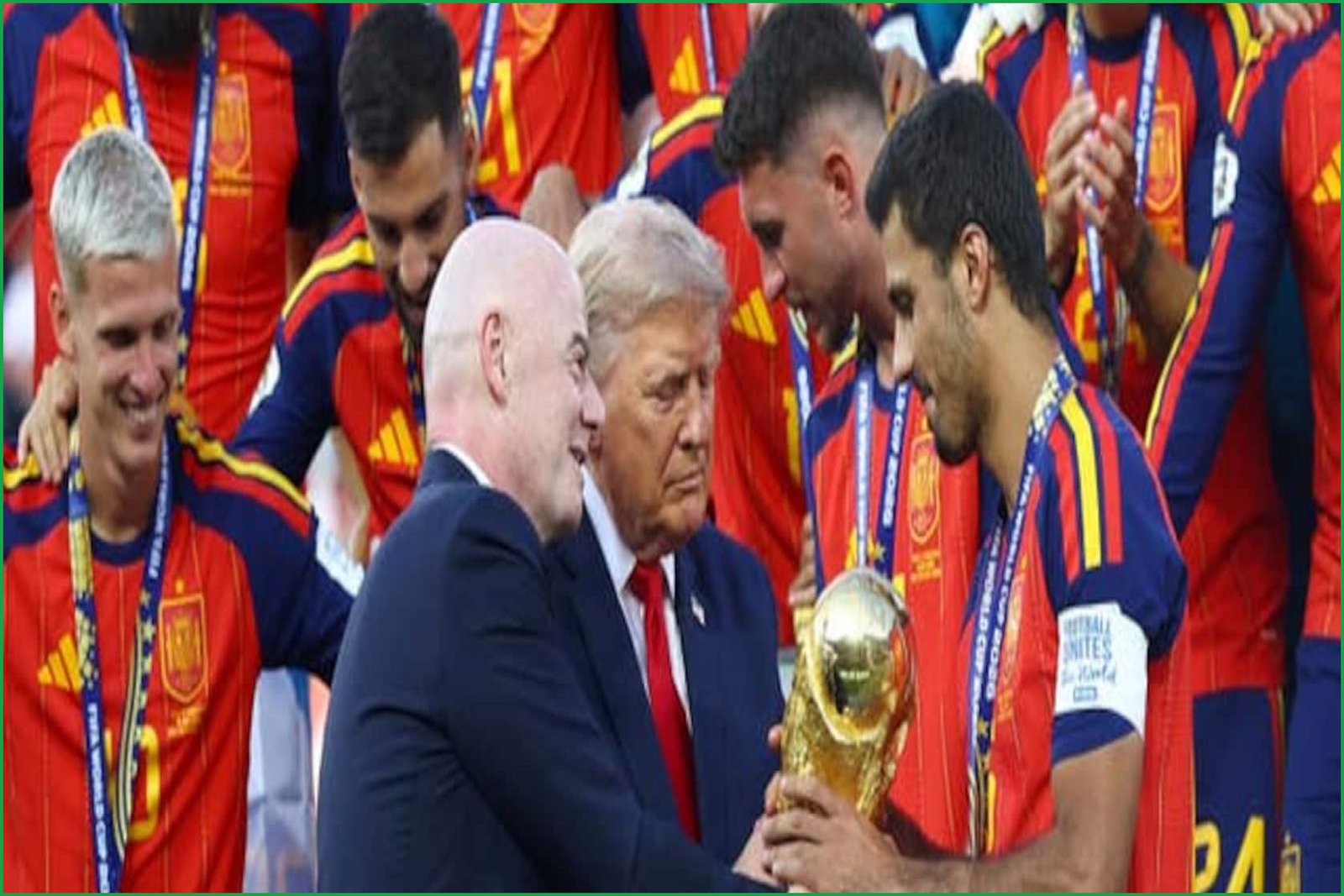
It is impossible not to conclude that Infantino has overreached, resulting from overconfidence that came from being in the World Cup and Donald Trump bubble for so long. He had navigated the Folarin Balogun affair, ticket prices, hydration breaks, the FIFA peace prize, the delivery of the World Cup to Saudi Arabia by acclamation, and all manner of unilateral decisions and governance by fiat until he inevitably went too far.
Some have described this as the most unreal unforced error possible and the beginning of the end for Infantino. He is said to have confused support for another term with support for any decision. It is believed that some figures within CONCACAF are losing faith in his leadership. Another senior figure said the privatization plan was the straw that finally broke the wafer-thin peace pact since the Super League.
We are now into a potentially new world. Some nations, including those outside Europe, are beginning to wonder whether this might actually be the opportunity to break FIFA’s one-country one-vote structure and even such distinctive confederation separation. Whether one agrees with that or not, the entire system has long looked antiquated. The repercussions are going to be huge, and there may be unintended consequences.
That may apply to UEFA, too. Despite the show of unanimity, some smaller nations like Azerbaijan say they would have liked more of a chance to speak. Around 50–60 percent of the countries got an opportunity to do so, and the figure that offered the most qualified view was Scotland. Others believe those close to Infantino are going to try and pick off any vulnerabilities.
The UEFA meeting did not actually come to a formal vote. Towards the end, Ceferin simply asked whether everyone backed the position to boycott. There was no show of hands, so UEFA was free to issue its statement. As to what happens next, this has the potential to blow the current structure up. This crisis has been likened to the Super League and is arguably even bigger due to its global complications.
Paris Saint-Germain president Nasser Al-Khelaifi, who was elevated to the top of the European Football Clubs body, is currently being mooted as a possible challenger to Infantino. We may be into a new world, but still with so many old themes.
Predicting which clubs the summer's biggest free agents will sign for
Tottenham: Why James Maddison was not awarded a penalty against Leeds as Premier League issue statement