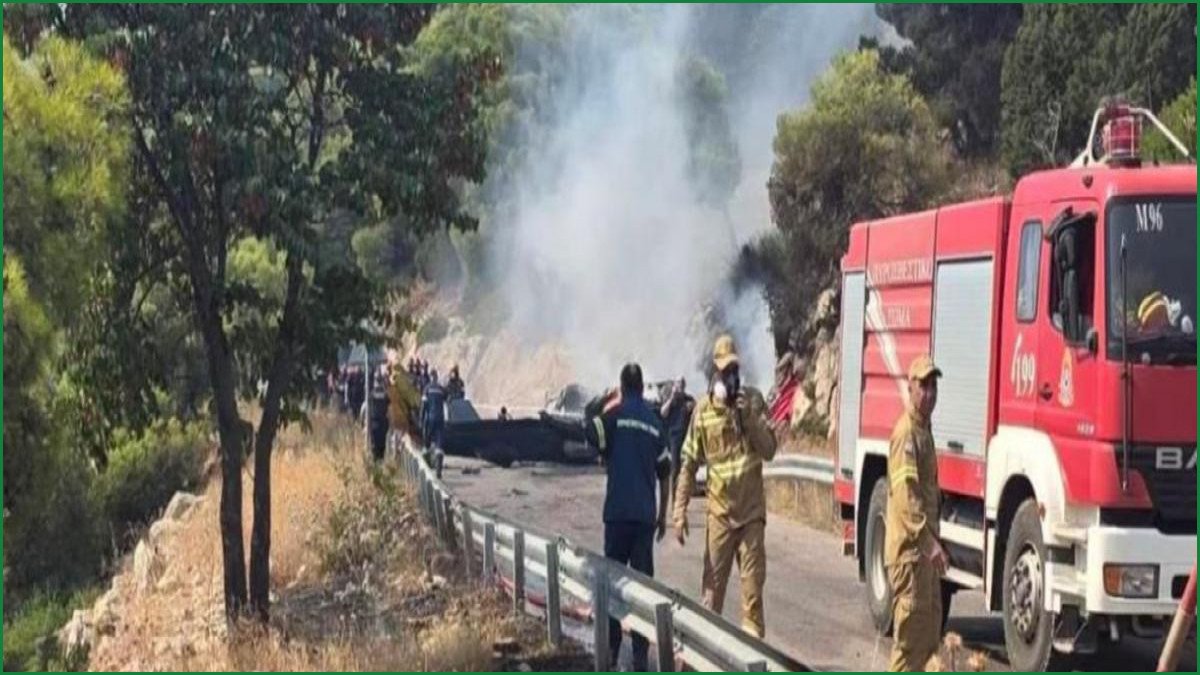
Two crew members have been killed following a mid-air collision involving two firefighting helicopters in Greece. The fatal accident occurred on Sunday while the aircraft were engaged in efforts to suppress a large wildfire burning along the Attica-Boeotia border.
The victims have been identified as a Danish pilot and a Greek fire service liaison officer. The second helicopter involved in the collision managed to perform an emergency landing in an area characterized by low vegetation. The two individuals aboard that aircraft—a British pilot and a Greek co-ordinator—survived the incident. According to reports from the civil protection ministry, both survivors sustained minor injuries and were transported to a hospital, where they were placed under observation for 24 hours as a standard precaution.
The British survivor, whose name has not been released, was identified as a private pilot hired specifically for the wildfire season. Officials confirmed he was not part of any formal exchange program between the UK and Greece, and his presence was not the result of an official request for assistance from Athens. The two survivors were able to report the collision immediately, which allowed them to guide rescue teams to the crash site.
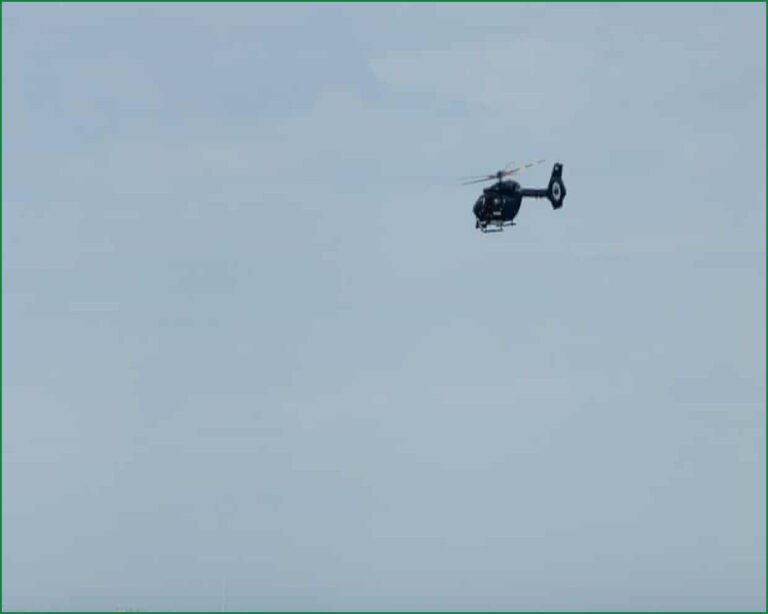
Video footage of the disaster, which took place approximately 65 km (42 miles) west of Athens, shows one of the Bell helicopters striking the propellers of the other. The impacted aircraft subsequently caught fire and crashed into a ravine. In response to the tragedy, Greek Prime Minister Kyriakos Mitsotakis expressed his profound sorrow and extended his condolences to the families of those lost, stating that the incident fills the nation with grief. Following established safety protocols, the civil protection ministry has ordered all Bell helicopters across the country to be grounded.
The collision occurred during a period of intense firefighting activity across Greece. Over the past 72 hours, more than 500 firefighters have been engaged in what has been described as a titanic battle against flames in areas including Porto Germeno, Psatha, Fokida, Megara, and Kefalonia. While most wildfires are sparked by human activity, climate change is increasingly cited as a factor that creates conditions conducive to rapid fire spread, following a mild, wet winter that encouraged vegetation growth before a series of heatwaves dried out the fuel.
While firefighting continues with Erickson Air-Crane and Chinook helicopters, as well as Canadair water-bombing aircraft, the accident serves as a grim reminder of the risks faced during the current European wildfire season, which has also seen devastating blazes in France and Spain.
Meanwhile, Greece's Ekathimerini news website said the two survivors immediately reported the collision, guiding rescuers to the crash site.
Thousands evacuated in Crete as wildfires threaten tourist resorts