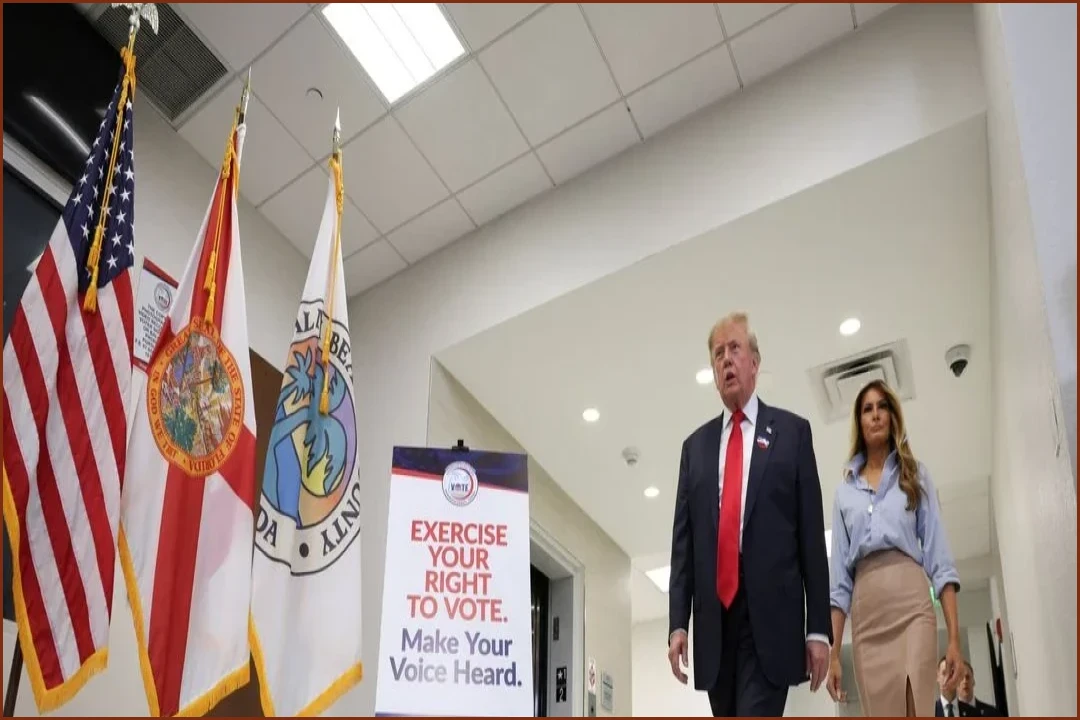
US President Donald Trump has officially cast his early vote in his home state of Florida ahead of the November 3 midterm elections. Accompanied by his wife, Melania, the president participated in early voting shortly before heading to a scheduled campaign rally in Georgia. The move comes as the Republican Party works to maintain its hold on Congress with Election Day less than two weeks away.
As the president exercised his right to vote, the Department of Justice (DOJ) launched a significant effort to scrutinize state voter rolls. Federal officials have issued warnings to election authorities across California, cautioning that they could face criminal exposure and federal investigations if they fail to cooperate in identifying suspected noncitizens or refuse to segregate mail-in ballots pending citizenship verification.
In letters dated Friday, the DOJ provided local officials with a 48-hour window to assist in confirming the citizenship status of individuals listed on federal government records. Bilal Essayli, the first assistant US attorney for the Central District of California, cautioned that processing ballots without such verification could lead to "significant federal scrutiny and legal exposure." He further warned that officials who knowingly count these ballots risk becoming "aiders and abettors to a federal crime."
The directives are based on a list of 20,000 individuals whom the Justice Department alleges are noncitizens currently registered to vote. Essayli instructed officials that for any individual whose status cannot be immediately confirmed, they must "instruct the appropriate elections official to segregate — not cancel — those individuals' vote-by-mail ballots until their citizenship status can be determined."
According to federal data, the suspected noncitizens are distributed across several counties, including 1,754 in Orange County, 1,355 in Riverside County, 1,133 in San Bernardino County, 407 in Contra Costa County, 334 in Ventura County, 180 in Santa Barbara County, and 63 in San Luis Obispo County. The New York Times reported that all 58 California counties received versions of these letters, following an initial warning sent to Los Angeles County on October 16.
This federal initiative aligns with broader White House efforts to compel federal agencies to expedite reviews of voter rolls in at least 47 states, using information obtained from the Department of Homeland Security. However, California officials have rejected the demands, noting that federal agencies have failed to provide evidence explaining how these individuals were identified. Dawn Kruger, a spokesperson for the Contra Costa County Elections Department, criticized the mandate, stating, "This letter came to us 11 days before Election Day with an unenforceable 48-hour deadline."