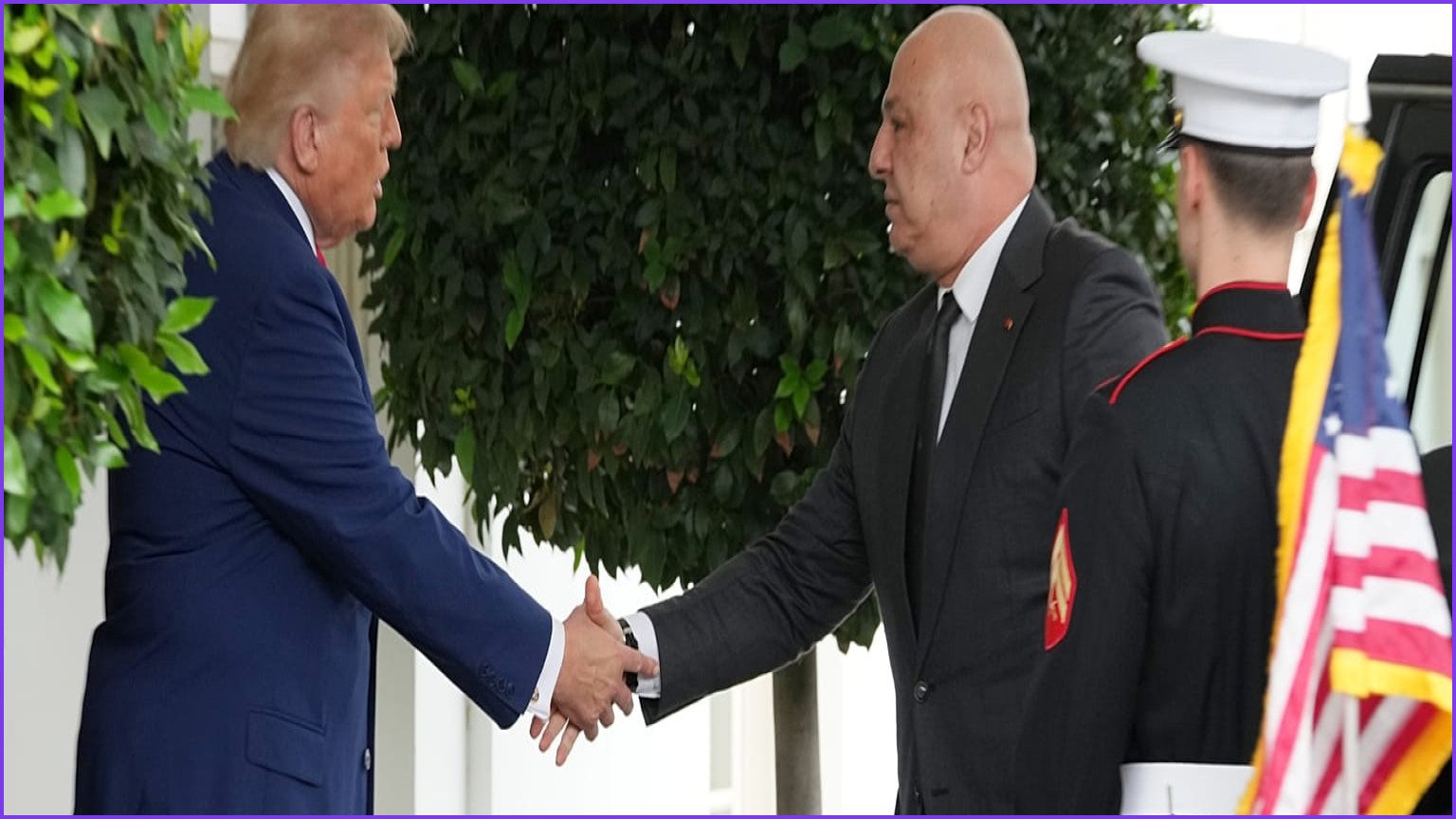
US President Donald Trump hosted Lebanese President Joseph Aoun at the White House on Tuesday, offering assurances of American support for Lebanon’s long-term stability. Aoun visited Washington seeking aid following months of intense conflict between Israel and the Iran-backed militant group Hezbollah. During the meeting, Trump stated that Lebanon has been "very badly treated" and promised that his administration would ensure the country is "properly treated and treated with the respect it deserves." While the President did not provide specific details on the nature of the assistance, he reiterated, "We’re gonna help it a lot."
In response to the pledge, President Aoun expressed his gratitude by writing in the White House guest book about his appreciation for the friendship between the two leaders. He specifically highlighted his support for the United States' commitment to Lebanon’s sovereignty, its legitimate institutions, and the Lebanese Armed Forces. During their exchange, Aoun characterized Trump’s vision as one of "peace" and described it as his "legacy," a sentiment with which Trump agreed. The meeting also featured a lighter moment where Trump complimented Aoun, joking that he "knows how to get to me" and suggesting that the Lebanese leader could now "have anything."
When questioned about the status of a full Israeli military withdrawal from Lebanon, Trump indicated that Israel is "in the process of doing that" and is currently "redeploying," though he offered no further elaboration. Lebanon is seeking the withdrawal of Israeli troops from large areas of the south to allow the Lebanese military to assert control over regions previously dominated by Hezbollah. As a step toward this goal, the US has noted that a pilot operation has commenced in three villages to facilitate the deployment of the Lebanese army.
Despite the focus on Lebanon, the US remains preoccupied with escalating tensions involving Iran. On Wednesday, Trump noted that he currently has little interest in pursuing talks with Iran’s leadership to resolve the broader regional conflict.