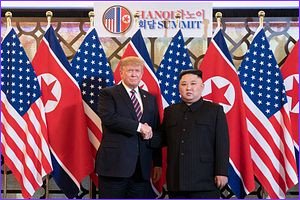
The decision by U.S. President Donald Trump to scale back the recent Ulchi Freedom Shield joint military exercises on the Korean Peninsula has signaled a clear effort to restart diplomatic engagement with North Korean leader Kim Jong Un. However, this goodwill gesture did not receive praise from Pyongyang. Instead, the North Korean government issued a sharp rebuke, reiterating its stance that it holds no interest in resuming talks as long as Washington maintains denuclearization as a primary policy goal. This exchange has reignited a deep debate over the future of U.S. policy toward North Korea, especially as Trump continues to make diplomatic overtures in hopes of securing a meeting with Kim on the sidelines of the upcoming APEC summit in November.
Within foreign policy circles, the dispute has divided experts. Some argue that the United States must accept reality, abandon denuclearization as an unrealistic goal, and shift toward a pragmatic arms control framework. Conversely, critics of this approach contend that making such a concession would severely damage the global nonproliferation regime and strain vital relationships with regional allies. Rather than viewing the issue through a simple binary lens, analyzing the situation requires a careful look at the constraints, motivations, and strategic interests of both Washington and Pyongyang.
The current diplomatic push began on August 16, when Trump announced the shortening of the annual South Korea-U.S. Ulchi Freedom Shield military exercises. Trump reiterated his long-held view that the joint drills are overly expensive, adding that they send an "inappropriate and hostile" signal to North Korea. He also characterized the Kim regime as having been "unthreatening and respectful" throughout his presidency.
Pyongyang quickly rejected the gesture. On August 19, Kim Yo Jong, the high-ranking sister of the North Korean leader, released a statement calling the reduction of the military exercises "unworthy of comment" and asserting that North Korea has "no interest in it at all." She emphasized that the fundamental nature of the drills remains provocative and offensive. Two weeks later, an unnamed spokesperson for the North Korean Foreign Ministry reinforced this position, stating that regional détente is impossible to expect as long as the United States remains committed to the complete denuclearization of the Democratic People's Republic of Korea (DPRK).
Despite this immediate pushback, there are indications that the administration's approach could evolve. The White House has previously shown a willingness to depart from status quo foreign policies to pursue diplomatic openings with authoritarian regimes. This has led to speculation that Washington might consider moving away from a denuclearization-first policy, opting instead for risk reduction and arms control measures, or even dropping denuclearization as an explicit objective altogether.
However, the exact nature of North Korea's demands remains unclear. While the Kim regime has made dropping denuclearization a clear precondition for talks, it has not specified what concrete actions it expects from the United States to prove this policy shift. Would it require a formal public declaration, the rescinding of United Nations Security Council resolutions, or other specific measures?
Pyongyang's stance on its nuclear program has hardened significantly following the brief period of diplomacy in 2018-19. After the failure of Kim Jong Un and Trump to reach an agreement at the February 2019 Hanoi Summit, which began on Feb. 27, 2019, Pyongyang hardened its stance against denuclearization. By December 2019, North Korean Ambassador to the United Nations Kim Song declared that denuclearization was completely off the negotiating table. Since then, official statements have consistently maintained that North Korea will never give up its nuclear weapons.
Even so, North Korea has kept a small diplomatic window open by continuing to praise the personal relationship between Kim Jong Un and Trump, noting Kim's "good memories and feelings" toward the U.S. president. While a warm personal dynamic does not automatically translate into formal state-level agreement, it serves as a signal that Washington might leverage to pursue alternative diplomatic paths.
The debate in the United States is increasingly shaped by the reality of North Korea's advanced nuclear capabilities. Decades of diplomatic efforts and economic pressure have failed to prevent Pyongyang from building a substantial nuclear arsenal. Trump recently stated that North Korea possesses 57 warheads, while the South Korean Ministry of National Defense estimates the regime's stockpile to be between 80 and 120 warheads.
Abandoning the goal of a nuclear-free Korean Peninsula, however, carries profound international and domestic risks. Globally, a formal shift in U.S. policy would reverberate through the nonproliferation framework, impacting the Non-Proliferation Treaty (NPT) Review Conference and the International Atomic Energy Agency (IAEA). Accepting North Korea as a de facto nuclear-armed state could undermine the NPT and encourage other nations to pursue their own nuclear ambitions.
Furthermore, the extensive web of international sanctions against North Korea presents a major hurdle. Reversing or modifying United Nations Security Council sanctions would require formal council action, which could easily be blocked by a veto from France, the United Kingdom, or other permanent members of the Security Council.
U.S. allies in the region are also deeply invested in the denuclearization goal. South Korea's current "END" strategy—standing for Exchange, Normalization, and Denuclearization—places denuclearization as the final step of a long-term process, but does not abandon it entirely. Meanwhile, Japan views the complete denuclearization of North Korea as a fundamental pillar of its national security. Any unilateral shift by Washington would force Tokyo and Seoul to reassess their security alignments, potentially damaging trilateral cooperation.
Domestic politics in the United States add another layer of complexity. While the Trump administration has previously executed controversial foreign policy decisions, the upcoming midterm elections could result in a Democratic-controlled Congress, which would seek to constrain executive action. Additionally, opposition to dropping denuclearization exists across the political spectrum, raising serious questions about the long-term sustainability of such a policy shift. Because Trump cannot run for re-election, a change in the presidential administration after 2028 could lead to a complete reversal of any agreements made without broad political consensus.
For any future dialogue to yield meaningful results, the United States and its allies must approach the denuclearization debate with greater nuance. A logical starting point would be to clarify what North Korea expects when it demands the removal of denuclearization as a policy goal. It is also essential to identify the two sides’ goals if preconditions are met and talks happen. Right now, there is no clear indication of what the White House would be seeking to achieve through another summit between Trump and Kim Jong Un. Conversely, after more than 30 years of focusing on denuclearization, it is unclear what the ultimate goals would be. Without a realistic, durable strategy that balances risk reduction with long-term political sustainability, a unilateral policy shift risks creating severe domestic and international backlash without securing lasting peace.
You have reached the limit of 2 free articles this month.
These knowns and unknowns reveal a few key considerations for the denuclearization debate.