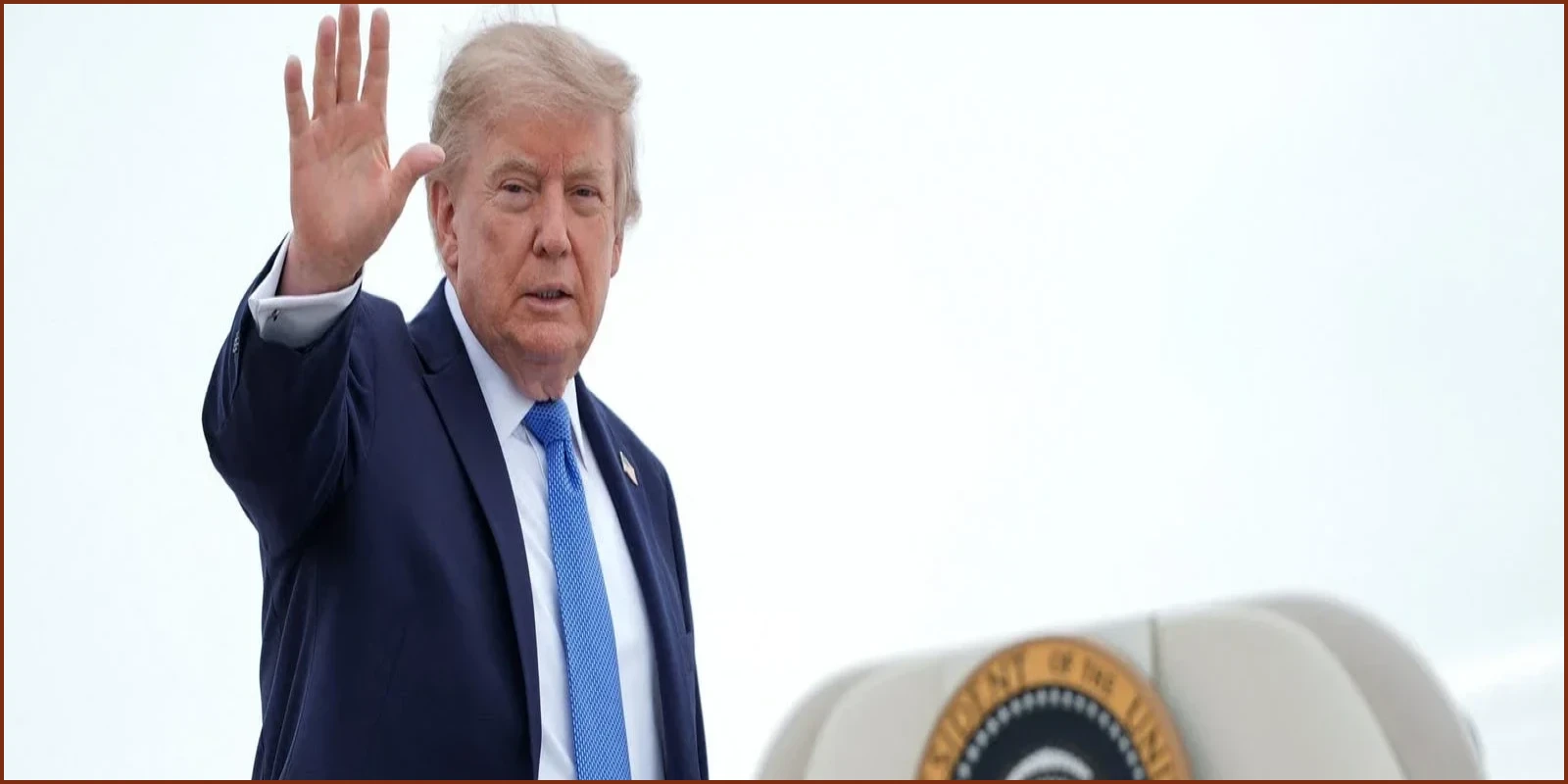
WASHINGTON — In an unprecedented move to assert his influence over the upcoming midterm elections, President Donald Trump is organizing a first-of-its-kind party convention in Dallas, Texas. However, as the Republican Party prepares to gather, political strategists and former lawmakers are warning that the high-profile event could backfire for candidates locked in tight battleground races.
The convention is scheduled to take place on September 9 and 10 at a Dallas sports arena, arriving immediately after Labor Day as the fall campaign season begins in earnest. While organizers pitch the event as a premier opportunity to unify the party, sharpen its policy message, and mobilize disengaged voters, some Republicans question the wisdom of battleground candidates leaving their home states to attend. With Trump’s national approval rating hovering at just 40% in the Real Clear Politics average of recent polls, some party insiders argue there is little political upside to being too closely aligned with the president in competitive districts.
Former U.S. Representative Fred Upton, a Michigan Republican who served 36 years in a swing district before retiring in 2022, expressed strong skepticism about candidates traveling to Texas. Upton, who voted to impeach Trump and later endorsed Democratic presidential candidate Kamala Harris, advised that candidates should prioritize local campaigning. "If I was in office running for re-election I would not be taking time going to Texas," Upton said. "I’d be connecting with voters. I’d have events . . . at home." He added that candidates running in competitive swing seats must demonstrate independence from Trump to avoid a damaging political backlash, warning that "otherwise, the tidal wave will be pretty big."
Veteran Republican strategist Charlie Black, who has advised multiple presidential campaigns, shared similar doubts regarding the event's utility for vulnerable candidates. "I can’t think of very many candidates whom it would help," Black remarked. Other Republican strategists, including a former Trump administration official and an active GOP member of Congress, also questioned the strategic value of the gathering. The lawmaker noted that candidates would likely only benefit from the trip if they were using the opportunity to host lucrative fundraisers in Dallas.
To gauge candidate attendance, inquiries were sent to eight Republican Senate candidates running in the country's most competitive battleground states: North Carolina, Georgia, Michigan, Maine, Alaska, Iowa, Texas, and Ohio. Representatives for Michigan Senate candidate Mike Rogers and Ohio Senator Jon Husted confirmed their plans to attend. However, spokespeople for the majority of the other candidates did not respond to multiple inquiries.
Among those who did not respond was Maine Senator Susan Collins, who is seeking a sixth term in a state that has consistently voted for Democratic presidential candidates since 1988. Collins has repeatedly sought to distance herself from Trump during her campaign. She recently chose not to attend an event held by Vice President JD Vance in Brewer, Maine, which was aimed at highlighting the administration's efforts to combat state-level fraud.
Despite the hesitation from swing-state candidates, convention organizers maintain that the event will be highly successful. Republican National Committee Chair Joe Gruters stated that there is a "pretty full list of candidates and elected officials" set to converge on Dallas, noting that nearly two-thirds of Republican senators and 80 House members have already indicated their attendance. When asked about candidates in marquee Senate matchups, however, Gruters acknowledged the uncertainty, saying, "I don’t know," and characterizing the expected turnout among those specific candidates as "probably a mixed bag."
Gruters defended the convention as a vital tool to heal divisions following a series of bruising primary elections and to energize the conservative base. He stated that if candidates decide they are better off staying in their home districts to campaign, "that’s great." However, he added: "But if you want to be part of history… we’re going to defy history and we’re going to win these midterms and this is the official start of us planting our flag in our efforts to do that."
The RNC released the official convention program, which schedules Vice President JD Vance to speak on September 9, followed by Trump delivering the keynote address on September 10. While no other speakers have been officially announced—with Gruters suggesting some names might not be revealed until the day of the event—the schedule lists policy topics including border enforcement, tax cuts, and healthcare affordability. The program also reserves dedicated time each evening for a "candidate showcase."
The stakes for both parties are exceptionally high, with control of Congress resting on a razor-thin margin. Republicans currently hold a 53-47 advantage in the Senate and a 218-212 majority in the House of Representatives. The nonpartisan Cook Political Report currently rates 69 House races and 10 Senate contests as competitive, with the remaining seats considered safe for either Democrats or Republicans.
For many Republican candidates, the decision to attend is complicated by their deep ties to the president. Many secured their party's nominations thanks to Trump's endorsements and may fear facing his political wrath if they skip the event. Trump's early endorsements propelled Senate nominees to primary victories in battleground states like Iowa, Michigan, and North Carolina, and his late endorsement helped secure the Texas Senate nomination for Attorney General Ken Paxton. In Georgia, Trump did not formally endorse in the Senate primary, but the winner, Representative Mike Collins, remains a staunch ally of the president.
Calvin Jillson, a political science professor at Southern Methodist University, observed that while Trump’s low public approval ratings may not actively benefit candidates in swing districts, they still feel compelled to show loyalty. Trump is well-known for publicly attacking those who break ranks. "So I don’t think people feel like they have much of an option other than continuing to hug Trump," Jillson said.