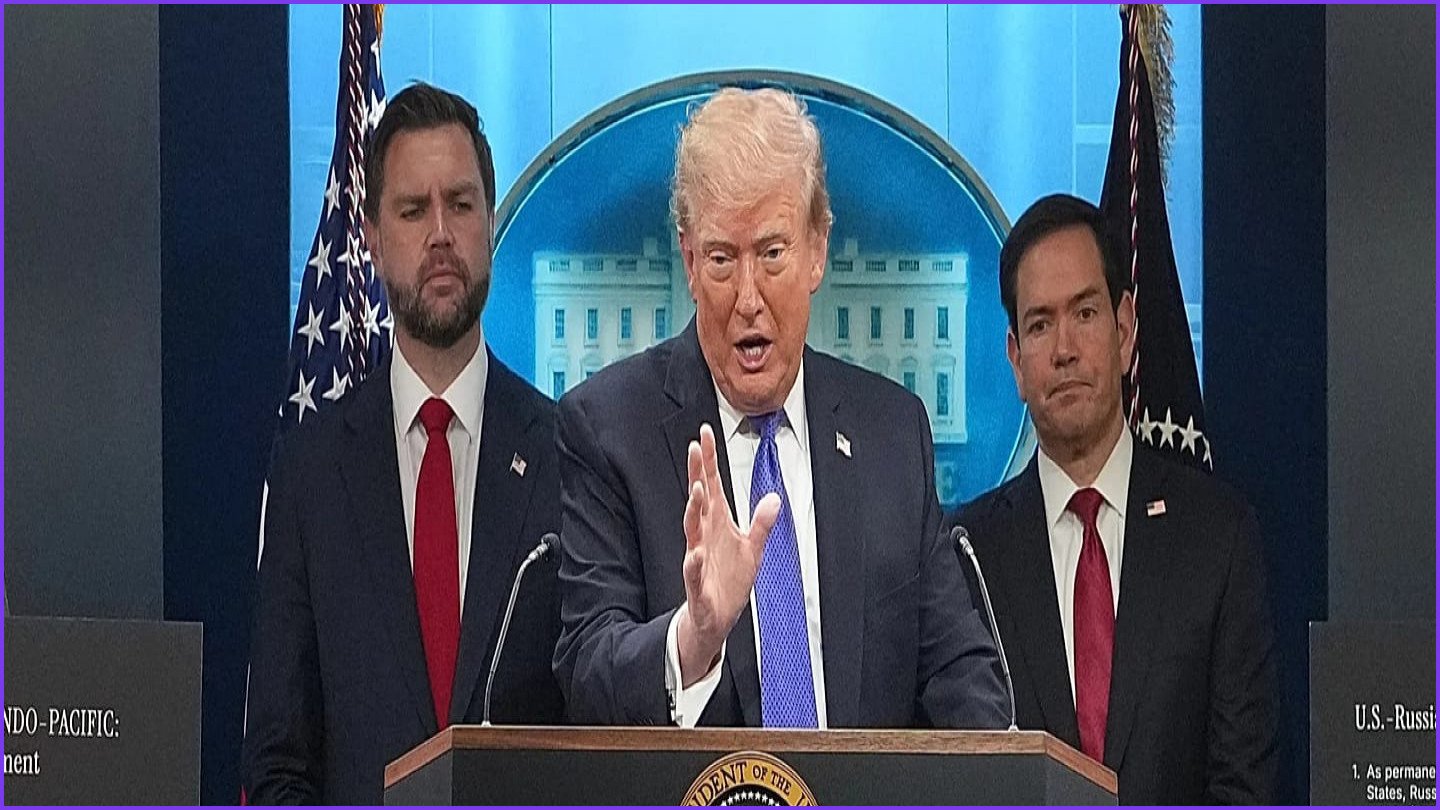
Following a four-day trip across Asia, US President Donald Trump defended his close relationships with Chinese President Xi Jinping and Russian President Vladimir Putin while presenting new trade proposals and commenting on ongoing global conflicts in Ukraine and Iran.
Addressing reporters after his return, Trump described his meetings with both leaders as a "positive" development and dismissed critics of his diplomatic rapport with Xi and Putin as "stupid." When questioned specifically on whether he considers the Russian leader a friend of the United States, Trump noted he could not speak on behalf of the entire nation, but characterized his personal relationship with Putin as "fantastic" and a "very good thing."
Trump highlighted Russia's nuclear capabilities as a source of leverage, remarking: "He's got lots of nuclear — he's second to us in nuclear weapons, it's very good. I think it, I think it gives us a lot of additional strength. And he's having a hard time right now because he's in a war that should have lasted one day and it's lasted for five years."
Regarding the conflict in Ukraine, Trump stated that Putin had expressed an intention to resolve the war "by diplomatic means." However, he pointed out that personal animosity between leadership in Moscow and Kyiv remains a major impediment to achieving peace. "The problem is President Zelenskyy and President Putin have tremendous hatred, and that's never easy," Trump remarked, referring to Ukrainian President Volodymyr Zelenskyy. "We're trying to help them […]. They don't know how to end it. They want to end it. They're both stuck in it."
Despite the ongoing fighting in Ukraine, leaders from the United States, Russia, and China signed a joint peace declaration during the trip to China. The agreement pledged to "maintain strategic stability and international security" while expressing shared intent to reform the United Nations and limit the reach of the International Criminal Court.
Turning to the Middle East, Trump addressed unconfirmed reports regarding Iran's nuclear capabilities, asserting that Washington would take a firm stance. "There is a rumor that they're building a dirty bomb," he told reporters. "We will not allow that." He also projected that US petrol prices would decrease further, though he acknowledged that fuel costs depend heavily on the resolution of the conflict with Iran. Nationwide petrol prices currently remain approximately €0.13 per litre higher than when Trump took office.
On international commerce, Trump detailed recent discussions with regional trade partners. He recalled telling Mexican President Claudia Sheinbaum, "We can't have you have a surplus. We're not going to let that happen." Regarding trade with Canada, Trump asserted that "more work remains to be done," accusing Ottawa of taking advantage of the US in trade arrangements for years.
Trump also outlined a new domestic tech policy proposal aimed at discouraging American corporations from expanding infrastructure abroad. He announced plans to introduce steep taxes on US businesses building data centers overseas, stating, "We're not allowing data centres to go into other countries," and warning that non-compliant firms would face "a tremendous tax." The President admitted he had not yet discussed the tax plan with his administration officials or provided further operational details, but urged Americans to back domestic data center developments in their local communities while negotiating beneficial terms with developers.