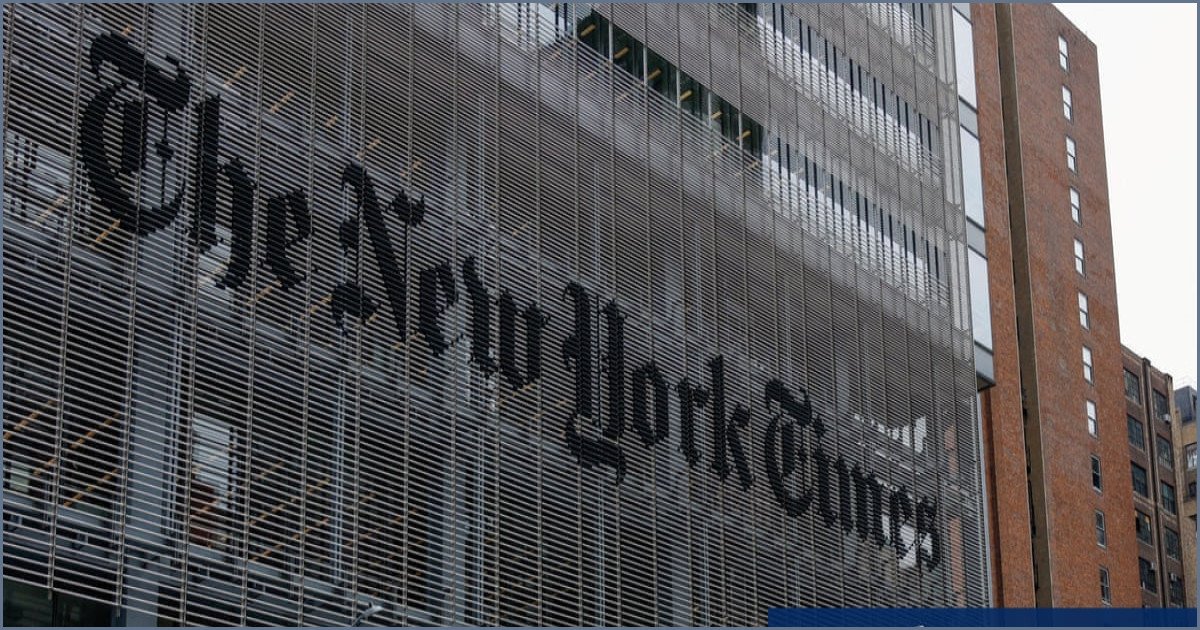
The Trump administration has pursued an aggressive strategy to identify confidential sources by seeking the phone records of several New York Times journalists and their relatives. According to a motion unsealed on Monday, these efforts were more expansive than previously disclosed, covering a timeline that extended well beyond the publication dates of the articles in question.
The investigation centers on reporting regarding the president's new Air Force One jet, a gift from Qatar that underwent a $400 million retrofit. While the aircraft recently entered service, reports indicated that Donald Trump opted to use an older model to depart a Nato summit in Turkey in early July. The Times reported, citing anonymous sources, that the decision was driven by Secret Service concerns regarding the new jet’s lack of advanced security features, such as antimissile capabilities. Trump has publicly denied these security claims.
Lawyers for the Times argued in a letter-motion that the Justice Department is using the investigation to "forage for information" rather than address specific leaks. They noted that two subpoenas requested records starting on January 1, 2026, long before the July 8 and 9 articles were published. The newspaper contends that the government acted in "bad faith" by failing to provide advance notice or conduct a serious initial investigation, violating its own internal protocols.
These phone record requests follow grand jury subpoenas served on July 10 to three journalists, which aimed to force testimony regarding their sources. US District Judge Arun Subramanian has scheduled a hearing for Thursday to address the newspaper’s challenge to those subpoenas and has frozen the enforcement of the phone record subpoenas in the interim. Additional phone record subpoenas were issued on July 14 and July 16, even after the Times had moved to quash the earlier grand jury efforts.
The government's requests included the personal phone records of a reporter’s mother, who is a mental health professional, and the spouses of two journalists, one of whom is a law firm general counsel. The Times' legal team described these actions as an "alarming pattern" and an abuse of the grand jury process that disregards First Amendment protections.
In response, the Justice Department maintained that it followed all regulations and conducted necessary investigative steps before issuing the subpoenas. Jay Clayton, the US attorney in Manhattan and nominee for director of national intelligence, testified during his confirmation hearing last Wednesday that the government had followed protocols and utilized the "least intrusive possible" methods. The Department further stated that while it was authorized to delay disclosure, it chose to alert the journalists' lawyers to allow for a legal challenge. This escalation follows an FBI search of a Washington Post reporter’s home and device seizure in January, drawing widespread condemnation from press freedom advocates.