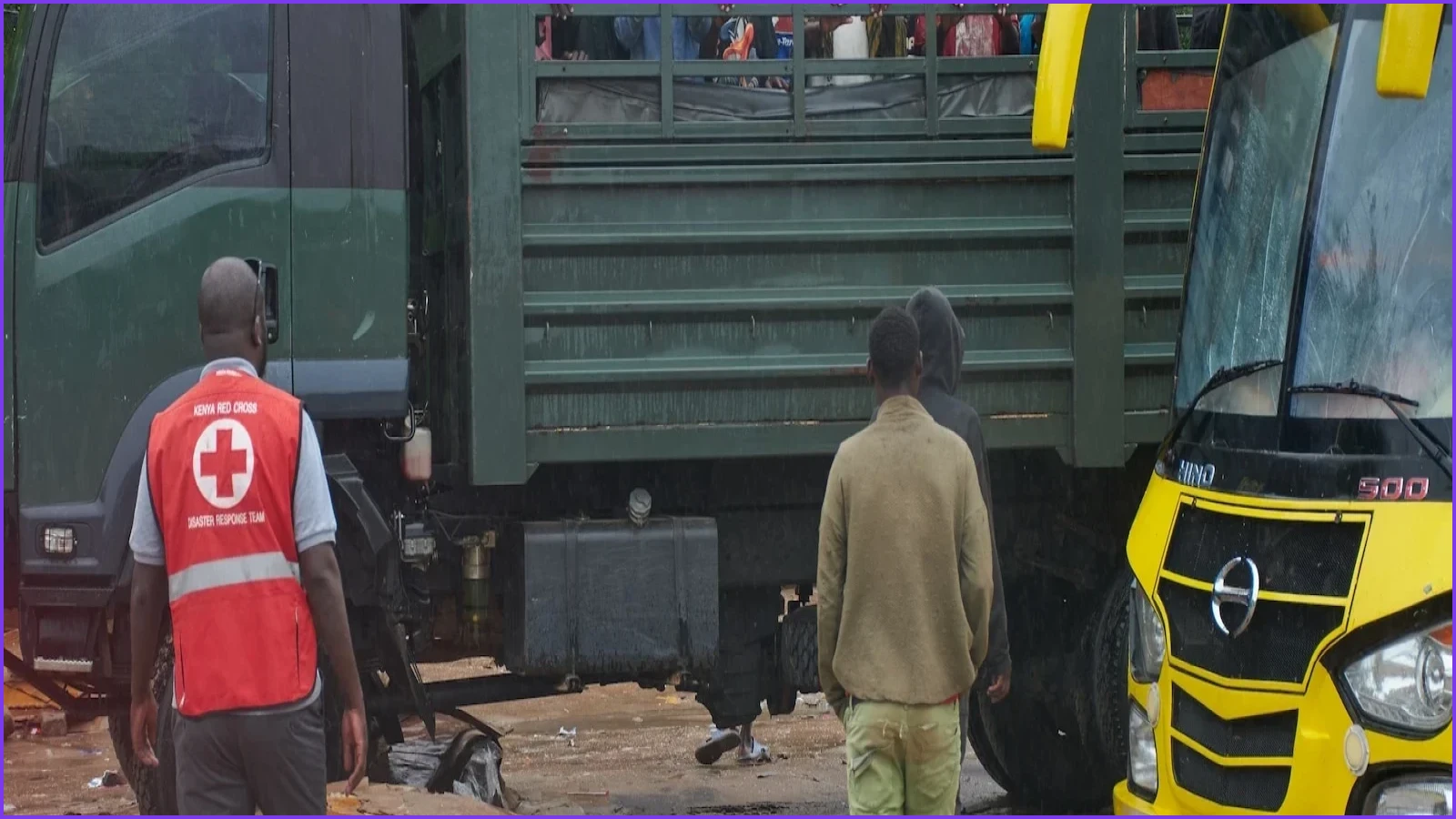
Persistent gunfire coming from the Ethiopian border town of Moyale has driven tens of thousands of civilians across the border into Kenya, leaving cargo trucks stranded on both sides as violent unrest from a regional boundary dispute continues to unfold.
An estimated 50,000 people have sought refuge in Kenya, according to U.N. refugee agency data released Wednesday based on estimates from local authorities. This marks a significant increase from the 36,000 refugees reported on Tuesday, with registration and verification efforts still underway. On Friday, sporadic gunfire was recorded on the Ethiopian side of the border, where shooting has been heard daily since Oct. 22.
The escalating displacement has placed a severe strain on local infrastructure and host communities in Kenya's Marsabit County. Benedict Munywoki, deputy county commissioner for Moyale Sub-County, noted on Thursday that many individuals fleeing the violence are integrating into local residential neighborhoods rather than staying in designated relief camps, complicating efforts to establish an exact headcount. He emphasized that the total number of displaced people in camps and host households continues to grow daily.
Local residents in Moyale, Kenya, have stepped in to assist the incoming families. Resident Galgallo Jarso shared on Monday that community members are opening their homes, providing meals, and taking sick refugees to medical facilities. However, local leaders in Marsabit County have issued urgent appeals for international and national aid, warning that the influx risks overwhelming local towns already struggling with shortages of water and food.
Relief operations are being managed by the U.N. refugee agency, the International Organization for Migration, and the Kenya Red Cross, which are delivering emergency meals, shelter, and medical services. At a camp established by the Kenya Red Cross, workers have set up outdoor kitchens cooking food in large pots over wood fires, while healthcare personnel conduct malnutrition screenings by weighing young children and measuring their upper arm circumferences.
Among those offering aid is Seifu Negash, an Ethiopian physician who was forced to escape the outbreak of violence and is now volunteering with the Kenya Red Cross to treat fellow refugees. Negash explained that the conflict erupted without warning before forcing widespread displacement, leaving families to cope with immense hardships both during their flight in Ethiopia and after arriving across the border.
The violence stems from an escalating territorial disagreement between leaders of Ethiopia's Oromia and Somali regional states. According to Jalale Getachew Birru, senior East Africa analyst for the Armed Conflict Location & Event Data Project (ACLED), the fighting is rooted in a longstanding boundary dispute between the Borana community, who are Oromo, and the Garre community, who are Somali.
The recent escalation was sparked when a 13-year-old Oromo girl was killed in an initial confrontation, though accounts regarding the exact circumstances of her death remain conflicting. Following the incident, clashes rapidly expanded to surrounding communities, drawing in regional police forces and local armed militias. Although ACLED noted that fighting appeared to subside by Wednesday, underlying tensions across the border region remain dangerously high.
The cross-border violence has raised significant security concerns on the Kenyan side of the frontier. Last week, Kenyan police reported that a woman in Moyale suffered a bullet wound to the neck, though authorities could not definitively determine where the gunfire originated.
This border dispute comes as Prime Minister Abiy Ahmed's government confronts multiple security crises across Ethiopia. In the northern Tigray region, rebel forces have vowed to persist with armed resistance despite losing control of the regional capital, Mekelle, earlier in the month. Meanwhile, in other districts of Oromia, separate religious and ethnic violence resulted in two attacks on Oct. 20 and Oct. 24 that killed at least 60 Orthodox Christians, according to the Ethiopian Orthodox Church. Regional authorities attributed those attacks to the Oromo Liberation Army (OLA), though an OLA leader previously denied deliberately targeting civilians. In September, the OLA and the Tigray People's Liberation Front joined five other opposition factions to establish the Ethiopian Peoples' Forces Alliance for Survival, an umbrella coalition intent on removing Prime Minister Abiy's government from power.