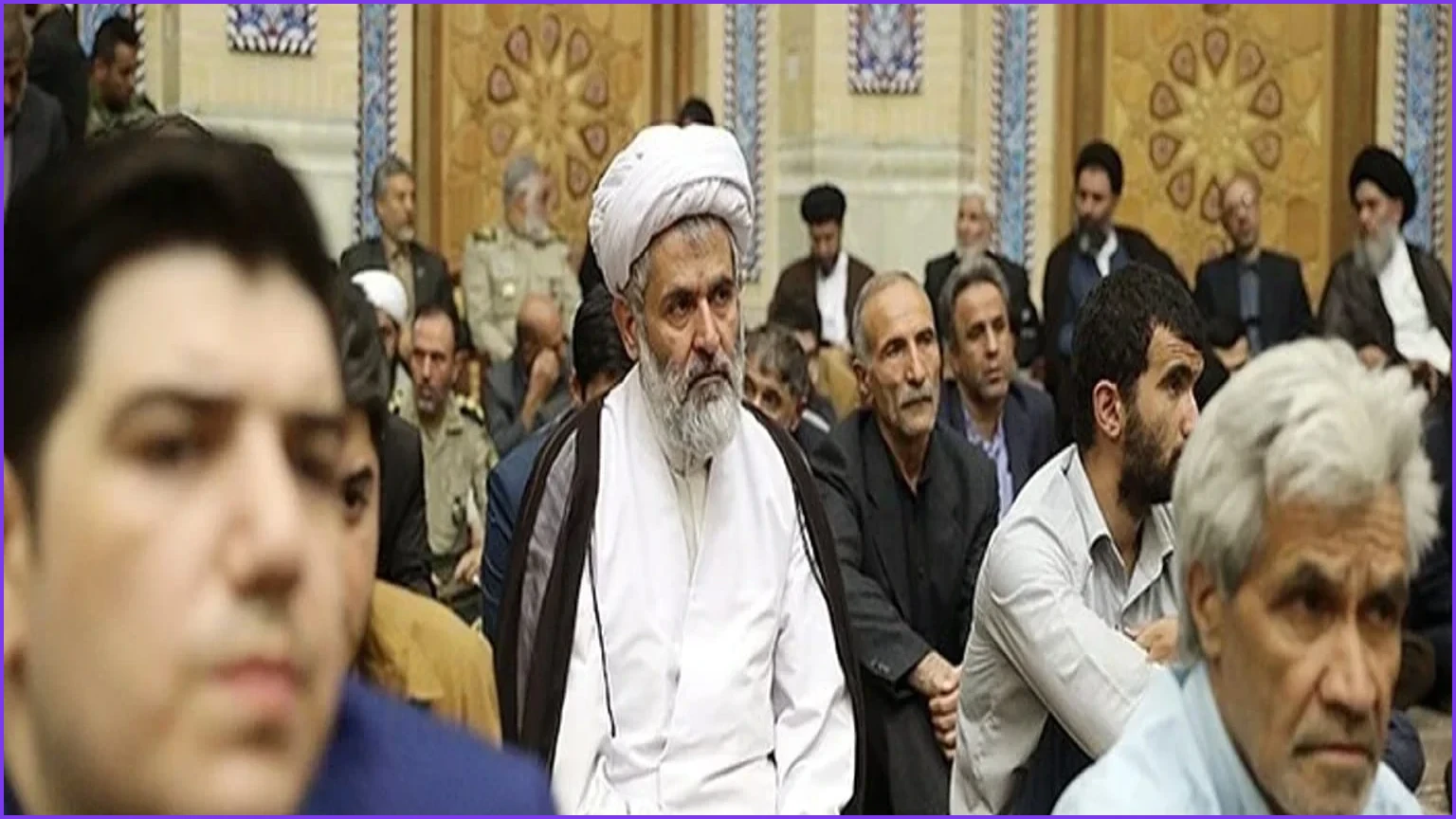
Hossein Taeb, the prominent cleric who commanded the Basij during the 2009 crackdown on the Green Movement and led the Revolutionary Guards' intelligence service for 13 years, has been reappointed as the head of the IRGC's militia. This decision to bring back one of the Islamic Republic's most senior internal security figures to a frontline position occurs during the early months of Ayatollah Mojtaba Khamenei's rule. The move is part of a recent, broader reshuffle among the Islamic Republic's political, military, and security elites. The appointment signals that the new leadership in Tehran is actively preparing for potential unrest at home, particularly amid the ongoing war with the United States and mounting economic pressure resulting from international sanctions.
Taeb's career within the security apparatus spans four decades. He joined the IRGC as a teenager and later served in the Ministry of Intelligence before returning to the Guards. He first became the Basij commander in July 2008, less than a year before Iran's disputed presidential election triggered the mass demonstrations of June 2009 known as the Green Movement. The Basij played a central role in the subsequent crackdown. Consequently, the United States sanctioned Taeb in 2010 over his command responsibility for the violence, with the European Union following suit in 2011.
In late 2009, Taeb was appointed the first head of the newly created IRGC Intelligence Organisation. He held that position for roughly 13 years, during which the body became one of the country's most powerful security institutions, often competing with and frequently overshadowing the civilian Ministry of Intelligence. Under his tenure, the organization expanded its reach into cases involving political opponents, journalists, environmental activists, and dual nationals. Notably, the IRGC brought dissident Ruhollah Zam to Iran in 2019, who was subsequently executed in 2020.
Taeb was replaced in June 2022 by Mohammad Kazemi and moved to an advisory role under the IRGC commander. His removal followed a period of significant intelligence failures, including operations attributed to Israel that exposed serious weaknesses in Iran's counter-intelligence. These incidents included alleged penetrations of sensitive sites and the killing of nuclear scientist Mohsen Fakhrizadeh in November 2020 outside Tehran. Although Iranian authorities never publicly confirmed those failures as the reason for his departure, Taeb was not expelled from the security establishment but was instead moved directly into another senior position.
Taeb and Mojtaba Khamenei are reported to have longstanding ties dating back to the Iran-Iraq War, during which both were associated with the Habib battalion of the IRGC's 27th Mohammad Rasulollah Division. Networks formed at that time later became significant pathways to institutional advancement within Iran's security structure for the most loyal cadre. His return to the Basij under Mojtaba Khamenei's leadership, rather than his retirement after the 2022 setback, suggests those ties remain close. The Basij maintains a presence in neighborhoods, places of worship, universities, and government offices, and has been used to monitor citizens, mobilize regime support, and suppress protests. Placing a veteran intelligence official in charge of the Basij could allow the force to shift from a body deployed reactively after protests erupt to one embedded in a broader system that detects and contains dissent before it spreads. The choice of Taeb also indicates that the IRGC, an elite paramilitary corps that answers directly to the ayatollah, remains crucial to decision-making in Tehran. Throughout his career, Taeb has faced internal friction, such as in 2018 when former president Mahmoud Ahmadinejad publicly accused him of fabricating cases against political opponents, marking a rare public dispute over power between the presidency and the IRGC intelligence apparatus. During Hassan Rouhani's presidency, the IRGC intelligence service under Taeb also openly challenged the civilian Ministry of Intelligence in several high-profile cases, reflecting a shift in security and political power toward institutions directly linked to the ayatollah.