Since the Taliban returned to power in Afghanistan on August 15, 2021, global attention has largely focused on the severe restrictions stripping girls and women of their right to learn. However, interviews with young men and students across the country reveal a parallel, less visible crisis: the education system for boys is being systematically dismantled from within. While boys are still legally permitted to attend school, the curriculum has been so drastically altered that many students say it no longer prepares them for any viable future.
Hashmat Mubariz, now 19, is one of many young Afghans who felt compelled to abandon regular school attendance by Grade 11. Although he remained officially enrolled, the classroom environment had deteriorated so significantly that he felt he was wasting his time. Mubariz, who subsequently taught himself English, became an instructor, hosts a podcast, and helps run a non-governmental organization, points out a common misconception. "Many people believe that only girls' education is affected," Mubariz said. "But boys are also facing a serious education crisis."
Interviews with 15 middle and high school students across Kabul, Herat, Helmand, Ghazni, Ghor, Mazar-e-Sharif, and Bamiyan paint a consistent picture of this educational decline. Students report a sharp reduction in the teaching of science, languages like English and Persian, and civic subjects. In their place, there is intense pressure to focus on religious studies, alongside strict new regulations governing personal appearance. This shift has been particularly pronounced in southern provinces such as Helmand and Kandahar, where traditional families already emphasized religious studies, and Taliban policies have intensified that pressure.
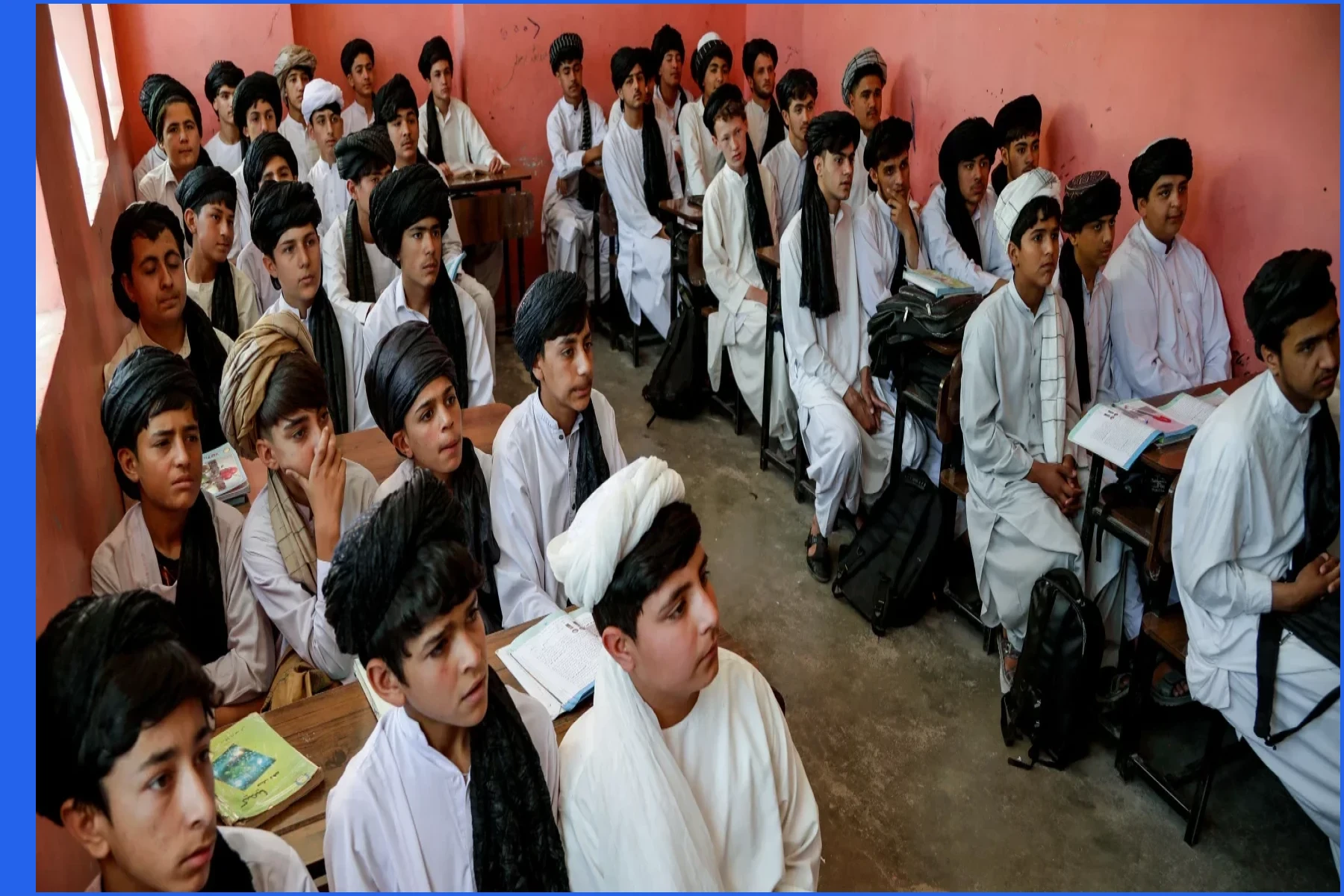
The transformation began with visible changes to the school environment. Male teachers were ordered to grow long beards and wear turbans and traditional clothing. At the start of the current school year, boys in grades 7 through 12 at government schools were also ordered to wear white clothing and turbans. However, the most profound changes occurred inside the classrooms. Subjects like English, biology, and general science were sidelined, while the study of the Quran and other religious texts took precedence. Religious messaging was not restricted to theology classes; teachers of mathematics, science, and English were required to integrate Quranic verses, traditions attributed to the Prophet Muhammad, and other religious lessons into their curricula. "Religion became part of almost every class," Mubariz recalled.
For many children in areas with limited public school access, religious madrasas have become the primary educational institutions. Under Taliban rule, religious education has been heavily prioritized over modern, secular schools. The Taliban's Ministry of Education claims to oversee 22,972 religious education centers, a massive increase from the approximately 5,000 registered under the previous government. However, the Afghanistan Human Rights Center notes that only 316 of these centers were newly built; the rest were existing institutions integrated into the state system. In contrast, the ministry reports that only 269 new modern schools were established during the same period. The Ministry of Education did not respond to inquiries regarding these changes.
Shabana Basij-Rasikh, an Afghan educator and co-founder of the School of Leadership Afghanistan (SOLA), warns that the damage to boys' education extends beyond curriculum changes. She emphasizes that boys are learning from a society where girls disappear from classrooms after the sixth grade and women are systematically excluded from public life. Her deepest concern is for younger boys who have no memory of life before the Taliban's return. "Their only normal is not seeing girls in school. Their only normal is not seeing women in the public sphere," Basij-Rasikh said, warning that these boys will eventually become the men making decisions for Afghan society.
Basij-Rasikh also noted that the restrictions on women have directly contributed to boys dropping out of school. With women barred from employment, the financial burden of supporting families has fallen entirely on men and boys. "Today we have an authority in Afghanistan that has made it a matter of national policy to restrict space for women and then place a lot of that burden on men and boys," she said. "Naturally you see boys dropping out of school to shoulder that responsibility of providing for their families."
The classroom atmosphere has also been stifled by fear. While students previously exercised caution when discussing sensitive topics like politics, war, or religion, Mubariz explained that this caution turned into absolute fear after the Taliban's return. Open discussions were discouraged by teachers, and students avoided asking controversial questions. "I could not express even one percent of my real opinions or ideas," Mubariz said. "I always felt that I had to stay silent because speaking openly could have serious consequences."
This oppressive environment has led to a widespread loss of interest among students, while teachers appear discouraged, frequently absent, or unqualified. In the months immediately following the Taliban takeover, many teachers went unpaid, leading to high absenteeism. Many experienced educators eventually fled the country and were replaced by individuals lacking the necessary training to teach academic subjects.
An 18-year-old Grade 12 student from Ghazni Province recalled how everything changed "overnight" when the Taliban took power. On the night of the takeover, his family rushed to the Kabul airport after receiving a call, but they were forced to turn back due to the dangerous chaos and injuries in the crowd. His school remained closed for several months. When boys were finally allowed to return, the girls' secondary schools remained shut. "Not even for one day were the girls' secondary schools reopened," he said.
To avoid the government's strict dress code requiring white clothing and turbans, this student transferred to one of Afghanistan's 3,000-plus private schools. However, his primary concern is the growing sense of hopelessness among young Afghans who feel that education no longer leads to a career. He described seeing engineering graduates working as day laborers or selling vegetables. He recalled a poor student who spent his life studying only to end up selling potatoes because he lacked money and influential connections. "I don't understand what has happened to Afghanistan," the student said. "You see people sitting in important positions who cannot even write their own names."
This lack of opportunity has driven many young people to despair. Some of Mubariz's classmates dropped out, fled to Iran, or attempted to reach Europe. One of his closest friends, struggling to support his family after his father lost his government job, ultimately died by suicide due to financial hardship. "It was one of the most painful experiences I have ever witnessed," Mubariz said. He fears that as conventional education loses its perceived value, more families will send their children to religious schools, which could have severe long-term consequences for the country.
The impact is also deeply personal for Mubariz's family. His two sisters were barred from continuing their education past primary school. Lacking access to high-quality online learning, Mubariz teaches them at home using whatever books and materials they can find. While some girls have managed to access online education, the option is fraught with difficulties. Zainab, a Grade 9 student using a pseudonym for her safety, considers herself fortunate to attend online classes but struggles with the high cost of internet data and an unreliable, slow connection. "Classes sometimes freeze or disconnect before the teacher has finished explaining the material," she said, adding that the constant technical failures make learning highly stressful.
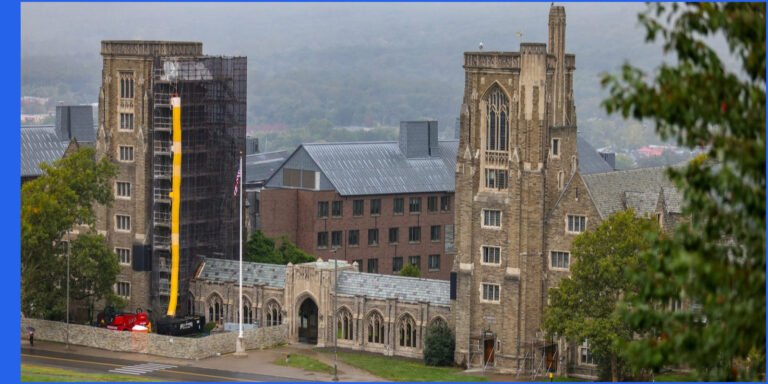
Mubariz continues to seek a way out of Afghanistan to pursue his own education. Although he received admission and scholarship offers in 2025 and 2026 from prestigious institutions including Cornell University, the University of Connecticut, and the University of St Andrews, he was unable to secure the necessary student visas. He worries about what Afghanistan will become as a new generation grows up without qualified teachers, academic freedom, or the right to question what they are taught. Having seen his parents' generation suffer from limited educational access due to decades of conflict, Mubariz fears that the same deprivation will now shape the next two or three generations of Afghans.