Residents of Barnham, a village in Suffolk, have cast a symbolic vote to “leave the UK” in a referendum held Saturday. The action was taken in direct response to government proposals to accommodate 930 asylum seekers at the nearby former military site, RAF Barnham.
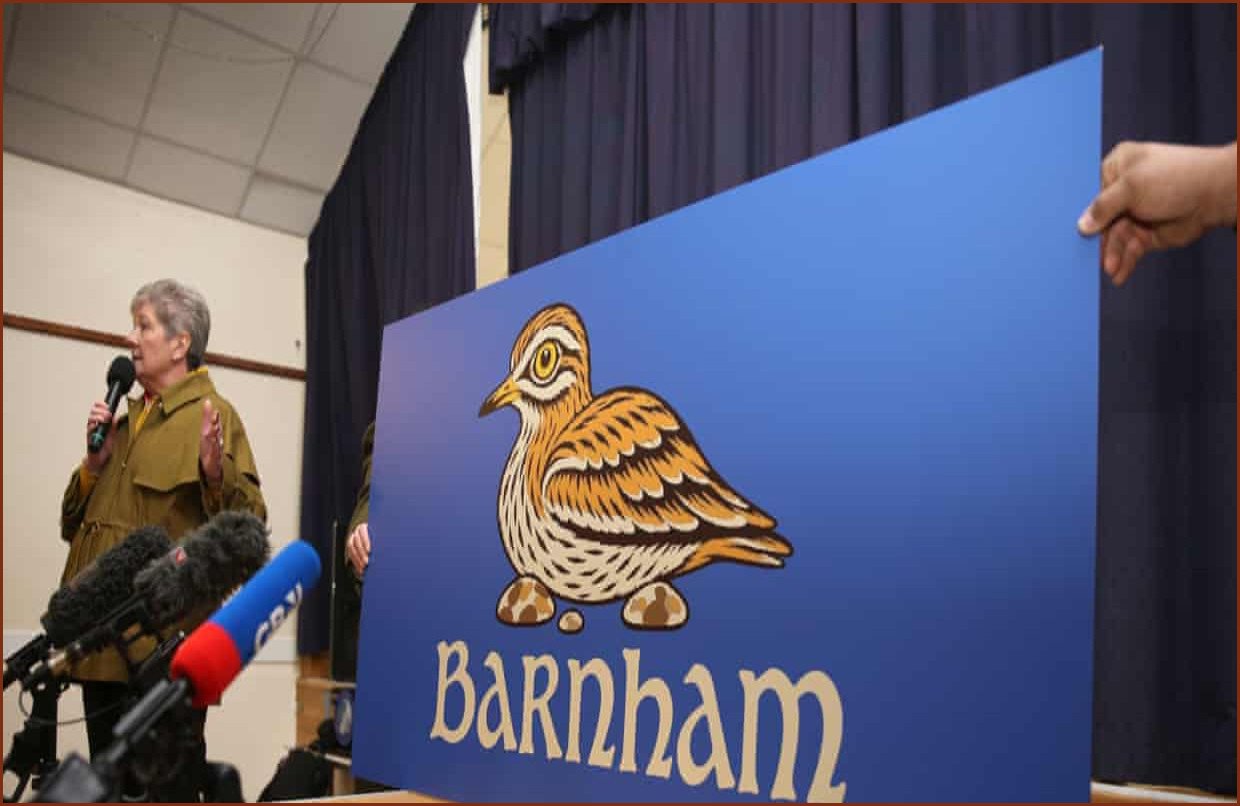
Approximately 500 eligible voters in Barnham participated in the ballot, with 257 votes cast in favour of independence, 16 against, and one spoiled ballot. Following the vote, Helen Beck, chair of the Barnham Residents’ Association, announced that Barnham’s new flag would feature a stone-curlew on a “Suffolk blue background.”
The referendum specifically asked residents if they supported seeking “crown dependency status,” a system akin to that of Jersey, Guernsey, and the Isle of Man. John Bauer, the parish council chair, explained that this status would enable the village to “retain loyalty to the crown” while simultaneously removing itself from the jurisdiction of the Home Office.
RAF Barnham was identified in June by the government as one of three Ministry of Defence sites slated for new developments to house asylum seekers. This situation mirrors a similar referendum conducted in Piddington, Oxfordshire, in September, where residents also voted to leave the UK amid plans to house over 1,000 migrants at another former military base. In Barnham, the government’s plans have already sparked protests outside the proposed site.
The local Labour MP, Dr Peter Prinsley, voiced his opposition to the development before Saturday’s vote, describing the plans as resembling a “concentration camp.” He cautioned that securing planning permission could prove challenging due to environmental concerns, particularly regarding rare stone-curlews nesting in the area. Prinsley noted that previous development applications nearby have been rejected for similar reasons, highlighting the site’s designation as a site of special scientific interest with “worldwide protections.”
Prinsley also raised concerns about the practicalities of the remote Barnham location, citing a lack of pedestrian access and its proximity to a “very hazardous main road” where serious accidents occurred during its use as military accommodation. He suggested that “disused office blocks in some of the larger cities” with better access to local services might be more appropriate for housing asylum seekers. He reiterated his view, stating, “It feels like a concentration camp. It doesn’t feel like a place that has a compassionate approach to people who are fleeing persecution and are being processed for asylum.”
While acknowledging the symbolic nature of the referendum, Prinsley anticipated a strong vote for crown dependency status, expecting a near-unanimous result from the 500 electors. He also stressed that individuals arriving on small boats are “not illegal migrants” but rather “people who are seeking asylum,” criticizing political opponents for using terms like “illegals, criminals, rapists.” He added that while the government is addressing the issue, it remains a “complicated problem.” Prinsley also stated that legitimate criticisms of the plans were being co-opted by opposition parties aiming to “stir up racial discord.”
Political parties have shifted their stances on the issue; Labour, while in opposition, criticized the Conservative policy of using military bases for asylum seekers but backtracked once in government. The Conservatives have also reversed their position, with Kemi Badenoch telling frustrated villagers on Friday that “the Conservative party is on your side” and that “We know that the problem of the boats needs to stop and we have got a plan to stop it.”
Earlier this month, construction company Kier announced it would be designing the new camp at RAF Barnham.
In response, a Home Office spokesperson stated, “We recognise the strength of feeling in local communities and are listening carefully to the concerns being raised. This includes closing all asylum hotels and moving to alternative accommodation, including former military sites. These are designed to be self-contained, with 24/7 security and CCTV, to reduce the impact on local communities.”