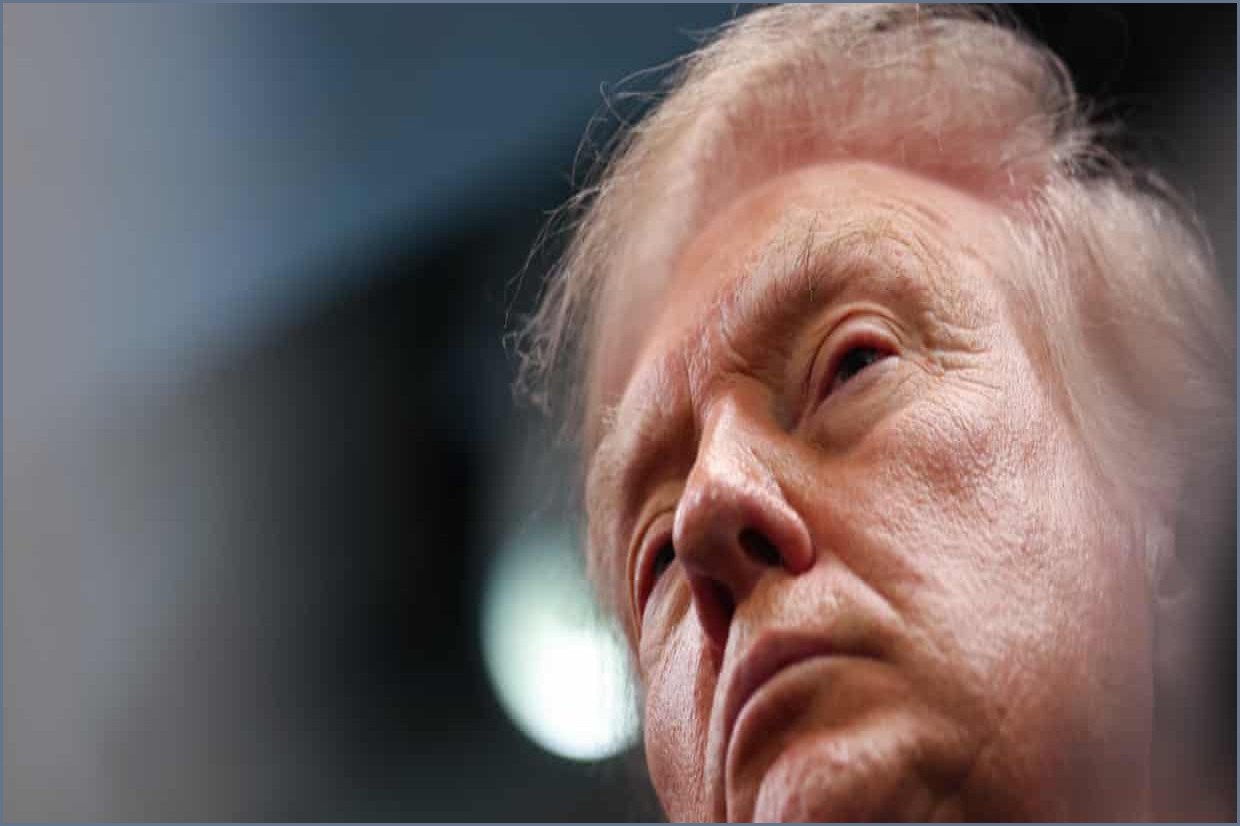
A federal appeals court panel has created a new pathway for Donald Trump to challenge his hush-money criminal conviction. In a decision issued on Monday, a three-judge panel of the second US circuit court of appeals reversed a previous lower court ruling that had kept the case within the New York state court system. The panel has directed a lower court to quickly determine whether the case should be moved to federal jurisdiction, a legal process known as removal.
Should the case be transferred to federal court, the president could then argue that his conviction—based on 34 felony counts of falsifying business records to conceal a $130,000 payment to Stormy Daniels—should be discarded based on the principle of presidential immunity. This development has effectively halted proceedings in Trump’s ongoing state court appeal. Trump, who was the first US president to be convicted of a crime, denies any wrongdoing and received no punishment in the case.
The two-page order from the second circuit panel explicitly stated its disagreement with the late district judge Alvin Hellerstein, who had previously denied Trump’s request to remove the case from state court. This federal action runs alongside efforts currently underway in the New York state court system, which had heard arguments in its appellate division earlier this month.
During Monday’s proceedings, Robert Giuffra Jr, a lawyer for the president, urged the judges to issue an order to take control of the case immediately to prevent the state appellate division from continuing its deliberations. Giuffra argued that without federal intervention, Trump would likely face years of waiting for state court rulings before being able to bring the matter to the US supreme court. Judges John M Walker Jr and Raymond J Lohier Jr questioned the procedural logistics of such a transfer, specifically asking how existing state briefs would be handled in a federal setting. Giuffra suggested that a federal district court judge would adopt the state verdict before the second circuit considered arguments regarding presidential immunity.
Judge Lohier expressed skepticism, noting, "You’re asking us to embrace an entire procedural mechanism that I don’t see anywhere authorized by Congress." Meanwhile, Steven Wu, representing the Manhattan district attorney’s office, requested that the panel uphold the earlier ruling to keep the case in state court, arguing that the state court could proceed regardless of federal actions.
This marks the third time Trump has appealed the hush-money case. His legal team has consistently cited the US supreme court’s July 2024 ruling, which established that presidents and former presidents cannot be prosecuted for official acts. Giuffra argued that prosecutors improperly used evidence of official acts during the trial and disputed the characterization of the hush-money payment as an illegal campaign contribution.