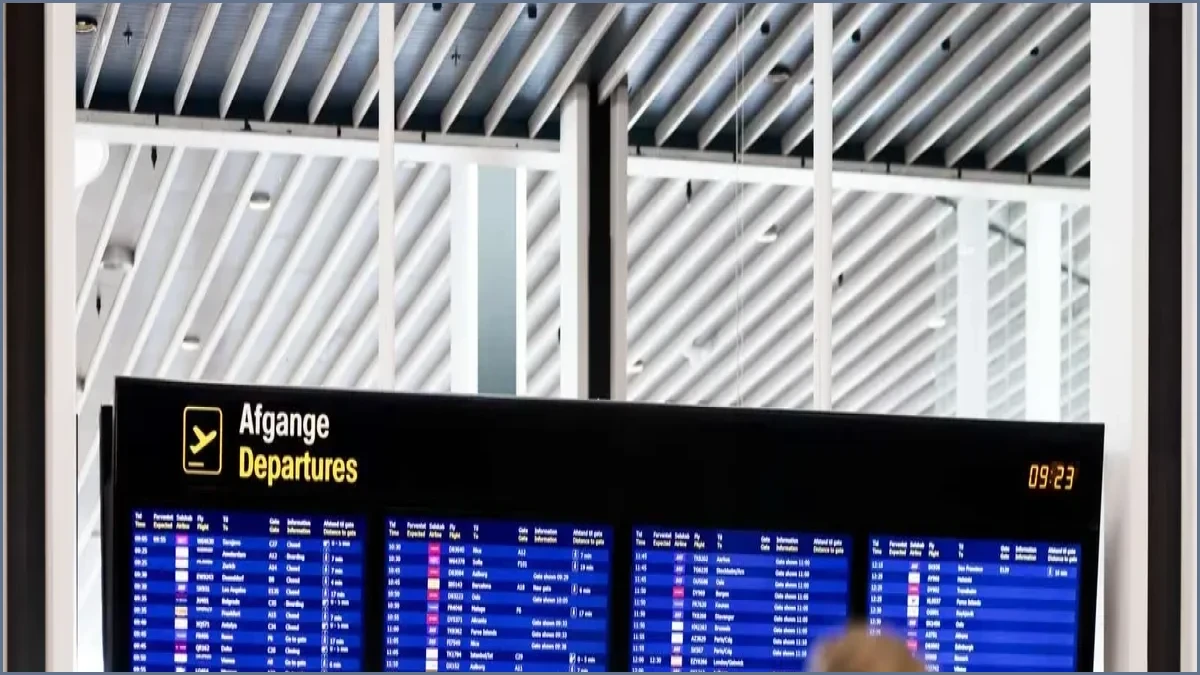
Copenhagen Airport has unveiled a significant new expansion strategy designed to transform the facility into a major Nordic hub. The airport is planning to increase its annual capacity to as many as 55 million passengers, a substantial rise from this year's estimated 34.5 million. This development is intended to accommodate larger aircraft, specifically those utilized for long-distance transatlantic and other intercontinental routes.
While the airport is already undergoing construction at Terminal 3—a 60,000 square metre project that has been in progress for years and is scheduled to open in June 2027—this new announcement represents a broader, long-term vision. According to Christian Poulsen, the airport's CEO, the expansion is vital for Denmark’s future, as the country is a small nation with an open economy that relies heavily on global connectivity. Poulsen stated that these connections provide Danish companies with access to international markets, attract investment and tourists, and link the country to the rest of the world. He emphasized the need to create a flexible framework that allows the airport to develop in alignment with Denmark's national requirements.
The strategic importance of the airport is underscored by its role as a transfer point. In an interview with the Swedish newspaper Svenska Dagbladet, the airport's chief commercial officer, Peter Krogsgaard, noted that Copenhagen serves as the primary airport for approximately 40 percent of Swedish travelers and businesses, particularly those in southern Sweden. Krogsgaard pointed out that one in four passengers at the airport is currently changing planes, and he expects this group to remain the fastest-growing segment. He expressed confidence that Copenhagen could become the largest transfer terminal in Europe, specifically suggesting it could serve as the Nordic hub for Air France-KLM. Furthermore, he described the decision by SAS to move from Star Alliance to SkyTeam as a significant opportunity for the airport to secure more long-distance routes.
Erik Westman, who is responsible for the route network at Scandinavian airline SAS, confirmed that the airline is currently focused on growing profitable transatlantic flights and expanding traffic to Asia, with plans to eventually include South America in the long term. As the airport pursues this growth, management has committed to developing the site responsibly. CEO Christian Poulsen acknowledged the environmental challenges associated with such an expansion, stating that the airport is aware that increased traffic brings disadvantages regarding noise and air pollution. He emphasized that it is the airport's responsibility to ensure that the rise in routes and passengers does not lead to a corresponding increase in environmental impact.
The airport expects to complete the current planning phase by 2028. Following this, the facility intends to apply for permission to carry out the expansion in phases, working in close coordination with the relevant authorities to ensure the project proceeds according to plan.
Among other things, the expansion will allow larger planes to use the airport – such as those used to fly long-distance to other continents.