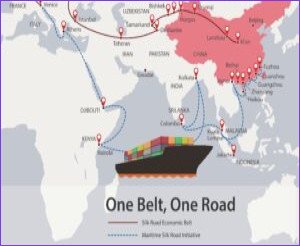
Since its launch in 2013, China’s Belt and Road Initiative (BRI) has significantly reshaped global trade and connectivity through large-scale infrastructure projects. While these developments have provided economic benefits, they have also introduced complex strategic risks for recipient nations, particularly regarding the integration of Chinese technology into critical sectors like telecommunications, electrical grids, and government utilities. Despite warnings from the EU and North America regarding the potential for subversion and threats to national sovereignty, companies such as Huawei and Dahua Technologies remain deeply involved in infrastructure projects across the Balkans.
Beijing’s financial engagement in the region has been substantial, with over €1 billion committed to Balkan states as early as 2009. These investments have successfully integrated the region into the BRI’s European route, impacting every Balkan state except Kosovo, which does not maintain diplomatic recognition with China. The introduction of Chinese technology has sparked intense debate, particularly after reports of embedded communication devices in imported products and concerns over China’s use of advanced surveillance against its Uyghur population. These issues prompted the United States to blacklist 28 Chinese companies and launch the Clean Network Initiative to protect Western telecommunications.
The 2021 Washington Agreement, which sought to normalize economic relations between Serbia and Kosovo, reflected these growing concerns by including a provision that prohibits the use of 5G equipment from untrusted vendors, a clear reference to Chinese firms. Kosovo had previously accused Serbia of deploying Chinese surveillance technologies along their shared border, setting a precedent for regional resistance to BRI-led expansion.
The geopolitical tension is particularly visible in the telecommunications sector. Serbia’s recent 5G rollout has become a focal point of East-West rivalry. With support from the European Investment Bank and the US EXIM Bank, Telekom Srbija Group has shifted away from Huawei, opting for contracts with Ericsson and Nokia to align with Western standards. CEO Vladimir Lucic confirmed this pivot, which aims to support Serbia’s integration into European markets. However, this shift has drawn backlash, including cyberattacks from Russian hackers who view the company’s alignment with Western allies as a challenge to the Sino-Russian partnership.
Despite this, China’s influence remains persistent. Last year, Beijing announced an additional €1 billion in investments for technological cooperation, and the 2024 Serbia-China Free Trade Agreement is facilitating further growth in robotics and data centers. In Belgrade, Huawei’s Innovations and Development Centre is central to the “Safe Society” project, which has deployed over 1,000 surveillance cameras across major cities. While these efforts are sometimes framed alongside European Commission-backed Smart Specialisation Strategies, they often reinforce bilateralism rather than EU integration. Minister Bela Balin has praised the partnership for enabling coordinated efforts and joint value.
As global geopolitical rivalries intensify, the Western Balkans face increasing pressure to abandon their strategic ambiguity. With the region susceptible to external influences—ranging from Iranian subversion to Russian information warfare—the choice between Western-aligned technology and Chinese-backed infrastructure has become a defining issue for Balkan leaders. Policymakers now face a critical juncture, as the ongoing expansion of the BRI continues to test the balance between economic development and long-term security in Europe’s western frontier.
You have reached the limit of 2 free articles this month.
Projects like these come as rhetorical by-products of theSmart Specialisation Strategies (S3)encouraged by the European Commission and initiated across Serbia, Montenegro, Bosnia, and Albania. Yet the projects fail to facilitate EU integration. Instead, the Serbian-Chinese Mixed Committee for Scientific and Technological Cooperation continues to advance stronger bilateralism. Minister Bela Balinthas describedthe partnership as enabling “us to plan together, coordinate efforts and create joint results of lasting value.”