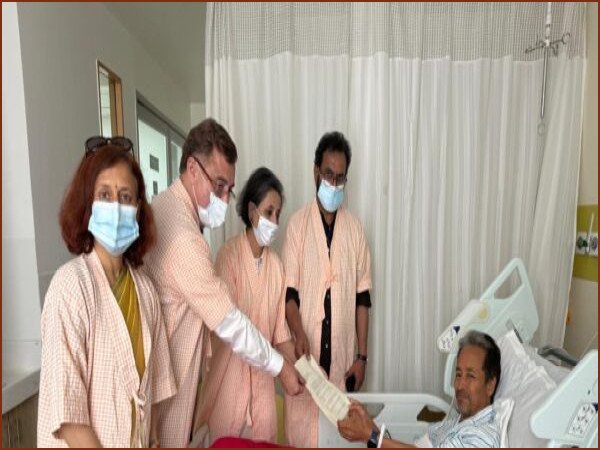
Social activist Sonam Wangchuk ended his 26-day hunger strike on Thursday night after reaching an agreement with the Narendra Modi government. While the fast concluded following a series of official assurances regarding the NEET paper leak controversy and concerns raised by youth protesters, the primary demand of the movement—the resignation of Education Minister Dharmendra Pradhan—remains unfulfilled. Thousands of students and youth remain stationed at the Jantar Mantar area in New Delhi to continue their demonstration.
Abhijit Dipke, founder of the satirical Cockroach Janta Party, expressed relief that Wangchuk ended the fast, citing the activist's well-being as a priority. However, Dipke emphasized that the campaign will persist, stating, "We won’t let Wangchuk’s immense sacrifice go in vain." He added that the protest has reached a new level and will continue until the minister is removed.
The hunger strike, which began on June 28, gained significant public attention around July 16-17 following reports that Wangchuk had lost over 9 kilograms. Besides, he has enjoyed a sort of celebrity image, partly due to the public perception that a prominent character in a Bollywood blockbuster was based on him. His history as a Ramon Magsaysay awardee helped draw support from leftist student groups. The protest also saw involvement from the Congress party after police intervention led to clashes with demonstrators.
Historically, the hunger strike as a form of protest traces its roots to 19th-century Tsarist Russia, later utilized by women’s suffrage activists in the U.K. and U.S., and Irish independence fighters like Bobby Sands. In India, Mohandas “Mahatma” Gandhi adapted the method for public use, successfully employing it to influence colonial authorities and address communal issues. Other notable Indian examples include Potti Sriramulu, whose 1952 fast led to the creation of Andhra State, and K. Chandrasekhar Rao, whose 2009 fast accelerated the formation of Telangana. Conversely, Irom Sharmila’s 16-year fast failed to repeal the Armed Forces (Special Powers) Act, and environmentalist Guru Das Agrawal died during his 111-day fast in 2018 without achieving government action on Ganges pollution.
Analysts note that the success of such protests often depends on the alignment of the cause with broad public interests, the clarity of the demands, and the reputation of the activist. Besides, the image of a frail old man in Gandhian attire launching a hunger strike seeking measures to prevent corruption when the UPA government was rocked by a series of scam charges struck a chord with many people across the country. While Anna Hazare’s 2011-13 fasts successfully galvanized public opinion, the current movement led by Wangchuk faces skepticism from the Congress party, which has questioned the origins of the Cockroach Janta Party. "Our protest has now reached another level, and we will not stop. Everyone wants only one thing-Dharmendra Pradhan Must Resign!" Dipke said on Friday.