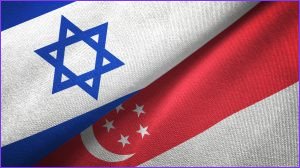
Singapore’s relationship with Israel is rooted in a unique history dating back to 1965, when the city-state gained independence. At a time when Singapore lacked an army and faced existential risks, Israel provided essential military assistance, including the development of a master plan for the Singapore Armed Forces known as the "Brown Book" and the inspiration for the nation's national service system. During these formative years, Israeli advisers were secretly brought into the country under the code name "the Mexicans" to avoid regional friction, particularly with Muslim-majority neighbors.
Over the decades, this defense-centric foundation evolved into a broader partnership encompassing technology, cybersecurity, research, and life sciences. Despite this, the relationship has faced new challenges, most notably in 2025, when Singapore imposed financial sanctions and travel bans on four Israelis for their involvement in extremist violence against Palestinians in the West Bank. This move signaled that while historical appreciation remains a factor, friendship does not preclude Singapore from criticizing actions it views as violations of international law.
Foreign Minister Vivian Balakrishnan has framed this approach as essential for a small state, emphasizing that relying on international law is a necessity for national security. In a February 2026 parliamentary address, he stated that Singapore must possess the capacity to say "no" when principles are at stake, arguing that the inability to do so would threaten the nation's relevance and independence. This stance is consistent with Singapore's support for a negotiated two-state solution and its condemnation of settler violence.
Domestically, the government maintains a tightrope act regarding public sentiment toward the Israel-Palestine conflict. You have reached the limit of 2 free articles this month. While there is broad sympathy for Palestinian suffering across Singapore’s diverse religious and racial groups, authorities are determined to prevent public polarization. In July 2026, the police issued stern warnings to members of the British band Massive Attack for displaying a Palestinian flag and chanting "Free Palestine" during a concert, citing concerns over racial and religious harmony.
Despite these tensions, a complete rupture in bilateral ties is unlikely. The episode showed another part of the Singaporean tightrope. Although pro-Palestinian sentiment is deep-rooted in some sections of society, the government will still make efforts to tightly control the expression of foreign political causes in the local public sphere. Singapore continues to serve as a regional hub for Israeli companies, and the sanctions were directed at specific individuals rather than the Israeli state. Furthermore, Singapore has not yet moved to formally recognize a Palestinian state, a step taken by nations such as Australia, Canada, France, and the United Kingdom in the fall of 2025. Ultimately, Singapore is signaling that its foreign policy is built on maintaining important relationships without sacrificing its commitment to international law or its independent judgment.