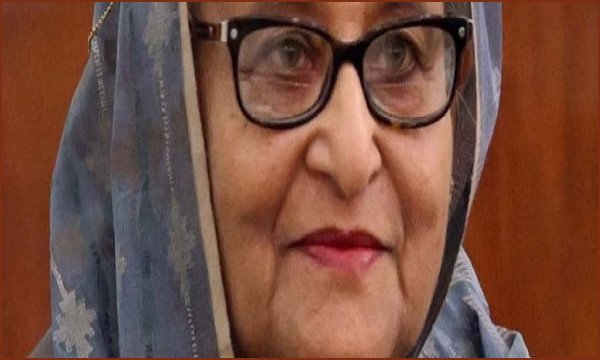
Bangladesh's former Prime Minister Sheikh Hasina has publicly committed to returning to her home country from India around December, intending to surrender before a court despite having been sentenced to death in absentia. This marks the first time Hasina has given a timeframe for her return, following months of speculation.
Hasina, leader of the Awami League (AL), was convicted of crimes against humanity under the doctrine of superior command responsibility in November 2025 by Bangladesh's International Crimes Tribunal. The charges stemmed from a deadly crackdown during mass protests in July and August 2024. She has consistently rejected the verdict as politically motivated and denied all charges.
Her government was ousted on August 5, 2024, after 15 years in power, following weeks of widespread protests. Soon after her resignation, she fled Bangladesh for India, where she has resided since. The mass uprising led to the AL being banned from political activities, with many of its senior leaders arrested, driven into hiding, or forced abroad.
Hasina's decision to return, despite the awaiting death sentence, aims to transform her public image from a fugitive avoiding justice to a political leader willing to face trial in her own country. While in India, she has primarily communicated through online messages, but has recently urged senior AL leaders to return with her and surrender to the courts. This appeal, even if the coordinated return remains uncertain, signals to supporters that the party leadership remains united and committed to the political struggle.
The political landscape in Bangladesh has significantly shifted since Hasina's departure. In February, the Awami League’s long-standing rival, the Bangladesh Nationalist Party (BNP), swept to power in general elections. The Jamaat-e-Islami (JI), Bangladesh’s largest Islamist party, emerged as the main opposition in parliament, while the National Citizen Party (NCP), formed by students who spearheaded the 2024 protests, has also become a major opposition force.
Human rights organizations have voiced concerns regarding aspects of the legal proceedings against Hasina, particularly the decision to try and sentence her in absentia. However, they have also underscored the critical importance of accountability for the killings committed during the 2024 uprising. The United Nations estimated that up to 1,400 people were killed during the government’s crackdown on protesters.
For many Bangladeshis, especially the families of those killed and participants in the uprising, Hasina’s return represents an opportunity for justice, rather than political reconciliation or rehabilitation. Her surrender could shift international attention from whether she should face justice to the fairness of the legal process itself.
The Awami League was banned in May 2025 by Bangladesh’s interim government under the Anti-Terrorism Act, pending outcomes of trials related to the 2024 crackdown. The Election Commission subsequently suspended its registration, effectively barring the party from future elections. While the ban reflects demands for accountability, debate continues over whether one of Bangladesh’s largest political parties should remain excluded from elections. Hasina herself has suggested that voters should determine the AL's future, seemingly separating her personal legal fate from the broader political survival of her party.
The BNP government faces a complex political dilemma. Legally, Hasina is a convicted individual who has declared her intent to surrender. However, politically, the situation is precarious. Immediate imprisonment and progression towards carrying out the existing sentence could trigger increased international scrutiny and risk turning Hasina into a political martyr, potentially galvanizing AL leaders, activists, and supporters, and increasing the risk of public unrest. Conversely, any perceived delay or softening of approach by authorities could draw criticism from victims' families and opposition parties like JI and NCP, who view accountability for the 2024 killings as non-negotiable. Both scenarios carry significant political costs.
Hasina’s return is expected to galvanize her supporters, but it could also trigger counter-protests from groups that led the uprising, potentially leading to a sensitive security situation in Bangladesh. The AL, meanwhile, appears to be pursuing a longer-term strategy focused on organizational survival, hoping to prevent collapse and keep its remaining supporters united by placing Hasina back at the center of national politics, even from a prison cell. Some argue that Bangladesh’s democracy cannot be fully competitive while one of its largest parties remains excluded.
Bangladeshi political analysts contend that the AL must accept responsibility for its ouster, including acknowledging public anger over authoritarian governance, corruption allegations, and the violence surrounding the 2024 uprising, to rebuild broader public trust. History offers examples of exiled leaders returning home, often believing they can achieve more from prison or at great personal risk than from safety abroad.
Thailand’s former Prime Minister Thaksin Shinawatra returned in 2023 after 15 years in self-imposed exile, facing imprisonment on corruption convictions. He was arrested upon arrival but later released on parole, remaining an influential figure. Pakistan’s former Prime Minister Benazir Bhutto returned from exile in 1986 to challenge a military dictatorship, which helped revive her party and led to an election victory. She returned again in 2007 despite assassination warnings but was assassinated just over two months later.
However, Hasina’s situation is considered even more precarious. Unlike Bhutto, she would return to a country where her party is banned due to her 15 years of autocratic rule, enforced disappearances, corruption, and the killings during the uprising. Unlike Thaksin, she faces a death sentence, not just prison time. Regardless of whether her return materializes, Hasina's announcement has already shifted the national debate from her exile to the future of the Awami League itself, and will ultimately test whether accountability, political competition, and the rule of law can coexist in Bangladesh after one of its most turbulent phases.
You have reached the limit of 2 free articles this month.
Several Bangladeshi political analysts argue that the AL cannot simply return to politics; it must accept responsibility for its ouster from power. As long as the party remains reluctant to acknowledge public anger over authoritarian governance, corruption allegations, and the violence surrounding the 2024 uprising, rebuilding broader public trust is likely to remain difficult.