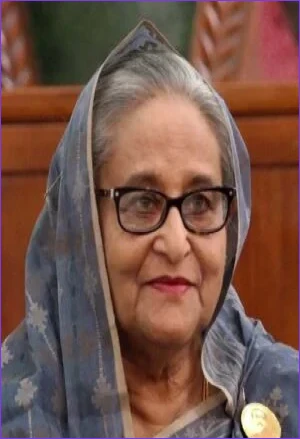
Diplomatic tensions between Dhaka and New Delhi have intensified following an online media engagement by former Bangladeshi Prime Minister Sheikh Hasina. Speaking from New Delhi on August 5, Hasina announced her intention to return to Bangladesh this December, approximately two and a half years after fleeing the country amid violent student protests that led to the collapse of her administration. During the virtual interaction, which was hosted by the Foreign Correspondents Club of South Asia, Hasina stated that her desire to serve the nation outweighs any fears of potential imprisonment or execution upon her return.
Hasina defended her past government’s response to the 2024 summer protests, during which she authorized the use of force. The resulting crackdown left over a thousand people dead. She characterized the protesters as responsible for destroying public infrastructure and vandalizing monuments dedicated to Sheikh Mujibur Rehman, the country’s first president and leader of the 1971 liberation war. The Bangladesh Nationalist Party (BNP) government, which took office in February, responded with sharp criticism, expressing “outrage” that India permitted the event to take place. Dhaka labeled the timing of the conference—held on the second anniversary of Hasina’s ouster—an affront to its sovereignty and an insult to the martyrs of the July Revolution.
Although India distanced itself from the event on the eve of the broadcast, stating it had no role in or endorsement of the presser, the clarification failed to satisfy Bangladeshi officials. Dhaka has consistently sought the extradition of Hasina to face justice, particularly following a November 2025 special tribunal ruling that sentenced both her and former Home Minister Asaduzzaman Khan Kamal to death for crimes against humanity. India has thus far ignored these requests, maintaining that forcing her return is not an option, though some speculate behind-the-scenes efforts are underway to ensure her safety should she return voluntarily.
The current friction complicates recent efforts by both nations to recalibrate ties. Despite the BNP’s historical perception as anti-India, the current administration had engaged in confidence-building measures, such as Foreign Minister Khalilur Rehman’s April visit to New Delhi. India has reciprocated with overtures, including sending Foreign Secretary Vikram Misri and Speaker Om Birla to Prime Minister Tarique Rahman’s inauguration, supplying 45,000 tons of diesel in April 2026, and appointing a new envoy, Dinesh Trivedi, with cabinet minister status. However, New Delhi remains concerned about the interim government's perceived proximity to China, Pakistan, and Turkiye.
Strategic issues, such as the upcoming renewal of the 1996 Ganga Water Sharing Accord this December and potential progress on the Teesta River water-sharing pact, remain critical to stabilizing the relationship. Furthermore, India’s Parliament Committee on External Affairs has urged the government to leverage development cooperation to counter the growing Chinese influence in Bangladesh’s infrastructure and defense sectors. For now, however, New Delhi faces the immediate challenge of mitigating the fallout from Hasina’s media appearance.