Decades after police killed dozens of Black protesters during an anti-apartheid demonstration in Sharpeville, South Africa, survivors and relatives of the victims are renewing a high-stakes legal fight for justice and reparations. The effort centers on striking down an old apartheid law that continues to block families from seeking monetary damages for historical state violence.
Standing among the garbage-strewn and weed-overrun graves in a Sharpeville cemetery, 71-year-old Paulina Mathinye expressed deep anger over the lingering neglect of the burial site where her father lies. Dozens of victims are buried in the graveyard following the March 21, 1960 massacre, which remains one of the deadliest days in the country's apartheid history. Mathinye noted that while the graveyard is cleaned for a single day each year when South Africa's political elite arrive to mark Human Rights Day, it is otherwise left to decay along with the surrounding township located about an hour's drive from Johannesburg.
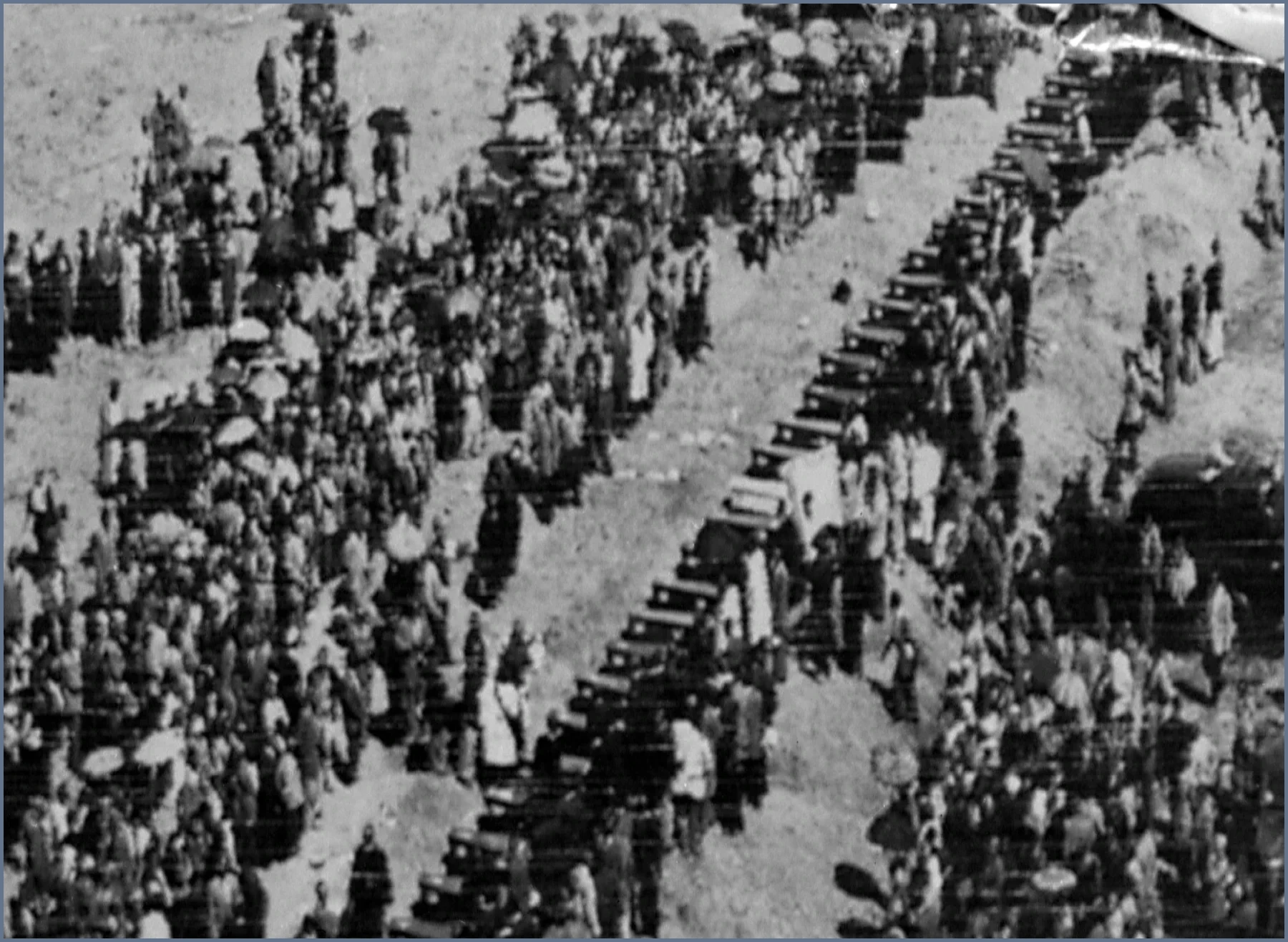
Mathinye was just five years old when police opened fire on a crowd demonstrating against pass laws, which strictly restricted where Black South Africans could live, work, and travel. At least 69 people were killed in the shooting, and a mass funeral was held in Sharpeville on March 30, 1960. The loss of her father, who was her family's primary breadwinner, forced Mathinye to drop out of school. She explained that the resulting economic hardship created a ripple effect that harmed her children and grandchildren, leaving her still struggling today because no official redress was ever provided.
To challenge that legacy, Mathinye joined survivors and descendants in signing onto a potential class action lawsuit 66 years after the massacre. While it remains uncertain whether any of the individual police officers who carried out the shooting are still alive, the legal effort aims to secure court-ordered reparations. If the case yields financial compensation, Mathinye plans to repair her modest home and pay for the education of her four grandchildren.
Before any damage claims can move forward, however, lawyers representing the Sharpeville families must dismantle a persistent legal barrier. In September, attorneys filed an application in the Gauteng High Court challenging the constitutionality of the Indemnity Act 61 of 1961. The apartheid-era law remains on the books despite decades of Black-majority rule. If the high court strikes down the statute as unconstitutional and certifies the class action on behalf of survivors and dependants, individual claims for financial damages can officially proceed.
Daniel Leader, an international human rights lawyer advising the legal team for the Sharpeville families, emphasized the broader imperative of confronting past atrocities directly rather than ignoring them. The Sharpeville challenge forms part of a broader resurgence in South African courts aimed at establishing truth, accountability, and legal remedies for apartheid crimes before surviving witnesses and victims pass away.
The push for legal accountability extends to several other prominent historical cases across South Africa. Last year, a court ruling overturned an earlier inquest finding regarding Chief Albert Luthuli, South Africa's first Nobel Peace Prize laureate and former leader of the African National Congress. While authorities originally claimed Luthuli died in 1967 after being hit by a train, the new judicial determination established that apartheid police actually beat him to death.
In the Eastern Cape, authorities have reopened the inquest into the 1985 murders of the "Cradock Four," a group of anti-apartheid activists who were abducted and slain by security forces near the town of Cradock. Although the security officers involved in the operational killing are now dead, the victimized families are seeking to establish through court proceedings who at the highest levels gave the orders for their execution.
Judicial scrutiny has also returned to the 1977 death of iconic Black Consciousness leader Steve Biko, who died in police custody after enduring severe torture. Speaking at the reopened inquest in September, his son, Nkosinathi Biko, stated that the murder of his father was unequivocally an intentional killing and expressed hope that the court would issue a clear, unambiguous finding. During the original 1977 inquest, security branch officers falsely claimed Biko hit his head during a scuffle while in detention.
When the Truth and Reconciliation Commission re-examined Biko's death in the 1990s, the body denied amnesty to the officers involved because they lied during their testimony. Although that decision opened the door for criminal prosecutions, no state charges were ever filed. In fact, hundreds of criminal prosecution recommendations put forward by the Truth and Reconciliation Commission were repeatedly delayed or ignored by authorities. Last year, President Cyril Ramaphosa appointed a formal inquiry to investigate allegations that those prosecution recommendations were intentionally shelved by government officials.
In Sharpeville, the search for resolution remains deeply personal for descendants who continue to visit the burial grounds. Gathered in front of a memorial plaque before leaving the cemetery, Mathinye and three fellow descendants stood with Vincent Thamae, a representative of the non-governmental organization Voices of Sharpeville. Pausing at the site, Thamae asked the dead to remain with the living as families continue their legal battle for accountability.
"Why are they dirty? It's a disgrace," says the 71-year-old grandmother, who wears a floral dress and a smart sunhat.
That's why she's signed up to take part in a potential class action lawsuit 66 years later, along with Sharpeville survivors and the families of Sharpeville victims.