Approximately 650 more offenders are set to leave prisons in England and Wales on Tuesday, marking the second phase of the government's strategy to address the ongoing prison population crisis. This group includes inmates serving sentences of up to two and a half years.
Under these adjusted regulations, these individuals are being released after serving one-third of their sentence, rather than the standard half.
This latest wave follows the release of 700 offenders on 1 October, all of whom were serving terms of less than 19 months. The current process involves releasing prisoners in batches serving increasingly lengthy sentences, a sequence scheduled to culminate next June with the release of those serving terms exceeding 12 years.
Typically, these released individuals are expected to be electronically tagged and subject to specific monitoring conditions for the second third of their sentence.
The releases have drawn criticism from Napo, the probation service union, which stated that the policy places enormous strain on its members responsible for monitoring offenders within the community. Furthermore, probation officers are currently preparing for a potential strike over pay and workload.
Members are set to meet on Tuesday to discuss an upcoming ballot; the Ministry of Justice has offered a 5% pay rise, whereas the union has demanded 12% to compensate for earnings lost due to cuts implemented since 2010.
Simultaneously, the government is bringing its criminal court reform plan back to Parliament. While the government recently announced it has abandoned the controversial proposal to introduce a new form of Crown Court where a judge sits without a jury for cases involving up to three years in prison, other changes remain.
Jury trials will still be scrapped for the most complex and long-running fraud cases, and an additional 5,500 trials will be shifted to the lower magistrates court by terminating a defendant's right to request a jury trial.
To combat backlogs, the government intends to expand the use of "blitz" or "short trial" courts, following pilots that demonstrated success in grouping similar cases to accelerate progression.
For instance, a pilot at the Old Bailey successfully halved the London backlog of 500 cases involving assaults on emergency workers over the summer.
Additionally, the government has accepted over 150 of the 180 recommendations made by former appeal judge Sir Brian Leveson to modernize the courts, including plans for defendants to appear directly from police cells via virtual hearings.
The government also rejected Leveson's advice to limit volunteer magistrates to 12-month sentencing powers, opting instead to increase their capacity to two years to keep more cases out of the Crown Court.
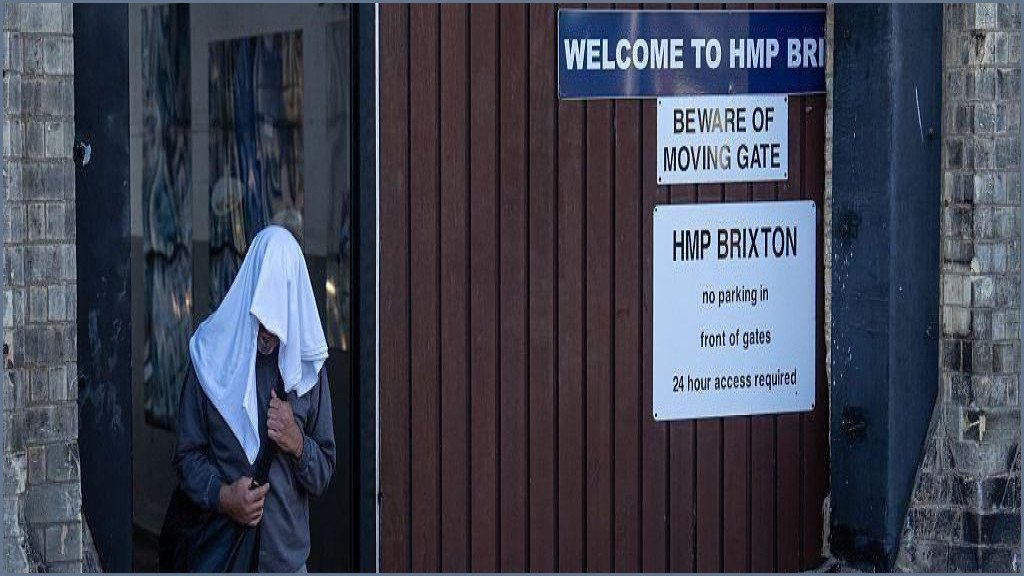
An inmate walks free from HMP Brixton earlier this month, in the first wave of the government's early release scheme
Monday's second stage begins the process of releasing batches of offenders serving increasingly long sentences – culminating next June with those serving more than 12 years.