For the first time, Russia is conducting its parliamentary elections within Ukrainian regions that Moscow unilaterally annexed following its full-scale invasion more than four and a half years ago. The election, which is part of a broader Kremlin effort to solidify its territorial gains, has been met with intense condemnation from Kyiv, where officials have declared the vote illegal. Concurrently, human rights monitors have reported that local residents in the occupied territories are being heavily coerced into participating.
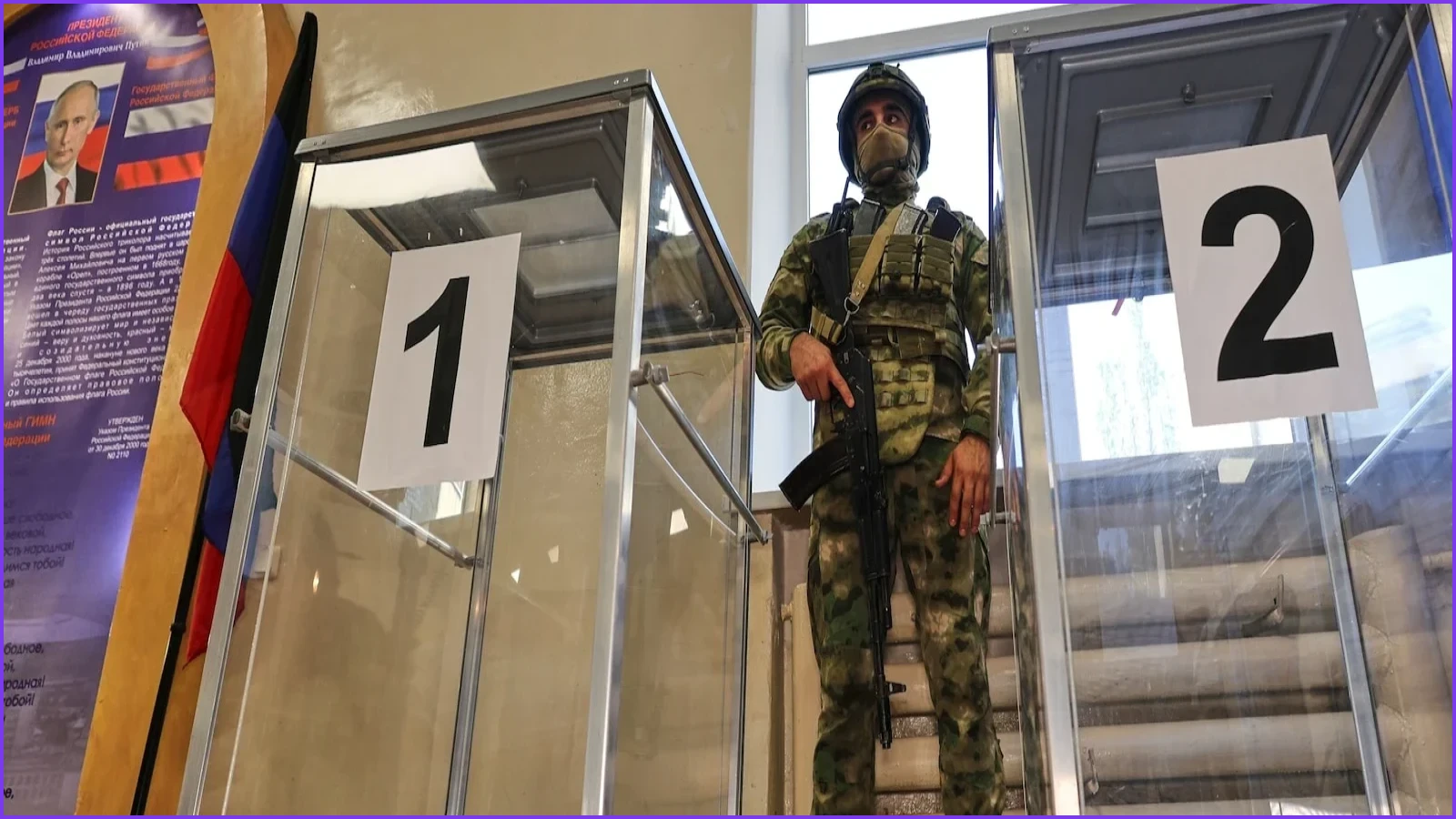
While the formal voting period across Russia is scheduled from Friday to Sunday to maximize voter turnout, balloting in the annexed parts of Ukraine and some Russian border areas has been underway since late last month. Occupation authorities cited security concerns as the reason for extending the voting timeframe. According to Russian officials, the occupied territories of Donetsk, Luhansk, Kherson, and Zaporizhzhia—frequently termed the "new regions" by Moscow—contain more than 3.5 million eligible voters. Russia annexed these areas in September 2022 despite not having full military control over them, a move that remains unrecognized by the international community. At a polling station in the Russian-controlled part of the Donetsk region, voters were seen dropping their ballots into boxes under the direct watch of an armed Russian soldier standing nearby.
In a speech on Wednesday, Russian President Vladimir Putin emphasized the strategic importance of the balloting in these regions for the State Duma, the lower house of the Russian parliament. Putin highlighted that residents in these areas are voting for the Duma "for the first time since their reunification with Russia." He also noted that Russian soldiers participating in the fighting would cast their ballots. Voting is similarly taking place in Crimea, the Black Sea peninsula that Moscow illegally annexed in 2014. The wartime election is widely viewed as a move to secure the Kremlin's political dominance and showcase public backing for the ongoing military campaign. In his address, Putin stated that the choice and resolve of the voters would "once again demonstrate that millions of people stand behind our fighters, that we are a united people, bound by shared values, historical memory, and love for the Motherland and that nobody can divide or intimidate us, undermine our statehood and political system."
Authorities in Kyiv have urged foreign governments and international bodies not to recognize the election, declaring the process entirely illegal. They also issued warnings to Ukrainian citizens, noting that assisting in the organization of the vote could lead to criminal prosecution. A coalition of nine Ukrainian human rights organizations released a joint statement calling on residents in the occupied territories to stay away from the polls. The coalition urged residents to prioritize their own safety, describing the voting process as a clear attempt by Moscow to use the electoral system to legitimize its occupation and attempted annexation of Ukrainian land.
The European Union has also strongly condemned the elections. European Commission spokesperson Christian Wigand described the voting in Russian-held regions as "another blatant violation of international law." Wigand affirmed that the European Union does not, and will never, recognize the holding or the results of these "sham elections" in the temporarily occupied territories of Ukraine.
Activists on the ground have described systemic coercion designed to force participation. Violeta Artemchuk, the coordinator of the Donbas SOS human rights group and one of the signatories of the joint coalition statement, reported that local election commission members have been conducting house-to-house visits escorted by Russian soldiers and security agents to compel residents to vote. According to Artemchuk, Moscow-appointed authorities are applying severe pressure on the local population, including threatening public sector employees with immediate dismissal if they do not participate. Furthermore, access to pensions and other essential social payments has been made conditional on voting. Artemchuk warned that vulnerable individuals, such as pensioners or people with disabilities who rely on social assistance, could be placed on a list of "disloyal" persons and subsequently deprived of their benefits or humanitarian aid if they refuse to vote.
Volodymyr Fesenko, a political analyst with the Kyiv-based Penta Center, characterized the entire process as a farce. Fesenko remarked that conducting an election amid constant shelling and bombing reflects the Kremlin's true attitude toward the residents and the democratic process in the occupied territories. He concluded that any electoral procedures run by the Russian occupation forces are a mockery and have absolutely nothing to do with democracy.
Russia’s parliamentary election for the first time includes residents of regions that Moscow illegally annexed from Ukraine after the start of its full-scale invasion more than 4 1/2 years ago, part of Kremlin efforts to cement its gains.Officials in Kyiv vigorously denounced the action as illegal, and a human rights a