As international attention remains largely consumed by conflicts in Ukraine and the Middle East, hundreds of thousands of Rohingya Muslim refugees are marking a grim nine-year anniversary in relative obscurity. Nearly a decade after a brutal military crackdown in Myanmar forced them to flee across the border into Bangladesh—an offensive that the United States formally designated as a genocide—the crisis has entered an increasingly volatile and dangerous phase. Despite ongoing diplomatic discussions regarding potential repatriation, the reality on the ground is that more refugees continue to arrive daily from Myanmar's conflict-torn Rakhine state.
According to regional analysts, talking about returning to Myanmar is highly premature as conditions in the sprawling refugee camps continue to deteriorate rapidly and international aid dries up. Instead, the immediate and pressing challenge is preventing more people from being driven out of their homeland. Jessica Olney, an independent researcher who has worked closely with the Rohingya population for ten years, emphasized the disconnect between diplomatic rhetoric and reality. "Forget about going back right now; people are still coming in, and nobody seems to talk pragmatically about that," Olney stated.
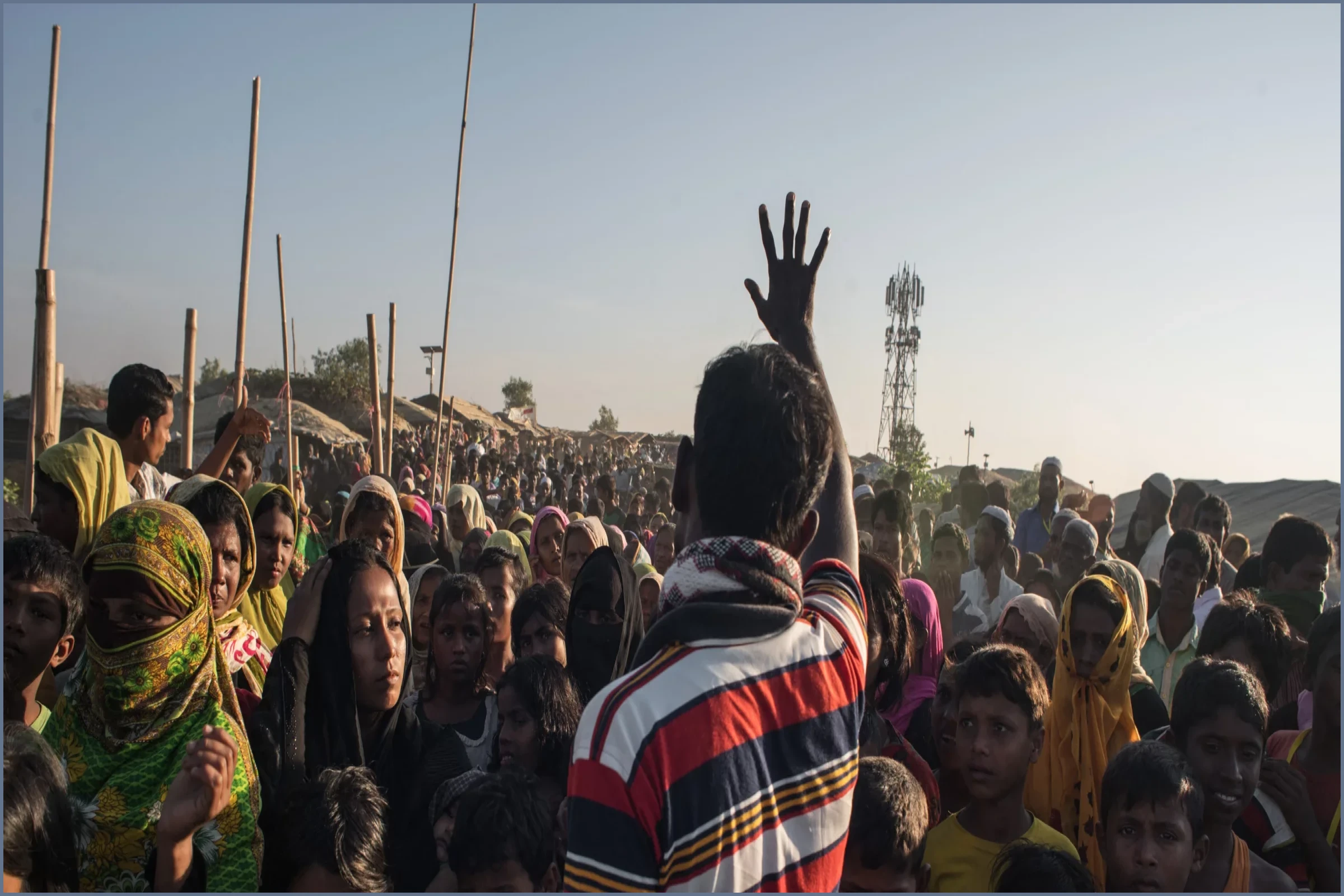
The massive displacement began on August 25, 2017, when the Myanmar military alongside armed Rakhine civilians launched a coordinated campaign, burning down hundreds of Rohingya villages. Doctors Without Borders estimated that at least 6,700 Rohingya were killed within the first month of the violence alone. That initial wave drove between 700,000 and 750,000 people into southern Bangladesh. Today, approximately 1 million Rohingya reside in the world's largest refugee settlement near Cox's Bazar, with an additional 200,000 scattered elsewhere across Bangladesh. More than half of this refugee population consists of children.
Among those struggling to survive in the camps is Bana Rashida, who fled her home in 2017 under active gunfire. During their escape, her husband, Mohammad Yunus, broke his leg falling from a high bank. The injury left him with a severe limp and unable to work, forcing Rashida to support their five children alone in the Kutupalong refugee camp. The family's tarpaulin-and-bamboo shelter offers little protection against the elements; devastating fires recently swept through parts of the camp, and subsequent monsoon downpours triggered deadly landslides. Rashida expressed her deep anxiety over their future, noting that without an income, she cannot afford to provide her children with an education. Her immediate hope is simply to acquire a sewing machine and learn how to use it. Her husband has abandoned any expectation of returning to his farmland in Rakhine state anytime soon, noting, "Without security and international backing, we aren't able to return."
Prospects for such security remain bleak. Myanmar's 2021 military coup, which ousted the democratically elected government of Aung San Suu Kyi, plunged the nation into a sprawling civil war. In Rakhine state, intense fighting between the military junta and the Arakan Army, an ethnic Rakhine rebel group, has caught the remaining Rohingya in the crossfire. The Arakan Army now controls the majority of Rakhine state and faces accusations of committing its own abuses against Rohingya civilians. Meanwhile, a strict blockade imposed by the junta has cut off essential supplies of food, medicine, and humanitarian aid, triggering widespread hunger across the region.
This ongoing violence has forced a continuous flow of new refugees into Bangladesh. Shari Nijman, a Bangladesh-based spokesperson for the United Nations refugee agency, revealed that approximately 154,000 new Rohingya refugees have arrived in the camps since 2024. Nijman described the situation in Rakhine as "extremely unstable" and noted that after nine years, it is incredibly difficult for refugees to maintain hope. She pointed out that an entire generation of children has now spent their entire lives inside the camps, and young Rohingya are increasingly despairing over their futures. "Without international attention, it becomes harder for them to believe there's an end to this suffering," Nijman added.
Because the Bangladeshi government bars Rohingya refugees from legally working, they are almost entirely dependent on international humanitarian assistance. However, this safety net is rapidly collapsing as global donor priorities shift. In 2023, severe funding shortages forced the United Nations World Food Program to slash monthly food rations from $12 per person to $8, even though 40 percent of Rohingya children under five were already suffering from chronic malnutrition. While rations were temporarily restored to $12 in 2024, they were cut again in April under a new tiered system, dropping to as low as $7 for some individuals.
The lack of food, resources, and legal employment is driving refugees toward desperate measures. Many are risking their lives on hazardous 1,000-mile sea journeys to Malaysia. Others are being drawn, sometimes through forced conscription, into Myanmar's civil war, or recruited by Rohingya militant groups and criminal gangs that operate with relative impunity inside the camps. Olney urged the United States and other international partners to step up, recommending that Washington increase its funding for the humanitarian response, pressure Bangladesh to allow refugees livelihood opportunities, and find ways to deliver aid directly to Rakhine state, including areas controlled by the Arakan Army. She noted that the rebel group has faced very little international engagement despite its control over most of the territory, leading to a lack of pressure and visibility.
While the United States historically provided substantial support, including $300 million in 2024, overall funding has declined amid broader cuts to U.S. foreign aid. The Trump administration pledged $73 million in new aid through the World Food Program in March 2025, followed by another $60 million pledge in September 2025, but these commitments still fall short of previous levels. In May, the UN and the Bangladeshi government launched a joint appeal for $710.5 million to cover basic necessities like shelter, food, healthcare, and education—a request already 25 percent smaller than the previous year's appeal. Despite the reduced target, international donors have funded only about 66 percent of the requested amount. Olney warned that without restored aid or the opportunity to work, refugees will continue to be driven toward illicit economies, gambling, and human trafficking, exacerbating what is already a major regional security crisis.