Disclosing details kept secret for more than 11 years, a former member of Myanmar’s parliament has revealed how senior ruling party leadership attempted to force him to publicly abandon his Rohingya identity as a condition for contesting the 2015 general elections.
In July 2015, the former lawmaker—who was elected to the Pyithu Hluttaw from Buthitaung township in Rakhine state in November 2010 as a Union Solidarity and Development Party (USDP) candidate—was invited to the Naypyidaw residence of U Aung Thaung, a powerful and senior leader within the USDP. The discussion centered on candidate nominations for constituencies across northern Rakhine state ahead of the upcoming national elections.
Preparing to secure his parliamentary office for a second term, the lawmaker faced a demand that went far beyond standard campaign politics. U Aung Thaung explicitly stated that he, the USDP leadership, then-President U Thein Sein, and then-Commander-in-Chief Min Aung Hlaing did not accept "Rohingya" as a legitimate ethnic identity. He urged the lawmaker to cease public advocacy for that identity and instead persuade his constituents to classify themselves as "Bengali" to obtain citizenship documentation and restore their political participation.
To execute the arrangement, U Aung Thaung advised the politician to give a public media interview declaring that "there is no Rohingya but Bengali," while strictly withholding any mention of their private meeting or U Aung Thaung’s involvement. His parliamentary nomination was made directly contingent on accepting this proposal.
While the lawmaker did not directly hear President Thein Sein or Min Aung Hlaing authorize the condition, U Aung Thaung confirmed the terms over the telephone during the meeting in the presence of then-Union Immigration Minister U Khin Yi, who currently serves as USDP chairman and speaker of the Pyithu Hluttaw. During the visit, the lawmaker also observed large portraits of President Thein Sein, Min Aung Hlaing, and nationalist Buddhist monk U Wirathu in an office at the residence. An assistant noted that the workspace was used by U Wirathu whenever he visited Naypyidaw.
Refusing to ask his constituents to surrender their ethnic identity in exchange for voting rights or another term in office, the lawmaker consulted with local community leaders in Buthitaung, who supported his decision to reject the offer. Because of the political risks of revealing such details while residing inside Myanmar at the time, he kept the conversation private. On August 4, 2015, he officially resigned from the USDP and filed to contest the election as an independent candidate for Buthitaung on August 6.
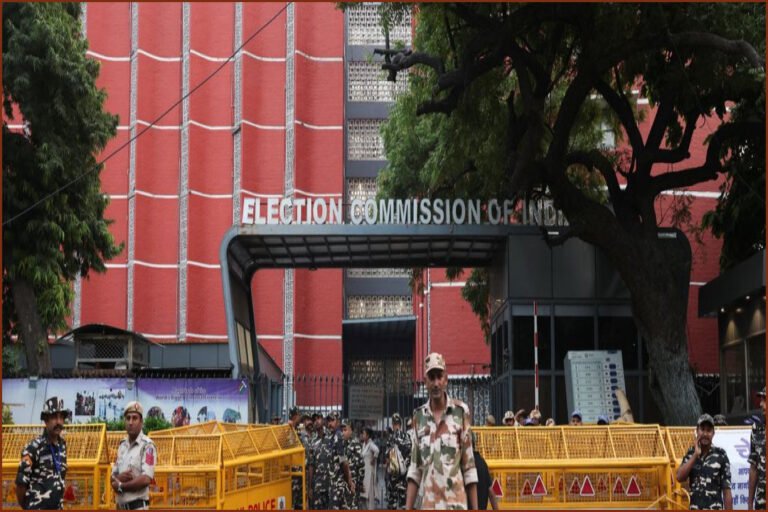
Electoral authorities moved rapidly to disqualify his independent bid. On August 22, 2015, the Maungdaw District Election Subcommission rejected his application, concluding that his parents were not Myanmar citizens when he was born in 1965. He appealed the decision with family citizenship documents, but the Rakhine State Election Subcommission upheld the disqualification on September 1. The decision was finalized when the Union Election Commission issued a formal rejection letter on September 6, 2015.
The ruling created a stark official contradiction regarding his legal status. The same Union Election Commission had officially recognized him as the elected representative for Buthitaung following the November 7, 2010 election, issuing a recognition certificate on January 10, 2011, that recorded his citizenship card details. Five years later, state authorities declared him ineligible for the same seat, claiming his family documentation was insufficient.
The State Election Subcommission acknowledged that his father held a national registration card—the primary document conferring full citizenship—and that his maternal grandparents possessed national registration cards as well. Despite submitting identical family documentation in both election cycles, officials deemed the records non-compliant with election statutes in 2015. Although official election decisions did not explicitly site his refusal of U Aung Thaung’s proposal as the cause for disqualification, the lawmaker emphasized that the outcome was directly linked to political pressure surrounding his Rohingya identity.
In November 2015, the lawmaker published an opinion article in the New York Times detailing the widespread disenfranchisement of Rohingya candidates and voters, though he omitted the specifics of the private Naypyidaw meeting until now. He noted that the historical refusal to recognize Rohingya identity and the systemic effort to label the community as "Bengali" migrants directly contributed to the mass atrocities committed in 2017, which drove hundreds of thousands into Bangladesh, as well as the instability following the February 2021 military coup.
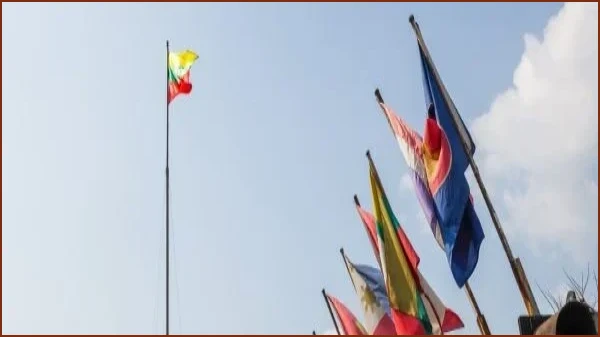
Highlighting ongoing international developments, the former representative urged the Association of Southeast Asian Nations (ASEAN) to incorporate fundamental questions of identity, citizenship, and political rights into its diplomatic engagements with military leader Min Aung Hlaing. He emphasized that refugee repatriation efforts cannot succeed unless they guarantee equal citizenship, self-identification rights, accountability for atrocities, and protection against future abuses, stressing that long-term stability in Myanmar depends on a political system where no community is forced to choose between its identity and its basic rights.
You have reached the limit of 2 free articles this month.
I maintained that I had submitted the same family citizenship documentation in both electoral processes. The surviving recognition certificate and 2105 rulings represent contrasting official outcomes, although a complete comparison of the underlying applications would require examination of the original 2010 candidate file.