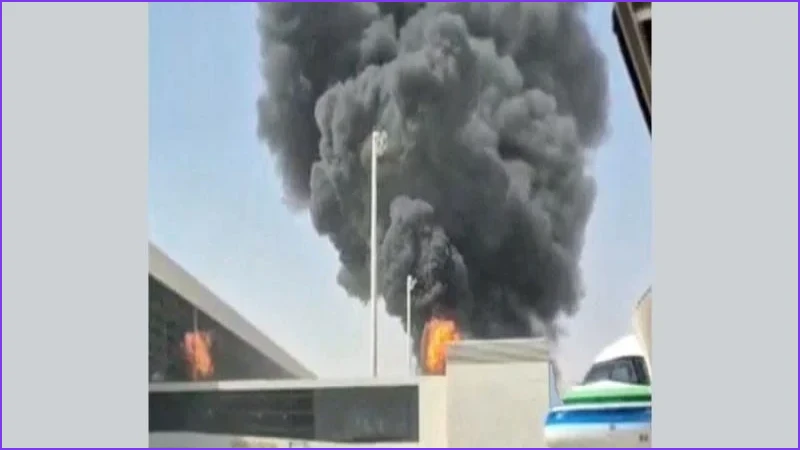
King Khalid International Airport in the Saudi capital of Riyadh has been hit by a projectile for the second time in as many days. A spokesperson for the Saudi military confirmed the incident occurred on Sunday, resulting in a fire within one of the facility's passenger halls. Saudi Arabia's civil aviation authority reported that injuries occurred during the event, although the exact number was not immediately specified. Maj Gen Turki al-Maliki, acting as a spokesman for the Saudi-led military coalition, stated that air defences had intercepted a missile in the vicinity of the airport, while authorities worked to address the fire in Passenger Hall No 4 caused by an "unknown projectile."
This latest attack follows a significantly more lethal strike on the same airport just one day earlier, which resulted in the deaths of 13 people and left 308 others injured. The Houthi rebel group in Yemen has claimed responsibility for these operations, issuing warnings to passengers and airlines to avoid Saudi Arabian airports and airspace. Their military spokesman, Brig Gen Yahya Saree, stated that the group utilized a combination of drones, cruise missiles, and ballistic missiles over the past 24 hours. He further claimed that the Houthis also targeted Dammam airport in eastern Saudi Arabia and various oil facilities, vowing that "escalating operations deep inside Saudi Arabia" would continue. Saree added that all Saudi airports are considered potential targets, with the notable exception of those located in the holy cities of Mecca and Medina.
According to the Saudi civil aviation authority, the casualties from Saturday's attack included four Saudi nationals, two individuals from Bangladesh, and one person each from the United States, Jordan, Palestine, Syria, Sudan, and Egypt. Additionally, the Indian embassy in Saudi Arabia confirmed on Sunday that an Indian citizen had died from injuries sustained during the strike. The attack has drawn sharp international condemnation, with US Secretary of State Marco Rubio condemning the strikes and confirming the death of a US citizen, while UK Foreign Secretary Ed Miliband described himself as "appalled."
Regarding the international response, US President Donald Trump stated that the United States would "make a decision" and "move very quickly" concerning potential action against the Houthis. Meanwhile, UK Defence Secretary Wes Streeting suggested that the UK could "potentially" provide additional support to Saudi Arabia. The UK Foreign Office has issued travel advice against visiting parts of Saudi Arabia, specifically areas within 10km (6.2 miles) of the Yemeni border. Other western embassies have also warned their nationals about travel in the region.
This week has seen a series of strikes on Saudi infrastructure, including an attack on Riyadh airport on Thursday that killed three Saudi nationals, as well as two additional deadly attacks on airports in Abha and Riyadh in the two days preceding that. The conflict has intensified significantly following Houthi seizures of strategic stretches of the Red Sea coast. While Yemeni pro-government forces claim to have secured those regions, the Houthis continue to control approximately a quarter of Yemeni territory and roughly 80% of its population. Saudi officials have expressed concerns that these developments could lead to the formation of an Iranian satellite state on their southern border.