Russian President Vladimir Putin declared that Moscow will deliver a "painful" retaliation against Ukraine after Kyiv targeted the Kerch bridge connecting Russia to occupied Crimea for the third time in a single week. Speaking at a press conference following meetings with U.S. President Donald Trump and Chinese President Xi Jinping in China, Putin stated that Russia would no longer engage in peace talks, reversing his previous consideration of local ceasefires.
Asserting that the bridge was utilized strictly by civilians, Putin warned that Russia's counterstrikes would far exceed the severity of Ukraine's assault. However, Ukrainian military officials directly disputed Putin's characterization, identifying the $3.6bn (£2.7bn) structure as the primary land artery used by the Russian armed forces to transport fuel, ammunition, and military equipment to its occupying forces in southern Ukraine.
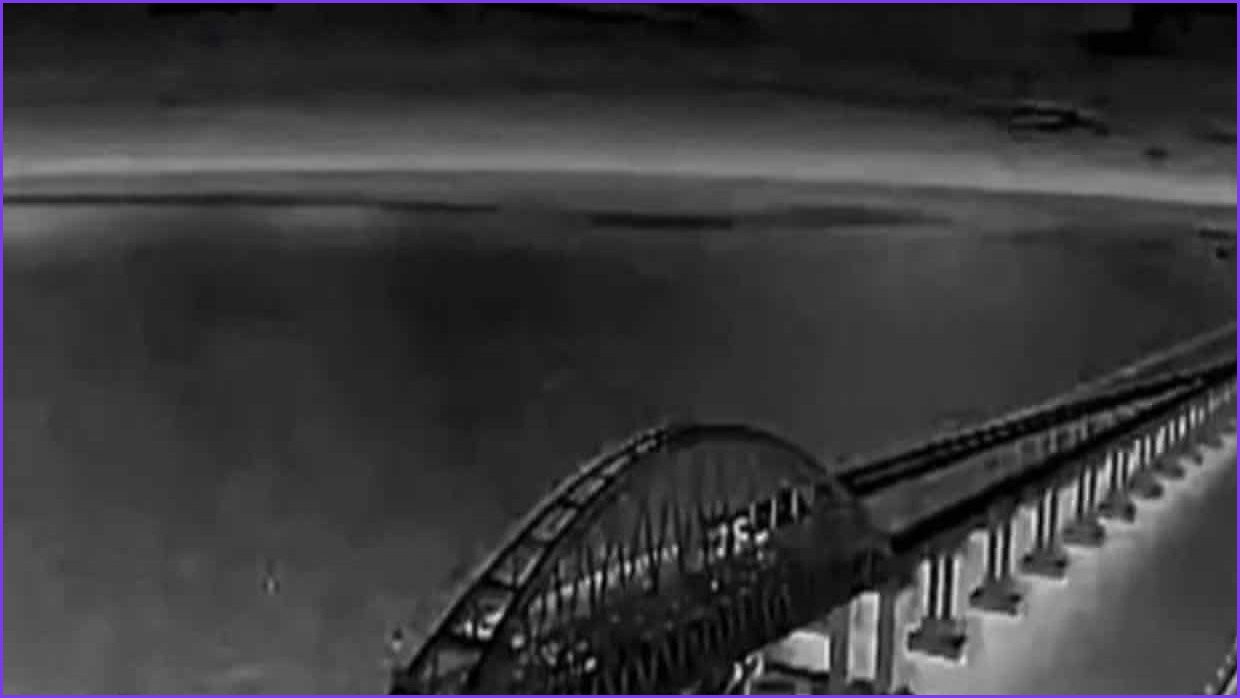
The series of strikes began early in the week after weeks of meticulous planning. Ukrainian President Volodymyr Zelenskyy described the operation as the culmination of a seven-stage campaign aimed at dismantling Russian radar and air defense systems across occupied regions. Initial strikes on Monday paved the way for a major air raid shortly after midnight on Tuesday, during which Flamingo FP-5 cruise missiles, Palianytsia drones, and Dutch-manufactured Ruta cruise missiles brought down the central supporting arch. A 227-metre road span subsequently collapsed into the Sea of Azov.
Ukraine followed up the destruction of the road bridge with a Wednesday night strike against Crimea's remaining rail link using domestic Neptune missiles, temporarily halting all train traffic. Sergei Aksyonov, the Kremlin-appointed governor of Crimea, stated that emergency crews undertook heroic repair efforts, allowing rail service to resume by approximately 4 p.m. on Thursday. Russia's transport ministry confirmed that no casualties occurred during the rail line attack.
Ukrainian military sources revealed that the strikes were intentionally timed to coincide with the extraordinary summit in China, aiming to publicly embarrass Putin in front of Trump and Xi. A source within Ukraine's armed forces emphasized that destroying the bridge—a central symbol of Putin's eight-year-old annexation of Crimea—was intended to signal to global leaders that the Russian leader's military position is weaker than presented.
Diplomatic tensions escalated further after Destinus, the Dutch company that produced the Ruta cruise missiles, confirmed its technology was key to the attack. In response, the Russian embassy in the Netherlands publicly questioned whether the Dutch government was openly participating in the conflict. Hours later, mid-afternoon explosions shook Kyiv, where a Russian drone struck directly behind the Dutch embassy. Dutch Foreign Minister Tom Berendsen confirmed that staff members were uninjured despite minor damage to the building, adding that an official investigation is underway. Kyiv city authorities reported that afternoon strikes across the capital killed a 26-year-old man and injured five others.
The international diplomatic fallout extended to British Prime Minister Andy Burnham, who addressed the situation during a press conference. Asked whether Trump had painted an overly optimistic picture regarding Russia's readiness for peace, Burnham rejected the notion, stating that the context of recent discussions indicated quite the opposite. Ukraine has long viewed the Kerch bridge as an illegal monument to Russian aggression, having previously attempted to destroy it using a truck bomb in 2022 and a maritime drone in 2023.