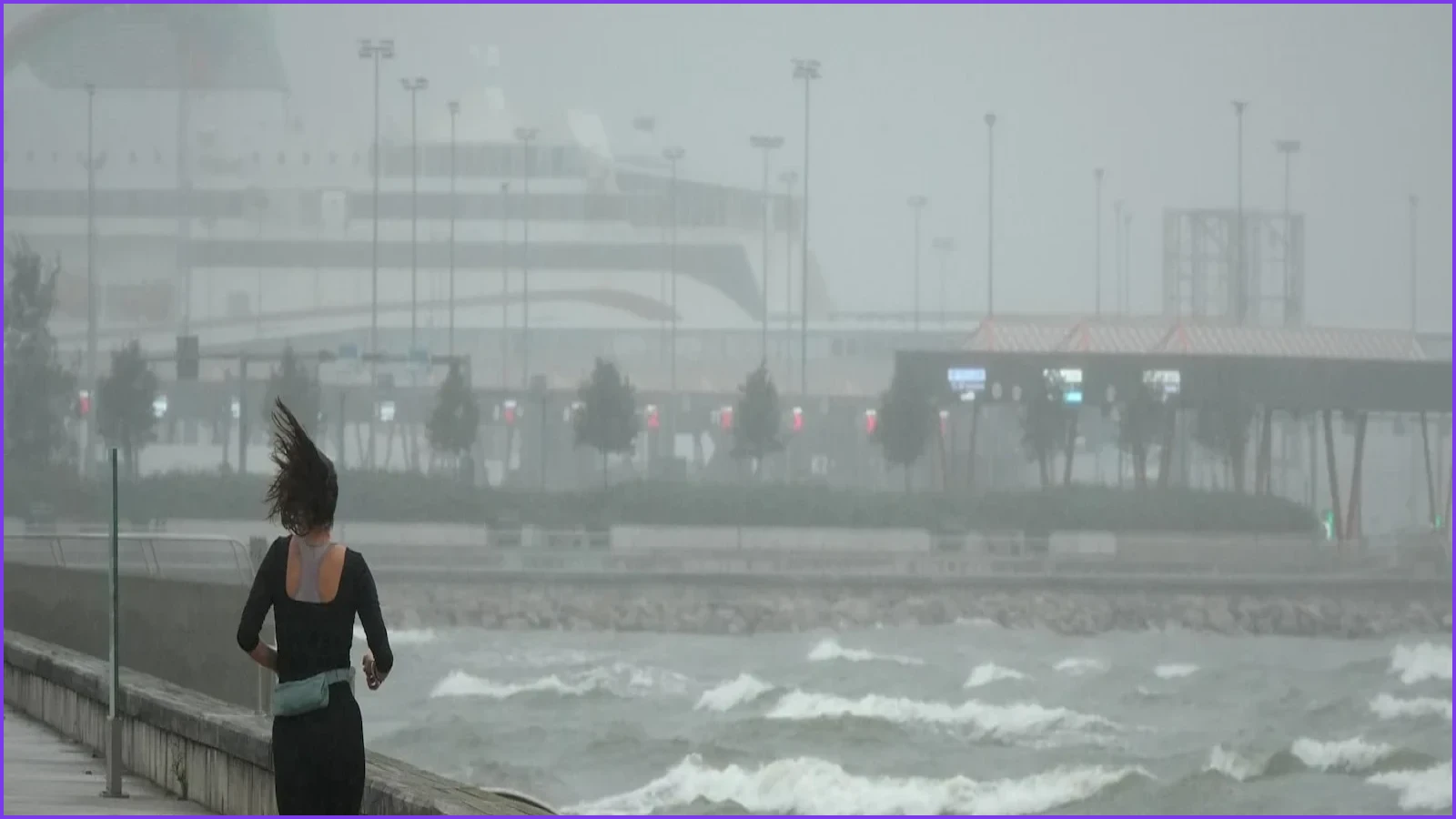
A powerful cyclone swept through Latvia and Lithuania over the weekend, resulting in two fatalities and leaving more than half a million people without electricity. The storm, which brought torrential rain and high-velocity winds, began its impact on Saturday and continued into Sunday morning.
In central Latvia, one individual died in Jelgava after a building partially collapsed on Saturday. The capital, Riga, recorded wind speeds exceeding 67 mph, while many weather stations reported that half of the typical monthly rainfall fell within a single day. The severe weather disrupted mobile services and damaged infrastructure, with falling trees affecting rail and public transport. Riga airport officials noted on Sunday morning that the storm caused flight delays and rerouting.
Across the border in Lithuania, another person died after being struck by a falling tree. By Sunday morning, more than 200,000 residents in Lithuania were without power, and several others had sustained injuries. Estonia also faced strong winds, particularly in its northern and western regions and on its islands, leading to delayed trains and the disruption of ferry services.
Northeastern Poland was also impacted, with over 100,000 people experiencing power outages. Andris Viksna, representing the Latvian Environment, Geology and Meteorology Center, described the event as the most severe storm to hit Latvia since 2005. While noting that the link to climate change requires further assessment, Viksna stated that it is plausible human-caused climate change may have intensified the rainfall associated with the cyclone. Conditions were expected to improve by Sunday and into Monday.