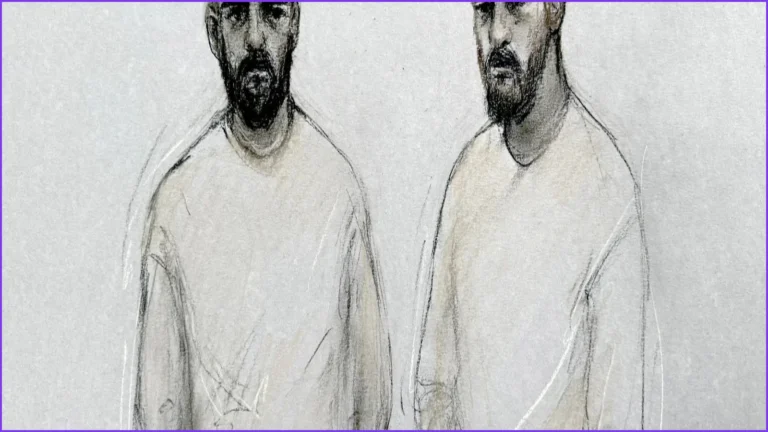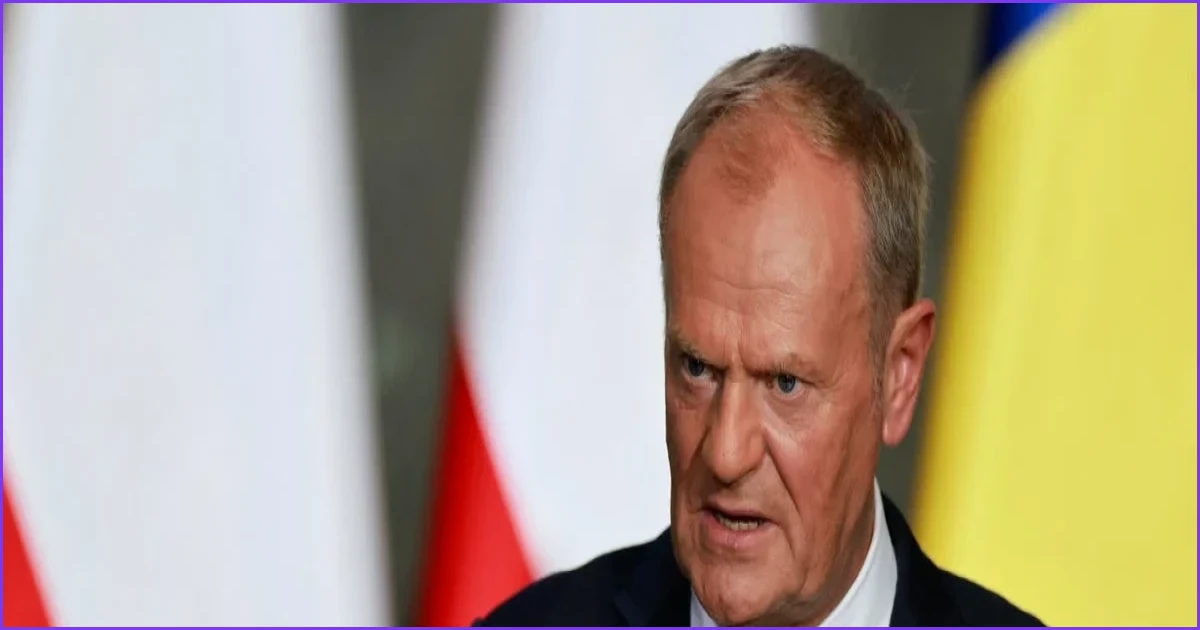
Polish authorities have successfully disrupted a Russian-backed plot to assassinate a Ukrainian-American citizen in Warsaw, Prime Minister Donald Tusk announced on Thursday, August 13, 2026. The arrest of the suspect, which was reported at 12:52 PM EDT and took place on Friday, August 7, marks the first time in decades that a Western government has publicly accused Moscow of orchestrating an assassination attempt against a United States citizen on NATO soil.
According to Tusk, the suspect was recruited by Russia's secret services to target an individual who was deemed "inconvenient" by Russian President Vladimir Putin's administration. Tusk emphasized that Polish security forces managed to prevent the execution at the last moment. "He was inconvenient from the point of view of the Putin regime, and at the last moment… we managed to prevent this execution," Tusk stated during a news conference. He added, "This is the first situation of its kind in which someone, acting on Russian orders, decided to carry out an attack against an American citizen on the territory of another NATO country." He warned that Western nations "have to accept the assumption that the Putin regime will try to eliminate people who are inconvenient for various reasons."
The operation to foil the assassination plot was conducted in close cooperation with intelligence services from the United States, according to Tomasz Siemoniak, the Polish minister overseeing the country's intelligence agencies. Siemoniak confirmed that the intended victim was a U.S. citizen "of Ukrainian origin," though officials did not immediately release additional details regarding the identity of the target. Russia's Foreign Ministry did not immediately offer a comment in response to inquiries.
While Russia has a long history of targeting its adversaries abroad—often employing rare poisons—intelligence officials note that Moscow's security apparatus has become increasingly brazen. Instead of focusing solely on traditional targets, Russian operatives are now actively pursuing foreign supporters of Ukraine, Russian activists, and military defectors. Western authorities view this escalating campaign as part of a broader strategy by Moscow to destabilize European nations supporting Kyiv.
Since the start of the 2022 invasion of Ukraine, media reporting has mapped roughly 200 acts of arson, sabotage, and other disruptions across Europe that officials have connected to Russia. Despite these findings, Vladimir Putin denied in May that Russia is conducting a sabotage campaign against European nations. However, a senior European intelligence official previously remarked that "this campaign is not by accident or chance," adding that "there is political authorization" behind it.
The thwarted Warsaw plot adds to a long list of high-profile operations attributed to Russian operatives. British authorities previously blamed Moscow for the 2006 fatal poisoning of former FSB officer Alexander Litvinenko using radioactive polonium in London, as well as the 2018 attempted murder of former military intelligence officer Sergei Skripal with the nerve agent Novichok in Salisbury. In Germany, authorities determined that Russia organized the 2019 assassination of Zelimkhan Khangoshvili, a former Chechen rebel commander shot in a Berlin park by Vadim Krasikov—a hitman whom Putin personally welcomed back following a high-profile spy swap.
Other European nations have also disrupted similar operations. Last year, French officials stopped a plot targeting Vladimir Osechkin, a Russian exile under police protection who helps military defectors escape. Lithuanian authorities thwarted two plots last year—one against a Lithuanian supporter of Ukraine and another against a Russian activist. In Germany, security services recently disrupted two separate conspiracies: one targeting a Ukrainian military official and another aiming at the head of a German weapons manufacturing firm supplying arms to Ukraine.
Poland itself has been a frequent site of these operations. In 2024, Polish authorities arrested a man accused of plotting to assassinate Ukrainian President Volodymyr Zelenskyy. More recently, in June, a Russian artist critical of Putin named Robert Kuzovkov, who used the pseudonym Semyon Skrepetsky, was shot and killed at close range near his home in eastern Poland. While Tusk noted at the time that the killing bore the hallmarks of a political assassination and suggested potential Russian involvement, Polish officials have not yet formally attributed the death to Moscow. Additionally, in 2024, a defected Russian helicopter pilot was killed in Spain, with Russian operatives remaining the primary suspects in that investigation.