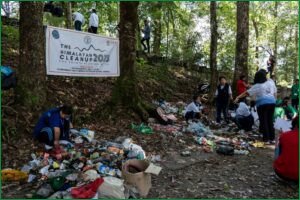
Volunteers participating in cleanup efforts across Ladakh, India, are consistently confronted with the same environmental degradation: pristine mountain slopes, streams, and soil littered with snack wrappers, plastic bottles, and discarded food packaging. While visitors may move on, the waste they leave behind accumulates in a cold-desert ecosystem where decomposition is exceptionally slow and infrastructure for waste management remains limited. This plastic buildup not only contaminates vital water sources and threatens local wildlife but is frequently burned in the open, releasing toxic pollutants into the air.
Data gathered during The Himalayan Cleanup (THC) campaigns in 2025 and 2026, coordinated by the Navikru Eco Foundation, Little Green World, and various local stakeholders, highlights the severity of the issue. In 2025, volunteers removed 22,582 waste items from 59 sites, with plastic accounting for over 21,000 of those pieces. Alarmingly, 74 percent of the recovered plastic was non-recyclable. The 2026 campaign showed a similar trend across 19 sites, where 1,050 volunteers collected 19,521 items. Of those, 18,709—or 95.8 percent—were plastic, with 75.6 percent classified as non-recyclable. A significant portion, 71.5 percent, consisted of multilayer packaging from items like chips, biscuits, and confectionery, which possess little to no recycling value.
Brand audits conducted during these cleanups identified packaging from major corporations, including ITC, PepsiCo, Nestlé, Coca-Cola, Perfetti Van Melle, Parle Agro, Britannia, Haldiram’s, GCMMF (Amul), Mondelez, and Dabur India. Experts note that while cleanup campaigns are vital for awareness, they cannot solve a crisis fundamentally rooted in unsustainable production. The burden of this waste is currently being shifted onto local mountain communities, who are forced to manage the consequences of mass-produced disposable goods.
To address this, the Ladakh Administration and policymakers are urged to strengthen Extended Producer Responsibility (EPR) regulations, requiring companies to finance the collection and recycling of their packaging while capping plastic production. There is an urgent call for producers to phase out single-use materials in favor of toxic-free, reusable systems. Furthermore, the tourism sector, including hotels and tour operators, must adopt refill stations and reusable alternatives. Ultimately, consumers are also encouraged to demand sustainable packaging and prioritize reusable products to protect the region from further environmental harm.