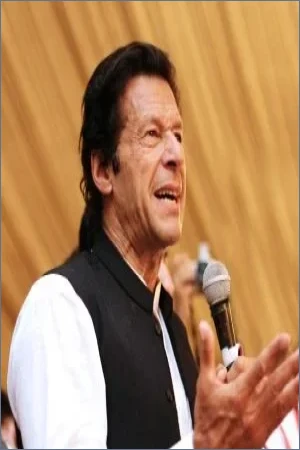
Pakistan’s Supreme Court issued a directive on August 18 ordering the government to transfer imprisoned former Prime Minister and Pakistan Tehreek-e-Insaf (PTI) founder Imran Khan to a hospital. The court’s intervention follows ongoing petitions from Khan’s family and legal team, which requested that the 73-year-old leader be granted access to specialized medical examination and treatment, as well as meetings with family and personal physicians.
Medical reports regarding Khan, who has been in custody since August 2023 following his removal from office in 2022 and subsequent corruption convictions, have highlighted concerns regarding his cardiac health and blood pressure. Additionally, reports indicate he suffers from a specialized eye condition that may have impacted his right eye. Authorities are reportedly aware of the potential for significant public unrest should the former leader’s health deteriorate further while in detention.
The judicial order arrives during a period of shifting political dynamics in Pakistan, where there is a growing urgency to lower political temperatures. Recent discussions have intensified regarding administrative reforms, including a proposal to create up to 32 new administrative units. Interior Minister Mohsin Naqvi recently remarked that the country's governance system had collapsed, necessitating deep reforms. Analysts suggest that for such structural changes to gain legitimacy, the participation of the PTI would likely be required.
A series of meetings between government officials and PTI-linked figures has taken place, involving leaders from the ruling Pakistan Muslim League-Nawaz (PML-N) such as Rana Sanaullah, Azam Nazeer Tarar, and Tariq Fazal Chaudhry, who have met with opposition leader Mahmood Khan Achakzai. A delegation from the Pakistan People’s Party (PPP) has also engaged in outreach to the opposition.
The situation remains volatile, particularly as the PTI has announced plans for a long march to Islamabad starting September 27. Khyber Pakhtunkhwa Chief Minister Sohail Afridi has stated that the agitation could be canceled or deferred if the government grants Khan access to his family, legal counsel, and doctors. Reacting to the Supreme Court’s decision, Adviser to the Prime Minister Rana Sanaullah noted that the ruling was based on merit and urged the PTI to respect judicial processes.
Observers suggest that the court’s decision may signal a path for the PTI to engage in parliamentary and constitutional processes by reducing confrontation. Furthermore, some speculate that the country’s security establishment is eager to maintain political stability to protect recent geopolitical gains. While the exact motivations behind the decision remain part of the complex, often opaque, political landscape of Pakistan, the move is viewed as a potential opening to de-escalate nationwide tensions.
You have reached the limit of 2 free articles this month.
The development does not appear to be a purely independent judicial ruling. Rather, it seems to be part of broader political changes underway in Pakistan. It points to a shifting environment in which lowering political temperatures and exploring limited dialogue have become urgent for various reasons.