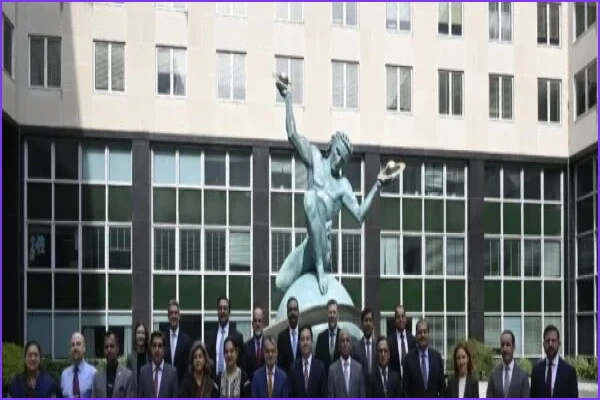
The fourth round of the annual Pakistan-United States Counterterrorism Dialogue concluded in Washington, D.C., on August 4, 2026, with Pakistan expressing satisfaction over the evolving nature of the discussions. The Pakistani delegation was led by Ambassador Nabeel Munir, special secretary at the Ministry of Foreign Affairs, and the U.S. side by Ambassador Gregory LoGerfo, the U.S. coordinator for counterterrorism.
A joint statement from the dialogue emphasized shared strategic interests and a mutual determination to confront regional security threats. Both nations affirmed their resolve to combat terrorist organizations endangering their citizens and regional stability, specifically naming ISIS-Khorasan (ISIS-K), al-Qa’ida (AQ), the Tehreek-e-Taliban Pakistan (TTP), and the Balochistan Liberation Army (BLA) and its affiliates. This collaboration is framed as essential for the security of both nations and for fostering regional peace, prosperity, and stability.
The institutionalization of this annual dialogue underscores counterterrorism as a vital pillar in Pakistan-U.S. relations, persisting despite broader geopolitical shifts. Since its inception in 2023, the dialogue has transformed from ad-hoc security exchanges under broader frameworks like the U.S.-Pakistan Strategic Dialogue into a structured security partnership.
The initial 2023 dialogue focused on re-establishing formal engagement following the U.S. withdrawal from Afghanistan, aiming to set a baseline for bilateral security contact and address general regional stability, violent extremism, and terrorism financing.
By the second session in 2024, the focus sharpened to prioritize TTP and ISIS-K as key regional threats. The joint statement acknowledged that a partnership to counter these groups would advance regional security.
A significant turning point occurred in 2025 when the joint statement formally integrated the Balochistan Liberation Army (BLA) alongside the TTP and ISKP. For Pakistan, securing U.S. recognition of the BLA as a threat within this formal dialogue was a major diplomatic success, especially after a series of high-profile BLA-led attacks within Pakistan.
The 2026 dialogue further broadened the scope by reintroducing al-Qa’ida into the explicit joint threat environment. The inclusion of al-Qa’ida reflects persistent U.S. concerns about core militant networks operating from Afghanistan.
The progression of the dialogue over four years shows a notable shift in bilateral security dynamics. While early rounds focused on threats to U.S. security, the 2025 and 2026 dialogues demonstrated a more balanced approach, with the U.S. formally acknowledging Pakistan's core internal security challenges, particularly those posed by the BLA and TTP. This explicit recognition of Pakistan-centric threats signifies a meaningful improvement in bilateral relations.
Looking ahead, Pakistan's strategic objective is to translate these joint statements into concrete operational support. This includes seeking expanded U.S. cooperation to dismantle cross-border sanctuaries in Afghanistan and secure official UN sanctions against BLA and TTP leadership. A key breakthrough would involve the U.S. applying tangible pressure on regional facilitators of BLA and TTP attacks by disrupting their international funding and operational networks.
You have reached the limit of 2 free articles this month.