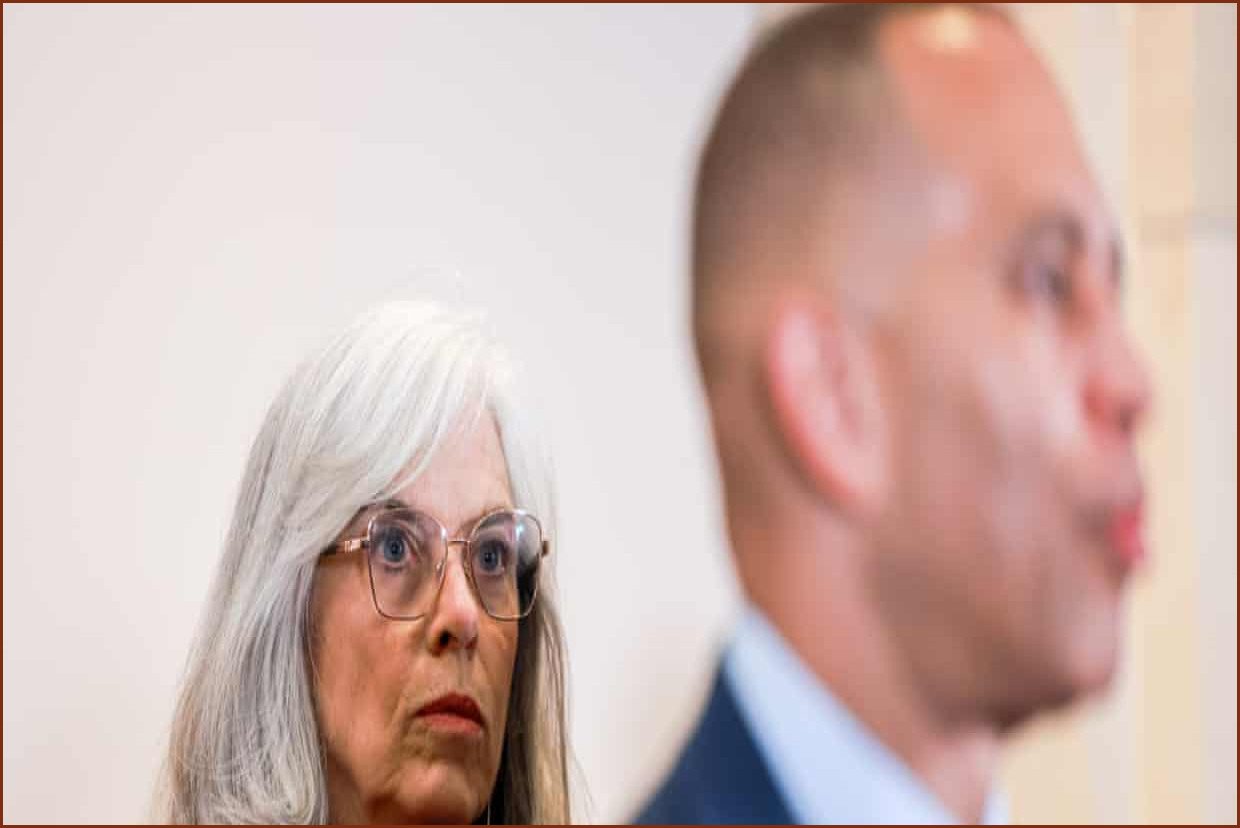
A significant shift in US political consensus became apparent this week as more than 100 Democrats in the House of Representatives broke with their leadership to support a measure that would have cut military aid to Israel. The vote occurred despite a direct effort by House minority leader Hakeem Jeffries to maintain party unity, as he had circulated a letter urging his caucus to reject the amendment.
The amendment, introduced by Kentucky Republican Thomas Massie, sought to eliminate $3.3bn in security assistance to Israel from the state department appropriations bill. While the measure ultimately failed in a 314-104 vote, the fact that 103 Democrats—nearly half of the entire caucus—supported the move marked a notable departure from traditional bipartisan norms. Even House minority whip Katherine Clark defied the position held by the minority leader.
Veteran lawmaker Nancy Pelosi, long considered a staunch defender of the US-Israel relationship, also voted for the amendment. Although she later described the proposal as “ill-conceived,” she noted that she supported it to send a specific message. Republican leadership had facilitated the vote in an attempt to expose political divisions within the Democratic Party ahead of upcoming midterms, yet the strategy resulted in an awkward outcome for the GOP as well. With the exception of Massie, every other Republican voted to keep the aid intact.
This legislative tension arrives as public opinion regarding unconditional aid to Israel has changed substantially. Data from the Institute for Global Affairs indicates that only 16% of US adults currently believe unrestricted aid should continue, a figure that drops to 9% among adults under 30. Furthermore, criticisms of Israeli influence are appearing in unexpected places, including recent comments from JD Vance, who suggested that figures within Israel’s system have attempted to hinder his diplomatic efforts regarding Iran.
The debate is expected to intensify with the National Defense Authorization Act, which contains the US-Israel Defense Technology Cooperation Initiative. This provision aims to deepen defense-industrial integration between the two nations, a move that Senator Bernie Sanders has warned will proceed with insufficient congressional scrutiny. Previous attempts by Massie and Congressman Ro Khanna to strip this provision were blocked in the House rules committee.
The recent vote underscores a broader trend where maintaining the traditional bipartisan support for Israel now requires active management from party leaders. With new candidates entering Congress who campaigned on challenging this long-standing consensus, the political floor that has held for 50 years appears to be buckling from both sides of the aisle.
Still this is not entirely a new debate: in April 2024, while under Joe Biden, dozens of lawyers inside and outside the administration then called on the president to immediately halt military aid to Israel after contending the state had probably violated US law and the Geneva conventions with disproportionate attacks on civilian populations.
This year’s Democratic primaries have already elevated a cohort of candidates who ran explicitly against the old consensus and won: progressives and democratic socialists in New York, New Jersey, Colorado, Pennsylvania and Illinois who campaigned on cutting aid and calling Aipac money toxic, and a marquee Michigan Senate primary, where candidate Haley Stevens voted alongside all Republicans to keep the aid flowing.