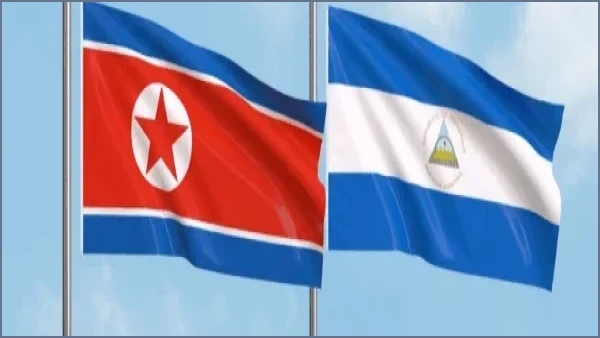
As North Korea emerges from its post-pandemic isolation, the Kim Jong Un regime is actively reshaping its foreign relationships, with a particularly unexpected focus on the Central American nation of Nicaragua. While Pyongyang has recently closed several of its diplomatic missions across the globe, its strategic courtship of Managua represents a notable shift in North Korea's foreign policy landscape, signaling an effort to build alliances outside the immediate geopolitical orbits of China and Russia.
This diplomatic restructuring became highly visible as North Korea began reopening its borders in 2023. Between late 2023 and early 2024, Pyongyang shuttered its embassies in Angola, Bangladesh, the Democratic Republic of the Congo, Guinea, Libya, Nepal, Senegal, Spain, Syria, and Uganda. Although the North Korean government did not offer specific reasons for the closures, the moves indicated a calculated reallocation of diplomatic resources toward key strategic partners. This included opening new consulates in Russia, pursuing deeper ties with Belarus—marked by President Alexander Lukashenko's visit in March 2026—and extending a surprising invitation to Nicaragua.
The outreach to Nicaragua began in July 2023 when a North Korean delegation visited Managua to propose the establishment of a Nicaraguan embassy in Pyongyang. Although North Korean state media remained quiet on the proposal, the Nicaraguan government publicly disclosed the invitation. Within a year, Managua inaugurated its diplomatic mission in Pyongyang and presented its ambassadorial credentials. Since then, North Korean state media reporting on Nicaragua has surged. The official Korean Central News Agency (KCNA) has published 12 reports on Nicaragua so far in 2026, following 15 in 2025 and eight in 2024, compared to just two reports in 2023.
The relationship between the two nations has historically ebbed and flowed alongside political shifts in Managua. Pyongyang avoided diplomatic ties with Nicaragua's U.S.-backed government until 1979, when the Sandinista National Liberation Front seized power. Initially, North Korea's connections to the Sandinistas were facilitated through Cuba, though Pyongyang had reportedly provided military training to Sandinista personnel before the revolution. Bilateral cooperation peaked during the 1980s, highlighted by North Korean military aid—including four patrol vessels valued at $8 million—and mutual diplomatic backing. In 1986, Sandinista leader and then-President Daniel Ortega traveled to Pyongyang for a historic summit, and Nicaragua later boycotted the 1988 Seoul Olympics in a show of solidarity with the North. However, ties cooled significantly after the Sandinistas lost power in 1990, leading to the closure of the North Korean embassy in Managua in 1995.
Diplomatic relations were reestablished when Ortega returned to power in 2006, but the relationship remained largely ceremonial for another decade. In January 2017, Choe Ryong Hae, one of Kim Jong Un's top officials, attended Ortega's inauguration for his third consecutive presidential term, where both governments celebrated nearly 40 years of friendship. Despite the warm rhetoric, the practical depth of the relationship was minimal; in 2017, North Korea's exports to Nicaragua were valued at just $1.8 million, reciprocal trade was negligible, and there was no evidence of active military cooperation.
The current revitalization of ties may be linked to broader regional shifts, particularly involving Cuba. In February 2024, South Korea normalized diplomatic relations with Cuba, which had long been a close partner of Pyongyang and hosted North Korea's third-largest embassy. This normalization was a major diplomatic setback for the Kim regime. Notably, in April 2024, just two months after the Seoul-Havana agreement, Nicaragua closed its embassy in South Korea, citing budget constraints. While it remains unclear if the events were directly connected, the timing aligns closely with Pyongyang's ongoing courtship of Managua.
Nicaragua fits the three primary criteria North Korea looks for in its preferred international partners: a loose adherence to the rules-based international order, a lack of close alignment with the United States or South Korea, and a need for resources or services that Pyongyang can provide to gain leverage. With the United States strongly opposing the Sandinista government and Nicaragua no longer maintaining a diplomatic presence in Seoul, the partnership offers mutual benefits. Furthermore, as Nicaragua's traditional security relationships with Cuba and Venezuela have grown less reliable, North Korea could serve as an alternative supplier of military equipment and expertise, complementing Managua's existing security agreements with Russia and China.
You have reached the limit of 2 free articles this month.
There are still unanswered questions as to why Pyongyang extended this outreach. Does North Korea see potential for trade (arms or otherwise)? Is Pyongyang seeking to expand its own work in the region?