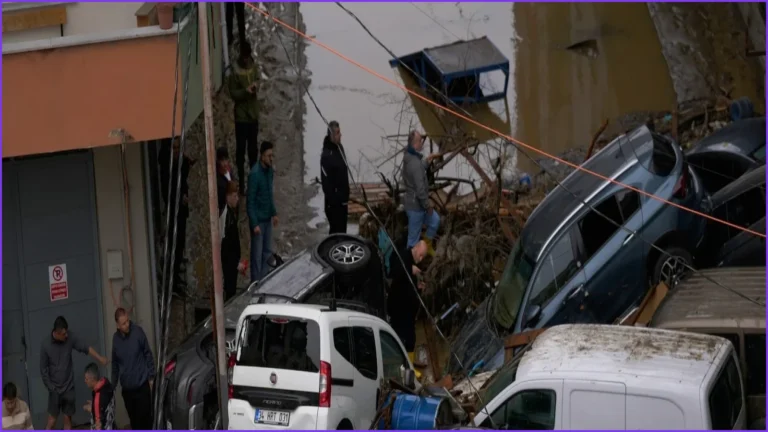
KATHMANDU, Nepal — Authorities in Nepal have begun conducting mass burials in trenches as the death toll from the devastating flash floods along the Nepal-China border officially surpassed 1,000. Search and rescue teams, aided by sniffer dogs, continue to comb through deep mud, rocks, and debris in a desperate search for thousands of people who remain missing a week after a catastrophic glacial collapse.
According to Nepal’s disaster agency, the confirmed death toll in the country has reached 1,003, with 3,916 people still missing, including 583 foreign nationals. Across the border, Chinese authorities reported 16 deaths and 546 missing, including 261 foreigners, as of Sunday. The disaster, which began on August 26, 2026, was triggered when bedrock beneath a Himalayan glacier failed, causing a massive collapse that registered as a magnitude 5.2 seismic event. The resulting torrents of rock, ice, and meltwater surged into downstream valleys, rapidly swelling rivers in Tibet and Nepal, and wiping out homes, bridges, and roads.
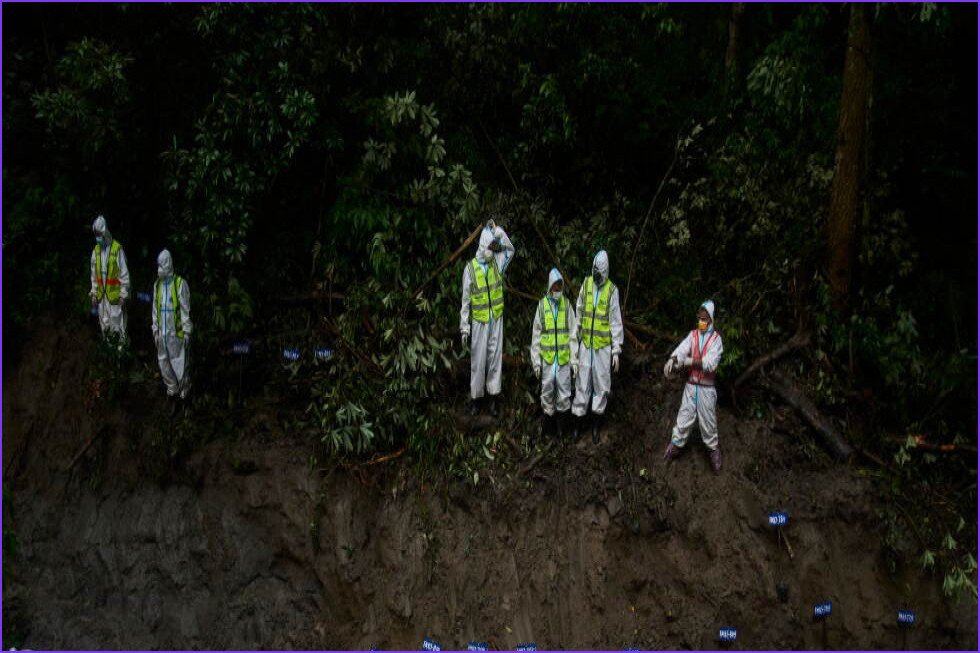
In the capital city of Kathmandu, police worked through heavy rain on Tuesday, September 1, to bury dozens of unidentified victims in multiple trenches near a forested area. To manage the grim task, authorities erected barbed wire around the burial site and placed blue numbered markers over the graves. To ensure families might eventually identify their loved ones, officials are preserving DNA samples, taking photographs of distinguishing facial features, and recording identifying details, with each body assigned a unique reference number. Outside a government hospital in Kathmandu, anxious residents searched for news, looking at photographs of missing individuals displayed on boards while speaking on mobile phones.
Meanwhile, in the south-central district of Chitwan, local authorities carried out temporary burials in trenches dug into a forest to mitigate mounting public health risks. The scale of the disaster has severely hampered rescue efforts, with widespread landslides and severed transport links leaving remote Himalayan communities entirely isolated. The initial onslaught of water and mud along the border killed at least 168 people and left more than 1,300 missing.
Rescuers are now in a race against time to reach hundreds of workers feared trapped inside tunnels at damaged hydropower projects. Local authorities reported that about 900 workers are missing across 12 different projects, with roughly 500 believed to be trapped inside water-control tunnels. Brig. Gen. Raja Ram Basnet, the spokesperson for the Nepalese Army, stated that rescue teams, assisted by foreign experts, are actively working at several of these hydropower sites. Military images showed rescuers wading through deep mud and water to enter debris-filled tunnels.
On the Chinese side, emergency crews have been searching for survivors around the Gyirong Port border crossing, which was completely destroyed by mudslides. Teams are using heavy machinery to clear the primary highway leading to the port to allow vital supplies, equipment, and personnel to reach the affected zone, according to reports. Amid the devastation, Nepalese authorities have successfully rescued at least 11,814 people, utilizing helicopters and other aircraft to reach communities cut off by destroyed infrastructure.
Bimal Sharma, a helicopter pilot flying rescue and relief operations, described his shock upon seeing Timure, a border town close to Tibet that he has known for years. "It felt like I was flying over an entirely different landscape," Sharma said, adding that he could see the profound grief of those he evacuated. "I can see the pain in their eyes. It’s heartbreaking."
International assistance is arriving, with China’s Foreign Ministry spokesperson, Guo Jiakun, announcing that a second batch of relief supplies is being dispatched to Nepal. This aid package includes drones, water purification systems, and DNA testing equipment. Chinese DNA testing experts are also traveling to Nepal to assist local authorities in identifying the remains of victims.
For survivors, the process of recovery is just beginning. In Nuwakot district, residents returned on Wednesday to assess the severe damage to their homes, with some salvaging usable materials from houses ruined by the torrents at 1 Number Pul. Grieving families are also mourning their losses; on Monday, a mother in the region cremated her 21-year-old son who perished in the flash floods.
The catastrophe has sparked urgent calls for international action on environmental degradation. Nepal’s Prime Minister, Balendra Shah, emphasized that the tragedy underscores the escalating dangers of global warming. "This incident has indicated that the risks we face in the Himalayan region are increasing with climate change," Shah wrote in a social media post. "Therefore, this region must be alert, and at the same time, it is time for us to strongly raise the issue of disasters caused by climate change before the international community."