KATHMANDU, Nepal — Rescuers on Monday scrambled to reach hundreds of workers believed to be trapped inside massive mud-blocked tunnels at hydropower construction sites along the Nepal-China border. The emergency operation comes as the combined death toll from last week's catastrophic flash floods in the Himalayan region climbed past 950, while families grow increasingly desperate in their search for thousands of missing relatives.
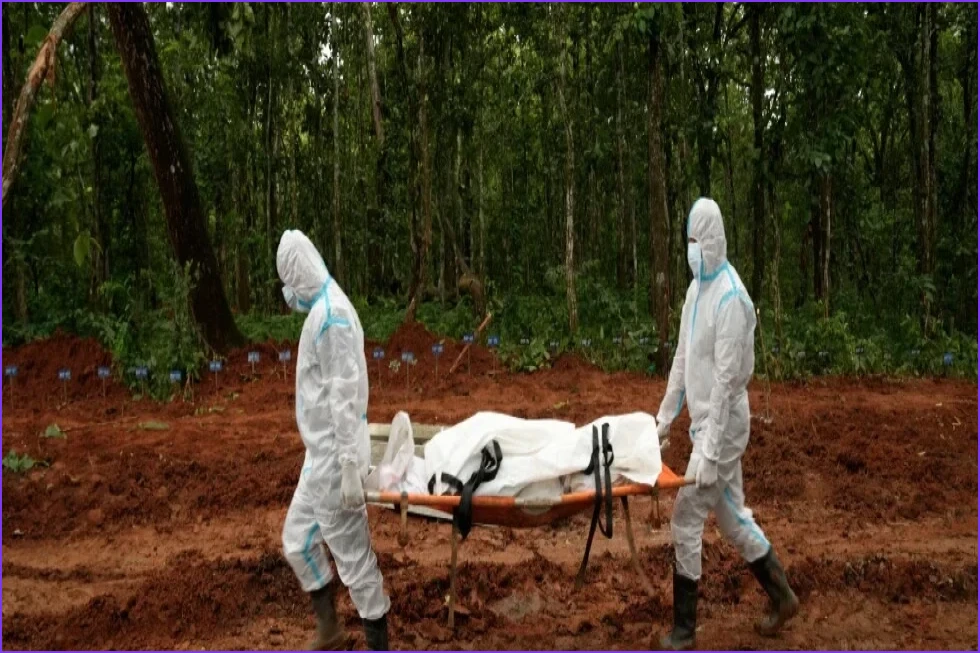
The scale of the disaster has overwhelmed local infrastructure, leading authorities in one Nepalese district to begin burying unidentified bodies in temporary graves. The move has sparked criticism and accusations that traditional Hindu funeral rites are being disregarded. In Chitwan, Nepal, military and paramilitary personnel were seen carrying bodies to mass burial sites, where relatives like Muna Khadka, who lost her son Aayush Khadka, gathered in grief.
According to the latest reports from Nepal's disaster agency on Monday, the official death toll in the country has reached between 903 and 939. The agency also reported that between 3,925 and 4,247 people remain missing, including 592 foreign nationals. Meanwhile, across the border in China, authorities had confirmed 16 deaths and 546 missing people as of Sunday. Chinese state media reported that 261 of those missing on their side are foreigners, including more than one hundred Nepalese citizens.
A major focus of the rescue effort is centered on the massive water-control tunnels of 12 damaged hydropower projects in Nepal's Rasuwa and Nuwakot districts. The Independent Power Producers’ Association, Nepal (IPPAN) reported that at least 900 workers remain unaccounted for across these sites, with approximately 500 believed to be trapped inside the tunnels. Mohan Kumar Dangi, the president of IPPAN, stated that some workers managed to place emergency calls when the disaster first struck last Wednesday, while others who successfully fled confirmed that many of their colleagues were left behind inside the structures.
Six days after the initial deluge, fears are mounting that those trapped may have run out of air. "These tunnels are big enough to drive trucks through," explained Jakob Steiner, a geoscientist at the University of Graz in Austria who is currently based in Dhaka, Bangladesh. Steiner noted that while rescuers have reportedly managed to pump oxygen to some of the trapped workers, the operation remains a critical race against time as supplies of food and water dwindle.
The situation is particularly dire at the Upper Trishuli-1 Hydropower Project in the severely affected Rasuwa district, where 576 people are missing, including an estimated 300 workers believed to be stuck inside the main tunnel. At the nearby Trishuli-3 Hydropower Project, Nepalese army spokesperson Brig. Gen. Raja Ram Basnet confirmed that rescue crews are working to descend approximately 15 meters (50 feet) into a tunnel to reach those trapped inside. Elsewhere in the region, in Dhading, workers were seen shoveling thick mud from a flood-damaged power station that serves as a vital electricity source for more than 20,000 local residents.
The disaster was triggered last Wednesday by a massive glacial collapse high in the Himalayas. Scientists analyzing satellite imagery determined that the bedrock beneath a glacier collapsed, pulling a significant portion of the ice sheet down with it. The force of the rockfall was so violent that it registered as a magnitude 5.2 seismic event. This immense volume of rock and melted ice surged into the river valleys below, unleashing a violent torrent that swept away homes, bridges, and roads across Tibet and Nepal. In Dhading District, remnants of a bridge that once spanned the Trishuli River lay ruined after being washed away, while students at the Shree Bagheswori Madhyamik School in Galchhi worked to salvage their schoolbags from piles of mud left behind by the waters.
On the Chinese side of the border, recovery teams are working to restore access to the Gyirong Port border crossing, a key transit point between the two nations. State broadcaster CCTV showed footage on Monday of trucks dumping large boulders to repave a section of the road that has been submerged under 2 to 3 meters (6.6 to 9.8 feet) of fast-flowing water. The repair work is taking place just over a kilometer (0.62 miles) from the border. While some rescue units have reached the frontier, a large portion of the recovery force remains cut off. Chinese state media coverage has focused heavily on the mobilization of the People’s Liberation Army, firefighters, and directives from top government leaders, leaving many details about the victims on the Chinese side unclear.
Among those searching for answers is Maraval Nagappan, a travel company owner from Chennai, India, who traveled to Nepal two days after the disaster to look for his son, Sathya Narayan. Sathya was leading a group of 49 Indian pilgrims returning from Mount Kailash, a sacred site in southwestern Tibet. The entire group has been missing since the floodwaters tore through a Chinese immigration complex where they were waiting to cross back into Nepal. Nagappan, who has searched hospitals, rescue centers, and morgues up to 40 kilometers (25 miles) from the border, said the group was only supposed to be at the complex for about two hours. "I haven’t heard from my son since then. I don’t know whether he is alive or dead," Nagappan said. He noted that surveillance footage of the surging water showed people fleeing the complex, some of whom he identified as members of his son's tour group based on their clothing.