A devastating flash flood swept through the Himalayan border region of Nepal and China on Wednesday, August 26, 2026, leaving at least 75 people dead and hundreds of others—including international tourists, pilgrims, and local workers—missing. The disaster has halted travel across key corridors and prompted a massive, multi-nation rescue operation.
In Nepal, officials reported that 403 people are missing, among whom are 341 foreign nationals. Sunil Sharma, a spokesperson for the Nepal Tourism Board, confirmed that 133 of the missing are Indian pilgrims who were traveling to Mount Kailash, a sacred Hindu site in China's Tibet Autonomous Region. Other missing foreigners include 47 citizens from the United States, 34 from Australia, 33 from the United Kingdom, and 24 from Canada. In total, individuals from at least 26 countries were in the affected zone when the torrent struck.
Additionally, at least 62 Nepali citizens are missing. Many of them were trekking near Gosaikunda Lake in the Rasuwa district, coinciding with the Janai Purnima festival scheduled for Friday. Nepal police spokesperson Abi Narayan Kafle reported the local death toll and noted that at least 28 police officers are also among the missing.
Across the border, Chinese state broadcaster CCTV reported that a mudslide in Gyirong County, Tibet, which lies close to Nepal, killed at least three people and left 265 others missing based on preliminary assessments.
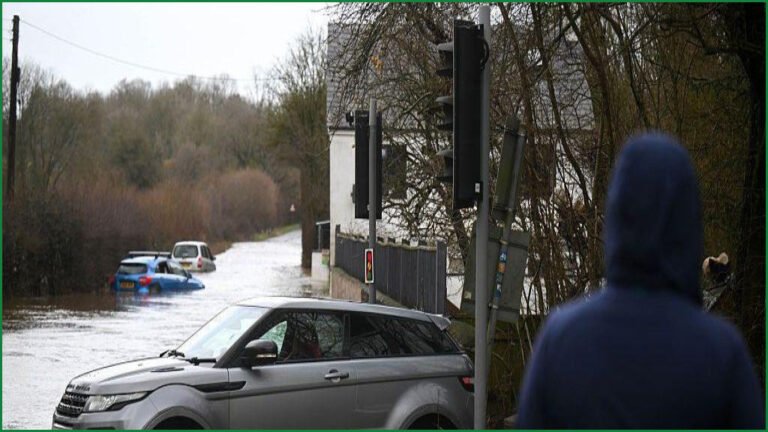
The catastrophe unfolded rapidly on Wednesday morning. Officials warned residents in several Nepali districts to stay far away from the banks of the Bhotekoshi, Trishuli, and Narayani rivers. The Bhotekoshi River flooded around 9 a.m., obliterating several villages, key roads, and vital hydropower projects. Images from the hard-hit Nuwakot district showed mud slathered up to the second floors of buildings, with debris dangling from tree branches and power lines, vehicles buried, and survivors caked in mud.
The flooding was preceded by a magnitude 4.4 earthquake early Wednesday, located about 100 kilometers (60 miles) north of Kathmandu near the Tibetan border, as reported by the U.S. Geological Survey. While the monsoon season is typically unfavorable for trekking within Nepal, it is a peak period for the Kailash pilgrimage in Tibet, which utilizes a route through Nepal's Rasuwa district.
Specialists at the Kathmandu-based International Centre for Integrated Mountain Development (ICIMOD) stated that the flash flood was likely triggered by a glacial avalanche. Saswata Sanyal, a disaster risk reduction specialist at the center, explained that the Lhende Khola River, a tributary of the Bhotekoshi, experienced maximum flooding. Sanyal noted that an ice-rock avalanche from a glacier on the Nepalese side blocked the river, causing a sudden, massive surge downstream. This marks the second time in 14 months that the Lhende Khola has flooded, underscoring the urgent need for early warning systems in a warming Himalaya.
The Himalayan region is warming faster than the global average due to human-caused climate change, making it highly susceptible to extreme weather, landslides, and floods. Earlier this year, Kathmandu researchers found that glaciers across the Hindu Kush Himalaya are melting at an accelerating rate, with the pace of ice loss doubling since 2000.
The scale of the disaster has drawn immediate international involvement. Sasmit Pokharel, a spokesperson for the Nepali government, stated that Nepal has officially requested assistance from both India and China to aid in the rescue efforts. Chinese authorities launched large-scale search and rescue operations in Gyirong, with President Xi Jinping ordering officials to intensify their efforts. Indian Prime Minister Narendra Modi spoke with Nepal's Prime Minister Balendra Shah, promising all possible types of humanitarian assistance and confirming that Indian and Nepalese teams are coordinating closely.
Malaysia's foreign ministry reported that its embassy in Kathmandu lost contact with 11 Malaysian nationals believed to be in Rasuwa. South Korean officials also confirmed that citizens working on a local hydropower plant are missing. Meanwhile, a joint statement from Australia, Britain, the European Union, Finland, France, Norway, and Switzerland expressed solidarity with Nepal and urged everyone in the affected areas to follow local safety advisories.
This tragedy echoes events from August last year, when a glacial lake overflow in Tibet killed nine people and destroyed a critical bridge linking Nepal and China.