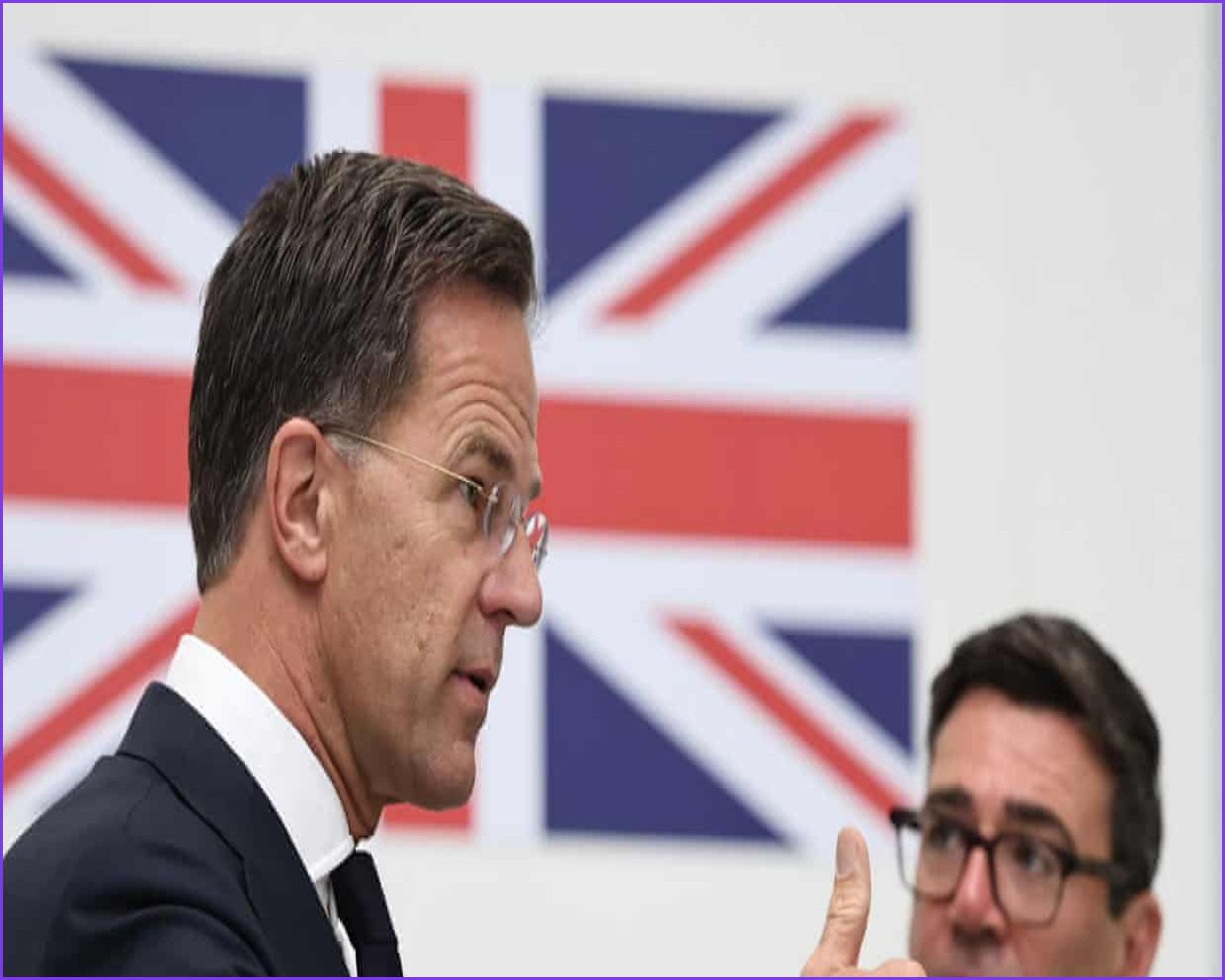
Nato Secretary General Mark Rutte has warned that the alliance is currently facing the most dangerous and complex security environment in a generation. During a speech at Ditchley Park in Oxfordshire, the former Dutch prime minister emphasized that the UK and European nations must bolster their defence investments to maintain the credibility of their collective security. Rutte highlighted that the return of major conflicts in Europe and the Middle East, combined with ongoing geopolitical instability, necessitates a stronger commitment to military readiness.
Rutte praised the UK for its recent pledges to increase defence spending but stressed that these efforts must be sustained. He specifically highlighted the need for Britain to work toward an alliance-wide target of spending 3.5% of GDP on defence by 2035, a goal previously demanded by Donald Trump. This would represent an investment of approximately £30bn in real terms, which would require significant fiscal adjustments through extra taxation, borrowing, or reducing other spending. Currently, Britain has only budgeted to reach 2.7% of GDP by the end of the next decade, and the army has faced short-term financial constraints that led to the suspension of non-essential training for the remainder of the year.
The Nato chief’s remarks followed his first one-on-one meeting with Prime Minister Andy Burnham at a science business park in Oxford earlier on Wednesday. While Burnham has insisted that the UK’s commitment to Nato remains unwavering, the government has faced internal pressure regarding its spending timeline. Former defence secretary John Healey resigned from Keir Starmer’s government in June because the former prime minister would not commit to 3% by 2030, arguing that it would require too great a step up. Healey later refused to recommit to the interim target when appointed to the Treasury by Burnham, raising questions about whether the new government is backloading spending increases until after the next election.
Rutte noted that for years, many in Europe operated under the casual assumption that the United States would provide the majority of the military muscle and financial backing. However, he pointed to an agreement made during the 2025 summit in The Hague, where alliance members committed to matching US levels in response to demands for Europe to take a leading role in its own defence. He added that the UK is playing a central role in this effort, noting its multibillion-pound investment in the Trident nuclear deterrent and its ongoing support for Ukraine, which includes £3bn in annual weapons assistance. Rutte also noted that the UK is leading the pushback against Russian provocation and sabotage across Europe.
While the UK has long held the second-largest defence budget in the alliance, it is now behind Germany, with Berlin’s military budgets on track to be twice that of the UK by 2029. In a related development, Canada has formally applied to join the British-led Joint Expeditionary Force, a rapid-response military coalition consisting of 10 North Atlantic member states, as it seeks to diversify its defence ties away from the US.