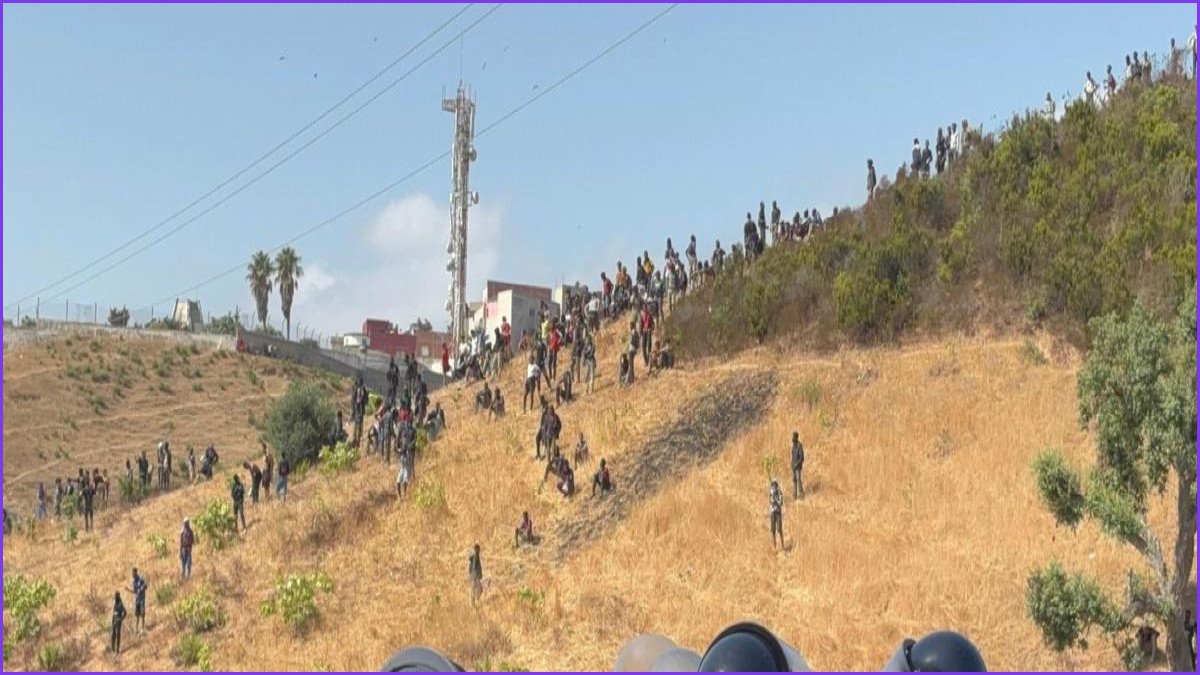
Moroccan security forces have intercepted dozens of individuals attempting to reach the Spanish North African exclave of Ceuta. According to security sources, 111 people were detained in or around Fnideq, also known as Castillejos, which is located approximately 3km (1.8 miles) from the border.
The majority of those detained were reported to be from sub-Saharan Africa.
The operation comes after 60,000 migrants reached Ceuta from Morocco, an event for which Spain's PM blames traffickers. The city’s mayor stated that 100 people died during that event, noting that the vast majority of those arrivals have since returned to Morocco.
Following that influx, security was significantly tightened amid social media rumors suggesting another mass attempt would occur this weekend. Moroccan police, some wearing riot gear, reportedly utilized tear gas to disperse groups gathered on nearby hills.
Earlier this week, the Moroccan government issued a warning that it would prosecute both organizers and participants of any mass crossing, citing its monitoring of social media posts of unknown origin calling for such actions on Saturday.
In response to the heightened situation, Morocco dispatched army officers, navy speedboats, and drones to the border area.
Meanwhile, Spain deployed more than 1,500 security officers to patrol the region, with reports from the newspaper El País indicating that security at the breakwater entrance was 10 times stronger than the previous day. Spain has also reinforced the border with a metal fence and a floating barrier.
The situation has sparked a wider diplomatic conflict, as Italy suspended the 29-member Schengen arrangement of free movement with Spain and introduced border checks on arrivals.
Spanish Prime Minister Pedro Sánchez reacted critically, asserting that Ceuta is not part of the Schengen area and that migrants there had not reached the Spanish mainland.
While Spain urged Italy to drop these controls, it eventually introduced its own measures in response to Italy's refusal, citing the possibility of a new influx on 15 August.
Italian Foreign Minister Antonio Tajani defended his country's actions, stating there was a risk of a new wave of arrivals. He remarked that Italy was not waging a battle against Spain but was simply controlling arrivals, adding that Spain should focus its concerns on Morocco where the problems originate.
Madrid meanwhile deployed more than 1,500 security officers to patrol the area.
Instagram accounts fuelling Ceuta crisis with paid advice for help to cross